Black crappie
Pomoxis nigromaculatus
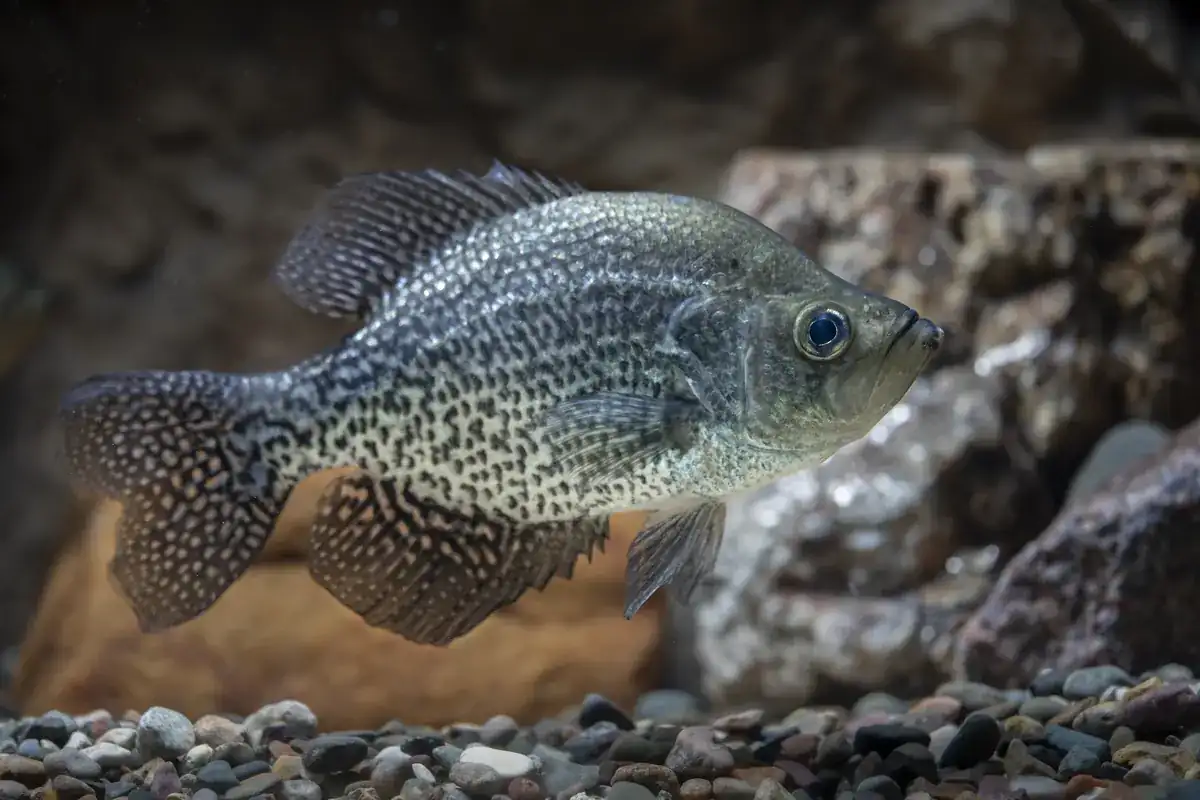
_(53084649608).jpg)
Related gear
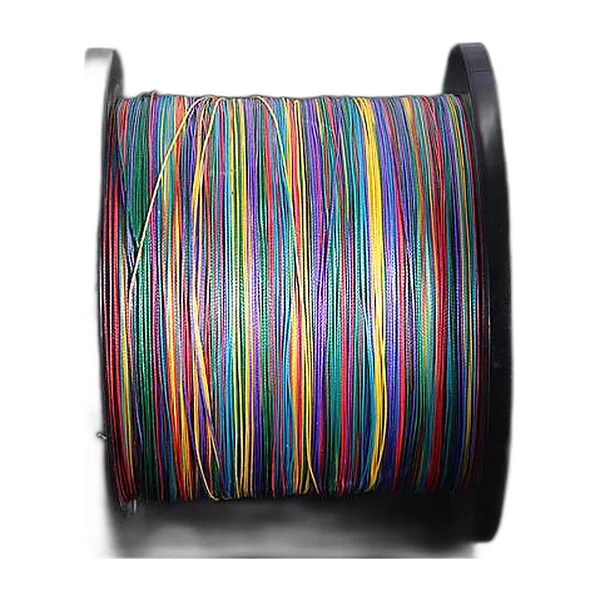 8-Strand Multicolour PE Braid, 500 m
For : northern pike, zander, walleye · vertical jigging
€72.90£49.90Not shipped to the United States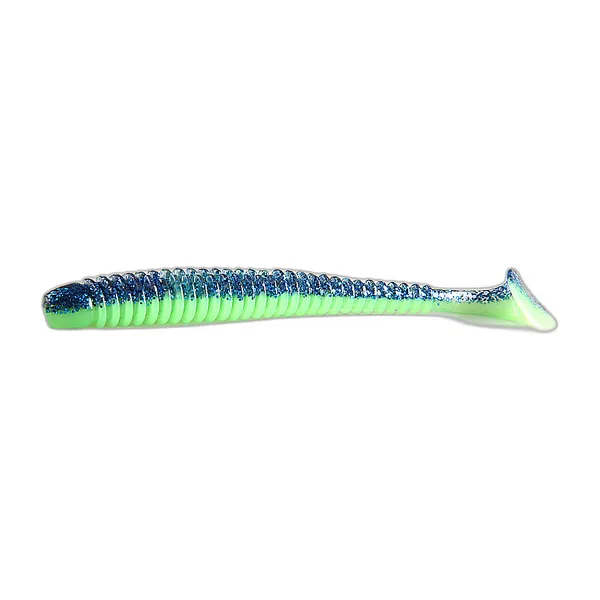 Soft Paddle-Tail Shads 8 cm, Pack of 30
For : european perch, zander, walleye · soft plastic lure fishing
€25.90£12.90Not shipped to the United States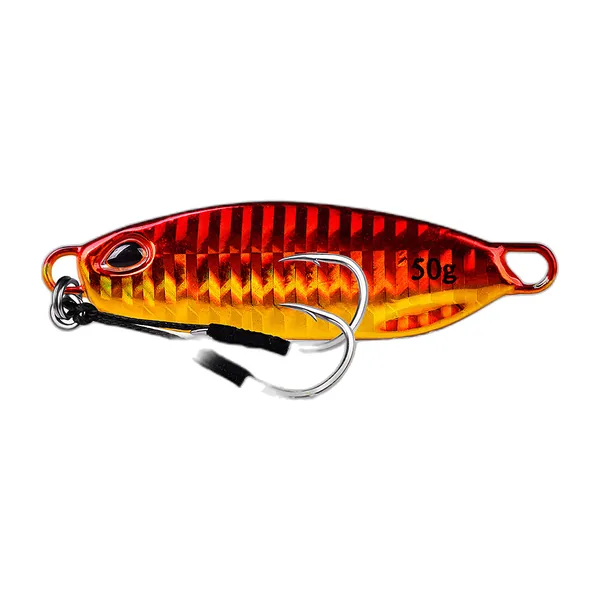 Flat Metal Jigs with Assist Hooks, Pack of 3
For : zander, walleye, european perch · vertical jigging
€24.90£12.90Not shipped to the United States
A schooling favourite
Black crappie are among the most popular panfish in North America, prized both for the fishing and for the table. FishBase describes them in lakes, ponds, sloughs and backwaters, usually among vegetation over mud or sand, and most common in clear water. They form schools: find one and you can often fill a limit quickly.
Their close relative, the white crappie (Pomoxis annularis), tolerates more turbid water. Both are fished the same way; anglers tell them apart mainly by the pattern of dark markings and the number of dorsal spines.
What and when they eat
Up to about 16 cm (6.3 in), crappie eat planktonic crustaceans and insect larvae; bigger fish eat small fish. FishBase notes that they feed early, from midnight to about 2 am. That is why dusk and night fishing under lights, where legal, can be so productive.
Sizes
Common length is 27.5 cm (10.8 in); the maximum published is 49 cm (19.3 in) and 2.7 kg (6 lb), with a maximum age of 15 years (FishBase).
Spring spawning
In spring the male clears a nest on sand, mud or gravel and guards the eggs for about 5 days; females probably spawn in several nests (FishBase). Schools move shallow and become easy to catch. Few states close the season, but most set daily creel limits and some set minimum lengths, so check the regulation page for your state or province.
Methods
A 1-2 inch jig, alone or under a slip bobber, is the basic tool. A small minnow under a float is deadly where permitted. From a boat, find schools on sonar around brush piles, bridge pilings and weed edges, then fish vertically. Spider rigging (several rods trolled slowly from the bow) is popular in the South. In winter, small jigs through the ice produce crappie across the northern states.
Handling
The thin mouth tears easily, hence the nickname papermouth: set the hook gently and unhook with care. Muoneke (1992) measured hooking mortality of white crappie in Texas reservoirs. If you keep fish, stay within local limits and keep only what you will eat.
Lures and baits
- 1-2 in micro jigs
- Small minnows where legal
- Small tubes and curly tails
- Slip bobbers
Catch and release
- The thin mouth tears easily ('papermouth'): set the hook gently and unhook carefully.
- Fish caught deep through the ice: bring them up slowly.
- Keep only what you will eat, within local limits.
Minimum size for Black crappie by area
United States : 20.3–22.9 cm (2)
| Alabama | 22.9 cm |
| South Carolina | 20.3 cm |
Studies cited
- Muoneke (1992) Hooking mortality of white crappie, Pomoxis annularis Rafinesque, and spotted bass, Micropterus punctulatus (Rafinesque), in Texas reservoirs Aquaculture Research doi:10.1111/j.1365-2109.1992.tb00598.x
Measures hooking mortality of white crappie (a sister species) and spotted bass in Texas reservoirs.
Official sources
- FishBase – Pomoxis nigromaculatus (fiche espèce ; statut IUCN Red List 2025-2 repris par FishBase) (accessed on 23 September 2026)