Float fishing (waggler and stick float)
Related gear
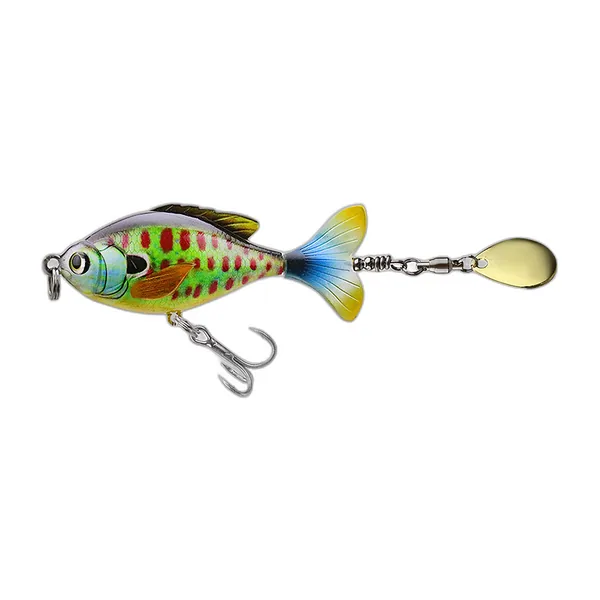 Small Floating Tail-Spinner Lures 6 cm, Pack of 5
Suited to: European perch, Chub.
€36.90£22.90Not shipped to the United States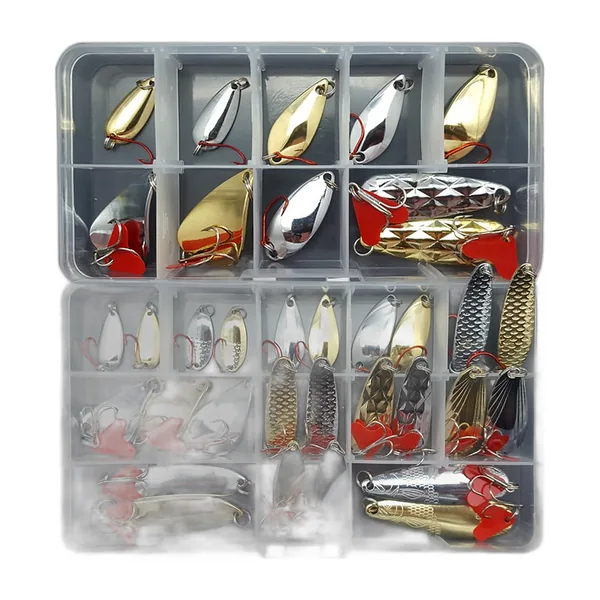 Assorted Wobbling Spoons in a Box
Suited to: European perch, Chub.
€32.90£17.90Not shipped to the United States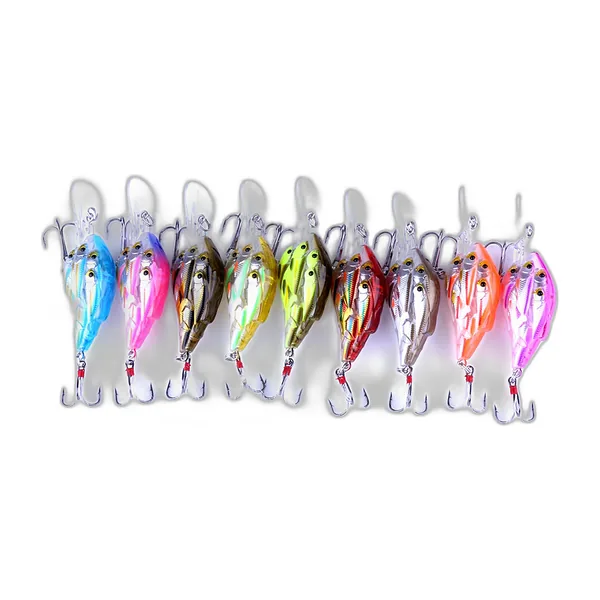 Floating Feathered-Hook Lures 7.5 cm, Pack of 9
Suited to: European perch, Chub.
€35.90£21.90Not shipped to the United States
The float as a precise indicator
A float does two jobs: it holds the bait at the right depth and it signals the bite. With a match rod and reel you can fish further than with a pole, on stillwaters and rivers alike. It is the most versatile method for roach, rudd, tench, crucian carp, bream and chub, and also for perch, winter grayling, margin carp and, in North America, crappie and bluegill under a bobber.
Waggler or stick float
A waggler is attached at the bottom end only. It is used on stillwaters, at distance or in wind, with the line sunk below the surface so the wind cannot drag it. A stick float, attached top and bottom, is made for flowing water: you let it trot downstream while gently holding back so the bait travels just ahead of the float, naturally. In both cases, shot the float so only the tip shows: the more sensitive it is, the more delicate bites you will see.
Setting up and feeding
Plumb the depth, then set the bait to trip the bottom or fish mid-water depending on species and season. Feed little and often to the same spot, with a pouch of maggots or casters from a catapult or a small ball of groundbait. On rivers, feed slightly upstream so the feed settles in the line your float follows.
Reading bites
A float that buries is obvious, but so is one that lifts, lies flat, stops in the current or moves sideways: any unusual movement deserves a strike. Striking promptly also reduces the risk of a swallowed hook.
Hooks and good practice
Czarkowski and Kapusta (2019) studied how angling experience affects the efficiency of float fishing with different hook types: experience matters as much as tackle. Pick a fine hook matched to the bait, barbless if you release, and carry a disgorger. For shotting, Scheuhammer and Norris (1996) reviewed the toxicity of lost lead to wildlife; in the UK lead shot in most sizes has long been restricted, and non-toxic shot is standard.
Rules
Rod limits, certain baits (maggots on some trout waters, livebait), keepnets and lead are regulated differently by country and fishery. In England and Wales, the close season applies to coarse fishing on rivers. Check the regulation page for your area.
The gear, item by item
- Match or float rod of 12-14 ft
- Light fixed-spool reel
- Fine mono, sinking for wagglers, floating for stick floats
- Wagglers (stillwater, distance) and stick floats (flowing water)
- Small shot, ideally non-toxic
- Fine hooks matched to the bait
- Maggots, casters, bread, sweetcorn, worms
- Groundbait and loose feed (catapult)
- Landing net
Step by step
- Choose the float: a waggler fixed bottom-end only for stillwaters or distance, a stick float fixed top and bottom for flowing water.
- Shot the float so only the tip shows.
- Plumb and set the depth.
- Feed little and often to the same spot, with a catapult if needed.
- On rivers, run the float through while gently holding back so the bait leads.
- Strike at any movement of the float and unhook quickly.
Common mistakes
- An under-shotted float that hides delicate bites.
- Floating line with a waggler, so wind drags the float.
- Irregular feeding that scatters fish.
- Late striking that leads to swallowed hooks.
Rules to check before you go
- Number of rods allowed.
- Banned or restricted baits (maggots on trout waters, livebait).
- Keepnet rules.
- Lead shot restrictions.
Fishing regulations by country
Frequently asked questions
What is float fishing?
Float fishing means suspending a bait under a float (a bobber in the US) that holds it at a set depth and signals the bite by dipping, moving or lying flat. It is the classic method for roach, bream, tench, carp, perch and, in North America, panfish such as crappie and bluegill.
A float does two jobs: it keeps the bait at the chosen depth and shows when a fish takes it. Take Me Fishing explains that weights take the bait down while a bobber holds the hook at the desired depth, and that longer, narrower floats are more sensitive than round plastic bobbers. The French national federation describes the routine for pole and float fishing: plumb the depth first, set the float so the bait lies on or just off the bottom depending on the fish, shot the float so only its tip shows, feed a little groundbait on the same spot, and watch the float for bites, which show as a bob, a sinking float, a sideways movement or a float lying flat when a fish lifts the shot. In Europe the main designs are wagglers, attached at the bottom only for stillwaters, and stick floats, attached top and bottom for flowing water. A study by Czarkowski and Kapusta found that angler experience affects float-fishing efficiency with different hook types.
Official sources : Take Me Fishing (RBFF) – Fishing weights and bobbers ; Take Me Fishing (RBFF) – Traditional fishing floats: the bobber ; Génération Pêche (FNPF) – getting started with float (pole) fishing ; Génération Pêche (FNPF) – 1001 ways to fish (technique sheets) ; Czarkowski & Kapusta 2019 – angling experience and float fishing efficiency with different hooks, Fisheries & Aquatic Life
What is float fishing for steelhead and salmon?
In North American rivers, float fishing for steelhead or salmon means drifting a bait or jig under a bobber at a set depth so it passes naturally just above the bottom. Some states regulate the rig: Oregon's bobber rule requires a bobber that suspends the gear, with a leader no longer than 36 inches.
River anglers use a float, or bobber, to present a bait, jig or fly at a steady depth while the current carries it downstream, watching the float for any pause or dip. Take Me Fishing notes that in rivers a float that halts while drifting can signal a bite. Where snagging is a concern, agencies may regulate the rig. Oregon's 2026 statewide regulations include bobber rules for some waters: gear is limited to an artificial fly, lure or bait with one single-point hook, the bobber and leader must be no longer than 36 inches, and the bobber must suspend the weight, leader and terminal gear without letting them rest on the river bottom. Oregon also allows salmon, steelhead and trout to be fished only in daylight (one hour before sunrise to one hour after sunset) unless an exception applies. Rules vary by state and river, so read the local regulations, including any tag or stamp needed for salmon and steelhead.
Official sources : Oregon Sport Fishing Regulations 2026 – general statewide regulations (ODFW) ; Take Me Fishing (RBFF) – Traditional fishing floats: the bobber ; Take Me Fishing (RBFF) – Fishing weights and bobbers
What rod is used for float fishing?
A long, light rod helps control the line and the float: European match or float rods are commonly 12 to 14 ft, while pole anglers use telescopic or take-apart poles without a reel (3 to 6 m for beginners). For bobber fishing, a light spinning combo matched to the line and bait works.
The French national federation's beginner sheet recommends a telescopic pole of 3 to 6 m without a reel for float fishing close in, with 3 or 4 m lengths easiest for beginners, and describes longer take-apart poles of 7 to 14 m that use an internal elastic to cushion fish and protect a fine hooklength. For fishing further out with a reel ('English' or match fishing), a longer match rod controls the line and the float; Pescatlas' technique data give 12 to 14 ft (3.60 to 4.20 m) for match rods paired with a light fixed-spool reel. Take Me Fishing's general advice applies: every rod balances flexibility and strength, lighter rods are more sensitive but less able to fight big fish, and the rod should match the weight of the bait and the line you use. For float fishing for larger fish such as carp or pike, a stronger rod with more backbone is needed. There is no official 'best' rod; match rod, line, float and hook to each other.
Official sources : Génération Pêche (FNPF) – getting started with float (pole) fishing ; Génération Pêche (FNPF) – 1001 ways to fish (technique sheets) ; Take Me Fishing (RBFF) – How to choose a fishing rod ; Czarkowski & Kapusta 2019 – angling experience and float fishing efficiency with different hooks, Fisheries & Aquatic Life
What is the best float fishing setup?
Start with a rod and reel or pole matched to the line, a float sized to the depth and conditions, split shot to cock the float so only its tip shows, and a small hook suited to the bait. Wagglers suit stillwaters, stick floats flowing water, and slip bobbers deep water.
The components are the same everywhere. Float: Take Me Fishing notes that round plastic bobbers carry heavier baits but resist being pulled under, while long, narrow floats are more sensitive; slip bobbers slide on the line against a stop knot so you can fish 10 feet deep or more while still casting easily. In Europe, wagglers are fixed at the bottom only for stillwaters and distance, stick floats top and bottom for rivers. Weights: split shot pinched on the line balance the float so only the tip shows, as the French federation's pole sheet explains, making delicate bites visible. Line and hook: a main line with a finer hooklength and a hook matched to the bait. Depth: plumb the swim, then set the bait on or just off the bottom for bottom feeders such as carp, tench and bream, or higher for fish feeding in mid-water. The best setup is the one balanced for the target species, depth and current.
Official sources : Take Me Fishing (RBFF) – Traditional fishing floats: the bobber ; Take Me Fishing (RBFF) – Try a slip bobber for summer sunfish ; Take Me Fishing (RBFF) – Fishing weights and bobbers ; Génération Pêche (FNPF) – getting started with float (pole) fishing ; Czarkowski & Kapusta 2019 – angling experience and float fishing efficiency with different hooks, Fisheries & Aquatic Life
Do you need a float for fishing?
No. A float is one way to present a bait; you can also fish on the bottom with a weight (ledgering or bottom fishing), cast and retrieve lures, or fly fish. A float is useful when you want to hold a bait at a fixed depth and see bites clearly, especially for beginners.
Take Me Fishing distinguishes weights, which take a bait down to where fish are, from bobbers, which hold the hook at a desired depth and show bites. Still fishing, the simplest method for beginners, can be done with a bobber near the surface or at mid-depth, or right on the bottom without one. Bottom fishing uses a sinker and relies on the rod tip or a bite alarm to show bites. Lure fishing and fly fishing need no float at all, although fly anglers sometimes use a small strike indicator, described by Take Me Fishing as essentially a micro bobber. A float is most useful when fish feed off the bottom, when the bottom is snaggy or weedy, or when you want a clear bite signal, which is why it is often recommended for children and beginners. Whether any method or number of rods is allowed depends on local rules.
Official sources : Take Me Fishing (RBFF) – Fishing weights and bobbers ; Take Me Fishing (RBFF) – Still fishing ; Take Me Fishing (RBFF) – Traditional fishing floats: the bobber
What reel is best for float fishing?
A light fixed-spool (spinning) reel is the usual choice for float fishing, because it casts light floats and baits easily. Take Me Fishing notes that spinning reels suit small lures and baits, and that reel size should match the line strength recommended for your rod. Pole fishing uses no reel at all.
Official sources do not rank reel models, so we give selection criteria rather than brands. Take Me Fishing explains that spinning reels work best for small lures and baits while baitcasters favour heavier lures; that reel sizes reflect spool capacity (for example 230 yards of 6-pound monofilament); and that the reel should handle a line of the strength recommended for the rod. Those points fit float fishing, which uses light floats, small hooks and fine line. Pescatlas' technique data pair a 12 to 14 ft match rod with a light fixed-spool reel for waggler and stick-float fishing. The French federation's pole sheet reminds that pole fishing, the simplest float method, uses no reel: the line is tied to the pole tip or to an internal elastic. For float fishing for larger fish, a reel with a smoother drag and more line capacity helps, since heavier line takes more room on the spool.
Official sources : Take Me Fishing (RBFF) – How to choose a fishing reel ; Génération Pêche (FNPF) – getting started with float (pole) fishing ; Take Me Fishing (RBFF) – How to choose fishing line
What line is best for float fishing?
Fine monofilament is standard: Take Me Fishing calls monofilament the tried-and-true beginner line, and European float anglers use sinking mono with wagglers and floating mono with stick floats. Choose the strength by target fish and snags, and use a finer hooklength so only it breaks.
Take Me Fishing describes three main line types: monofilament, flexible and easy to use and suited to beginners; fluorocarbon, nearly invisible in clear water; and braid, very strong but visible, often used with a fluorocarbon leader. For float fishing, monofilament dominates because it is supple and easy to control on the surface. Pescatlas' technique data advise sinking line with a waggler, so wind does not drag the float, and floating line with a stick float in current. The French federation's pole sheet explains the usual set-up of a main line carrying the float and shot and a finer hooklength carrying the hook, so a break loses little tackle; it does not give diameters, and we have found no official source that does, so we do not give numbers. Strength should match the target species, snags and the rod's recommended line rating. Lead shot is being replaced by non-toxic alternatives in some places because of its ecotoxicity.
Official sources : Take Me Fishing (RBFF) – How to choose fishing line ; Génération Pêche (FNPF) – getting started with float (pole) fishing ; Scheuhammer & Norris 1996 – the ecotoxicology of lead shot and lead fishing weights, Ecotoxicology
When should you strike when float fishing?
Strike as soon as the float moves in an unusual way: when it dips, sinks, slides sideways or lies flat. Striking early limits the risk of the fish swallowing the hook, which matters if you plan to release it.
The French national federation describes the bite signals under a float: the float bobs, sinks decisively, moves sideways, or lies flat when a fish lifts the shot, and it recommends striking at these signs. Take Me Fishing adds that in rivers a drifting float that stops can mean a bite, and that long, slim floats show a take when they stand up before going under. A float must be shotted so only its tip shows, otherwise delicate bites go unseen. Early striking also protects fish: studies of hook injuries show that deeply swallowed natural baits increase injury and mortality, for example in pike (Arlinghaus and colleagues, 2008) and bait-caught rainbow trout (Schill, 1996). With experience, anglers learn to read the pattern of bites for each species; Czarkowski and Kapusta found that angler experience affects float-fishing catch efficiency with different hooks.
Official sources : Génération Pêche (FNPF) – getting started with float (pole) fishing ; Take Me Fishing (RBFF) – Traditional fishing floats: the bobber ; Arlinghaus et al. 2008 – size selectivity, injury and initial hooking mortality in pike angling, NAJFM ; Schill 1996 – hooking mortality of bait-caught rainbow trout, NAJFM ; Czarkowski & Kapusta 2019 – angling experience and float fishing efficiency with different hooks, Fisheries & Aquatic Life
Is float fishing good for carp?
Yes, especially in the margins and in shallow or weedy water, where a float shows bites clearly and lets you place a bait precisely. Carp feed on the bottom, so set the bait on the bottom and use stronger tackle than for small fish.
The French national federation notes that carp, tench, gudgeon and barbel feed on the bottom, so when float fishing for them the float is set slightly deeper than the plumbed depth to lay the bait on the bottom. It also explains that long take-apart poles fitted with strong internal elastics are made for big fish, from carp to wels catfish, allowing fine lines to be used close in. Pescatlas' technique data list common carp among typical float-fishing targets, particularly margin carp. Bottom-feeding carp often lift the shot, which makes the float rise and lie flat, a classic carp bite. For long sessions, fishing at distance or at night, many anglers switch to ledgering with bite alarms instead, and night carp fishing is only allowed on designated waters in countries such as France. Use tackle strong enough to control the fish near snags, and a large landing net and unhooking mat.
Official sources : Génération Pêche (FNPF) – getting started with float (pole) fishing ; Génération Pêche (FNPF) – 1001 ways to fish (technique sheets) ; French Environment Code, art. R436-6 to R436-16 (fishing hours, night carp fishing)
Is float fishing good for trout?
It can be: a float drifts a bait or nymph at a steady depth through runs where trout feed, and bobber fishing is common for stocked trout in lakes. Check local rules first, because many trout waters restrict bait, hooks or methods, such as Oregon's bobber rules or fly-only stretches.
Pescatlas' technique data list grayling among typical float targets, and Take Me Fishing explains that in fly fishing a strike indicator acts as a micro bobber to hold a nymph at a set drifting depth. For trout, the bigger question is regulation: many trout waters limit gear to artificial flies and lures, single barbless hooks, or specific rigs. Oregon, for example, restricts gear on some rivers to an artificial fly, lure or bait with one single-point hook and sets bobber-rig rules, and limits trout fishing to daylight hours. In France, first-category trout waters allow one rod, and some departments ban maggots and other fly larvae as bait there, as the Doubs does in its 2026 guide. If you intend to release trout, note that studies found bait fishing causes more deep hooking than lures or flies (Schill 1996; DuBois and Kuklinski 2004), so strike quickly or use flies and lures.
Official sources : Take Me Fishing (RBFF) – Traditional fishing floats: the bobber ; Oregon Sport Fishing Regulations 2026 – general statewide regulations (ODFW) ; Génération Pêche (FNPF) – rules to know 2026 ; Doubs fishing federation – 2026 fishing guide ; Schill 1996 – hooking mortality of bait-caught rainbow trout, NAJFM ; DuBois & Kuklinski 2004 – hook type and wild stream trout caught by active bait fishing, NAJFM
When should you use float fishing?
Use a float when fish are feeding off the bottom or at a precise depth, when the bottom is snaggy or weedy, when you want to see delicate bites clearly, or when you fish close in for small and medium fish. It also works in current, where a float carries the bait naturally downstream.
Take Me Fishing notes that bobbers keep the bait suspended at a chosen depth, whereas weights take it down to the bottom, and that still fishing with a bobber can target fish near the surface, at mid-depth or just off the bottom. A slip bobber lets you do this in deep water, for example over deeper weedlines where larger sunfish move in late spring and summer. The French federation explains that fish such as rudd and bleak feed between two waters or near the surface, while carp, tench and barbel feed on the bottom, so the float is set according to the species. In rivers, a stick float or bobber carries the bait naturally with the current. Float fishing is less suited to long range, strong wind or very deep water with small floats, where ledgering or feeder fishing may be better. Choose the method the local rules allow.
Official sources : Take Me Fishing (RBFF) – Fishing weights and bobbers ; Take Me Fishing (RBFF) – Still fishing ; Take Me Fishing (RBFF) – Try a slip bobber for summer sunfish ; Génération Pêche (FNPF) – getting started with float (pole) fishing
Is float fishing surface fishing?
Not usually. The float sits on the surface, but the bait hangs below it at the depth you set, often near the bottom. True surface fishing uses floating baits, topwater lures or dry flies that stay on the surface itself.
In float fishing the float is only the depth-setting and bite-indicating device: Take Me Fishing explains that a bobber holds your hook at a desired depth, and the French federation's pole sheet describes setting the float after plumbing so the bait lies on or just off the bottom, or higher for fish feeding in mid-water or near the surface. So a float rig can fish any layer, but most often it presents the bait below the surface. Surface fishing is different: topwater lures such as poppers are worked on the surface and draw visible strikes, and fly anglers fish dry flies that float. Some anglers do fish a bait just under the surface with a float set very shallow, for species such as rudd or bleak that feed near the top. Whatever the method, the local rules on baits and rods apply.
Official sources : Take Me Fishing (RBFF) – Fishing weights and bobbers ; Génération Pêche (FNPF) – getting started with float (pole) fishing ; Take Me Fishing (RBFF) – Topwater fishing ; Take Me Fishing (RBFF) – Fly fishing FAQ
Studies cited
- Czarkowski & Kapusta (2019) The impact of angling experience on the efficiency of float fishing using different hook types Fisheries & Aquatic Life doi:10.2478/aopf-2019-0005
Studies how angling experience affects the efficiency of float fishing with different hook types. - Scheuhammer & Norris (1996) The ecotoxicology of lead shot and lead fishing weights Ecotoxicology doi:10.1007/bf00119051
Review of the ecotoxicology of lead fishing weights: why non-toxic shot is preferable for float rigs.