Chub
Squalius cephalus
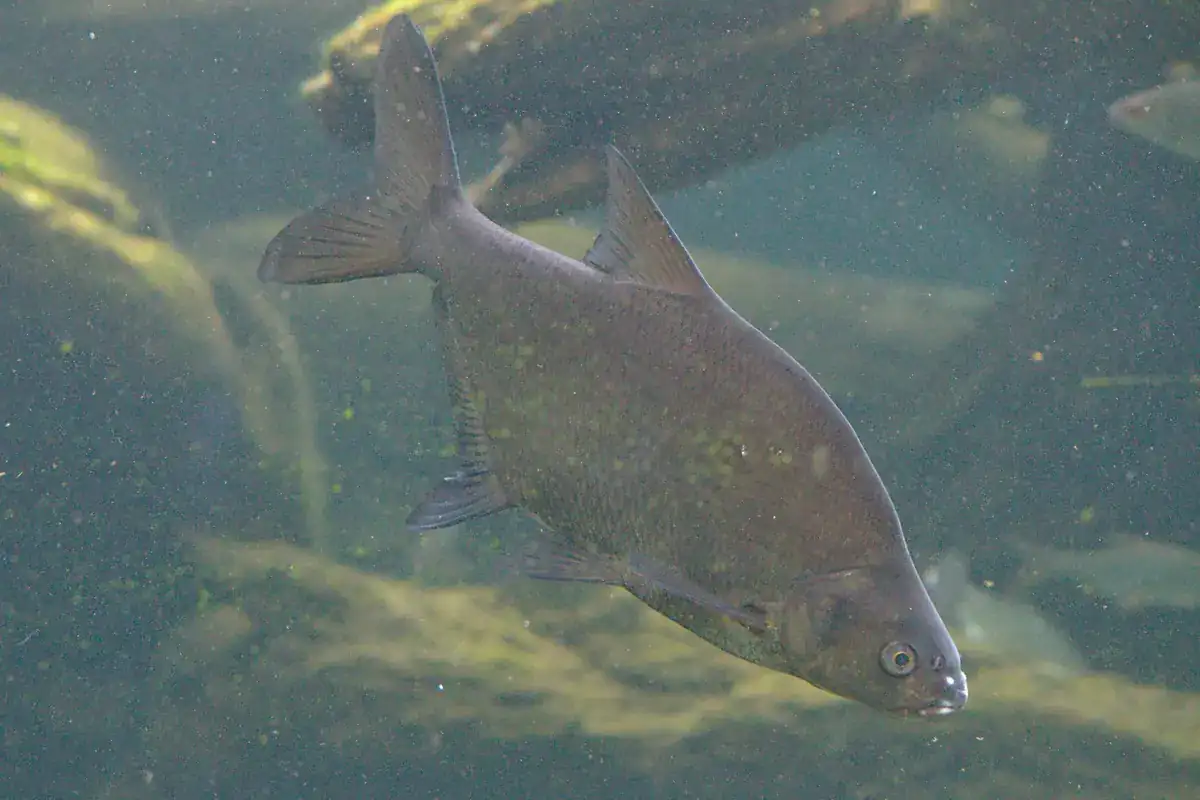
.jpg)
season calendar
Closed months recorded (share of areas closing the species that month) — 8 areas.
Related gear
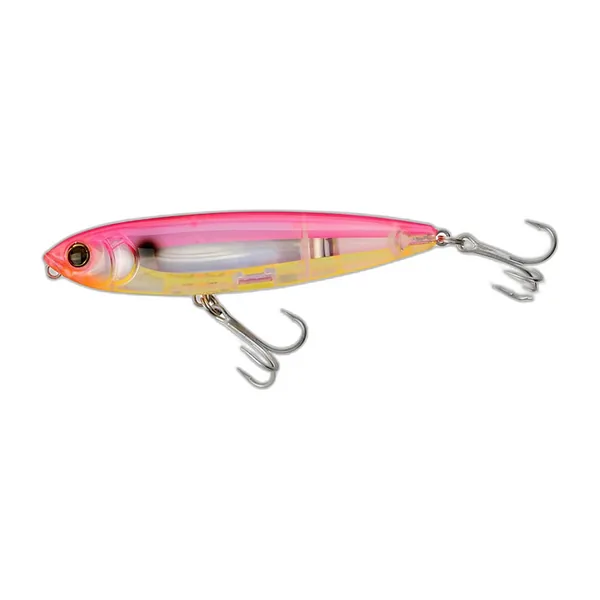 Walk-the-Dog Surface Stickbaits 10 cm 18 g, Pack of 3
For : largemouth bass, smallmouth bass, northern pike · crankbait and hard-lure fishing
€60.90£43.90Not shipped to the United States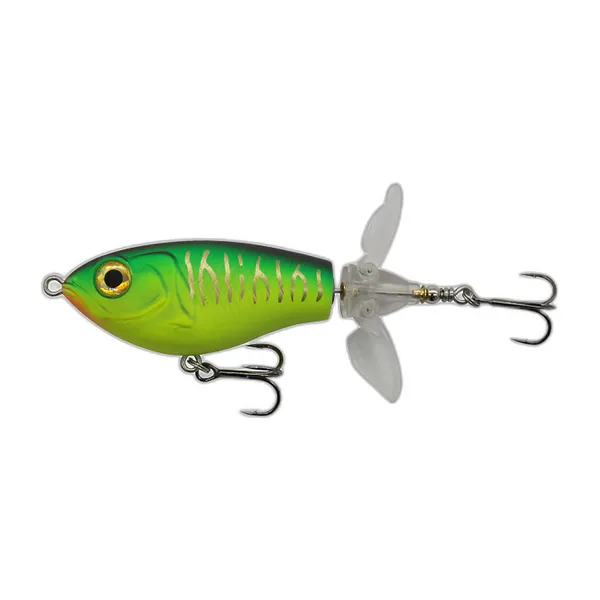 Floating Spinning-Tail Lures, Pack of 4
For : european perch, largemouth bass, smallmouth bass · crankbait and hard-lure fishing
€42.90£27.90Not shipped to the United States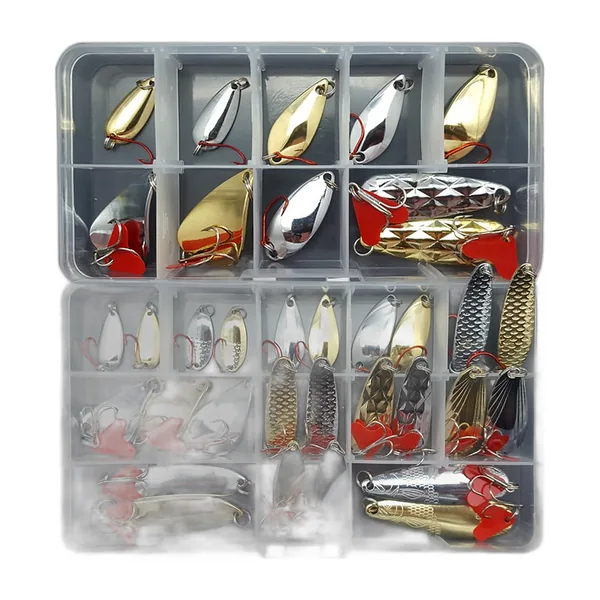 Assorted Wobbling Spoons in a Box
For : brown trout, rainbow trout, european perch · spoon and spinner fishing
€32.90£17.90Not shipped to the United States
What gear do you need for chub?
An opportunistic river fish
Chub live in most European rivers. FishBase describes them mainly in small rivers and large streams of the barbel zone, with alternating riffles and pools, but also along the banks of slow lowland rivers, in small mountain streams and in large lakes. Young chub shoal in shallow margins; adults become more solitary. For many British river anglers, chub are the most reliable winter fish.
They eat almost anything
That is what makes chub so interesting: they take a very wide range of aquatic and terrestrial animals and plant material, and large chub feed mainly on fish (FishBase). Ünver and Erk'akan's (2011) study of chub diet in a Turkish lake illustrates this omnivory. On the bank, it means chub can be caught on bread, cheese paste, slugs, cherries falling from a tree, grasshoppers, dry flies or small plugs.
Sizes
Common length is 30 cm (11.8 in); the maximum published is 60 cm (23.6 in) standard length and 8 kg (17.6 lb), with a maximum age of 22 years (FishBase).
Spawning
Chub spawn in spring in fast water over gravel, rarely among weed. Females spawn more than once per season with several males, often with a great deal of splashing (FishBase). In England and Wales the river coarse close season (15 March-15 June) covers spawning. Elsewhere there is usually no chub-specific closure. Check the regulation page.
Methods through the seasons
In summer, chub hold under overhanging branches waiting for food to drop in. Approach carefully with polarised glasses and present bread crust, a slug, a grasshopper or a terrestrial dry fly. Small plugs and spinners cast under the trees trigger confident takes. In winter, big chub fall to bread flake or cheese paste, trotted under a float or on a light link leger, especially late in the afternoon.
Chub are famously wary: a shadow on the water or a heavy footstep can empty a swim. Fish from a distance and avoid being silhouetted against the sky.
Release
FishBase describes chub flesh as poor quality, and most anglers release them. Use single barbless hooks on lures, unhook the fish in the net with wet hands and release it in slack water.
Lures and baits
- Bread (crust, flake)
- Cheese paste
- Slugs, cherries, grasshoppers
- Small crankbaits and spinners
- Dry flies and terrestrial imitations
Catch and release
- Single barbless hooks on lures for quick unhooking.
- Wet hands, unhook in the net.
- Release in slack water.
Frequently asked questions
How do you catch chub?
Chub are opportunistic feeders that hide under cover such as overhanging brambles and tree roots. The Canal & River Trust suggests loose-feeding chopped worms or casters and using a large worm or piece of bread on the hook; small spinners and lures also work. Respect the river close season (15 March to 15 June).
The Canal & River Trust gives practical advice. Chub seek cover on the far side of canals and are drawn to overhanging brambles and tree roots. To attract them, feed chopped-up worms or casters. On the hook, a large worm or a piece of bread works well, and small spinners and lures can also be effective. It describes chub as opportunistic feeders that will eat almost anything, including frogs and even slugs. FishBase confirms an omnivorous diet of a very wide range of aquatic and terrestrial animals and plant material, with large chub eating mainly fish. It adds that the species can be caught with various baits and lures. Chub are most abundant in small rivers and large streams with riffles and pools (FishBase), and are often seen in shoals near the surface (Canal & River Trust). Rules: In England and Wales, coarse fish in rivers may not be fished from 15 March to 15 June inclusive; most stillwaters and canals stay open. On rivers, you may keep at most 15 small coarse fish (up to 20 cm) a day, and larger chub must be returned. You need an Environment Agency rod licence and the fishery owner's permission. In North America, 'chub' usually refers to other species (such as creek chub); this answer covers the European chub, Squalius cephalus.
Official sources : Canal & River Trust — Chub (freshwater fish species) ; FishBase — Squalius cephalus (species summary) ; GOV.UK — Freshwater rod fishing rules: when and where you can fish ; GOV.UK — Freshwater rod fishing rules: fish size and catch limits ; GOV.UK — Buy a fishing licence ; Canal & River Trust — Coarse fishing close season
What is the best bait for chub?
No source names a single best bait, but the Canal & River Trust recommends a large worm or a piece of bread on the hook, with chopped worms or casters as loose feed. Chub are opportunistic and will eat almost anything, including slugs and frogs, and FishBase says large chub mainly eat fish.
The Canal & River Trust's advice for chub is to attract them with chopped-up worms or casters. For the hook, a large worm or a piece of bread 'works a treat'. It describes chub as opportunistic feeders that will eat almost anything, including frogs, and says some anglers have caught them on slugs. It lists their natural diet as caddis and mayfly larvae, small fish, fish eggs, worms and molluscs. FishBase describes an omnivorous diet of aquatic and terrestrial animals and plant material, with large individuals preying mainly on fish. We have no source ranking baits, so we do not name one best bait; bread and worms are the options the Canal & River Trust highlights. Fish baits close to cover, such as overhanging branches and roots, where chub hide. In England, crayfish are banned as bait. The river close season for coarse fish runs from 15 March to 15 June inclusive, and on rivers only small coarse fish up to 20 cm may be taken, 15 a day at most. In North America, 'chub' usually refers to other species (such as creek chub); this answer covers the European chub, Squalius cephalus.
Official sources : Canal & River Trust — Chub (freshwater fish species) ; FishBase — Squalius cephalus (species summary) ; GOV.UK — Freshwater rod fishing rules: fish size and catch limits ; GOV.UK — Freshwater rod fishing rules: when and where you can fish
What are the best lures for chub?
Official sources do not rank lures. The Canal & River Trust says small spinners and lures can tempt chub, and FishBase notes that large chub feed mainly on fish and the species can be caught on lures. Fish them near cover such as overhanging trees, and respect the river close season.
The Canal & River Trust notes that small spinners and lures can be effective for chub, which it describes as keen, opportunistic feeders. FishBase states that the species 'can be caught with various baits and lures' and that large individuals prey predominantly on fish, which explains why small fish-imitating lures work. Neither source names specific models, sizes or colours, and we found no study ranking lures for chub, so we do not recommend one. Practical points from the sources: chub hide under overhanging brambles, tree roots and far-bank cover, and often feed near the surface, so lures that can be cast tight to cover and worked close to the surface fit their behaviour. Perch take small spinners and lures too, according to the Canal & River Trust, so the same small lures often catch both species. Rules in England and Wales: no coarse fishing on rivers from 15 March to 15 June. On rivers, larger chub and perch must be returned (only small coarse fish up to 20 cm may be taken, 15 a day). You need a rod licence and permission. In North America, 'chub' usually refers to other species (such as creek chub); this answer covers the European chub, Squalius cephalus.
Official sources : Canal & River Trust — Chub (freshwater fish species) ; FishBase — Squalius cephalus (species summary) ; Canal & River Trust — Perch (freshwater fish species) ; GOV.UK — Freshwater rod fishing rules: when and where you can fish ; GOV.UK — Freshwater rod fishing rules: fish size and catch limits
What do chub eat?
Chub are omnivores. FishBase says they eat a very wide range of aquatic and terrestrial animals and plant material, with large chub feeding mainly on fish. The Canal & River Trust lists caddis and mayfly larvae, small fish, fish eggs, worms and molluscs, and notes they also eat crayfish, flying insects and berries.
FishBase describes Squalius cephalus as feeding on a wide variety of aquatic and terrestrial animals and plant material, and says large individuals prey predominantly on fishes. Larvae and juveniles live in very shallow shoreline habitats. The Canal & River Trust lists the chub's diet as caddis and mayfly and their larvae, small fish and fish eggs, worms and molluscs. It adds that with their large mouths, chub feed on worms, crayfish, flying insects, small fish, berries and other plant matter, and so can grow quickly. For anglers, this broad diet explains why chub take such varied baits, from bread and worms to slugs and small lures. It also explains why they often patrol near the surface under overhanging trees, where insects and berries fall into the water. In England, crayfish may not be used as bait, even though chub eat them. Chub themselves are eaten by pike and fish-eating birds, according to the Canal & River Trust. In North America, 'chub' usually refers to other species (such as creek chub); this answer covers the European chub, Squalius cephalus.
Official sources : FishBase — Squalius cephalus (species summary) ; Canal & River Trust — Chub (freshwater fish species) ; GOV.UK — Freshwater rod fishing rules: fish size and catch limits
How big do chub get?
FishBase gives chub a common length of 30 cm and a maximum of 60 cm (standard length) and 8 kg, with a maximum age of 22 years. The Canal & River Trust lists a typical size of 40 cm and 4-5 lb, a British record of 9 lb 5 oz (4.224 kg) and a lifespan of 14-20 years.
Reference figures: FishBase lists a common length of 30 cm, a maximum published length of 60 cm (standard length, without the tail fin), a maximum weight of 8 kg and a maximum reported age of 22 years for Squalius cephalus. In Britain, the Canal & River Trust gives a typical size of 40 cm and 4-5 lb, a lifespan of 14-20 years and a British record of 9 lb 5 oz (4.224 kg). With their varied diet, chub can grow quickly and reach an impressive size, it notes. Small chub can be confused with dace, which are smaller and more slender, with duller fins; chub have a wider mouth and curved dorsal and pelvic fins with a reddish tinge. Size rules: in England and Wales, only small coarse fish up to 20 cm may be taken from rivers (15 a day at most), so larger chub must be returned. Elsewhere, some countries set a minimum size, such as 30 cm in the Netherlands and in Wallonia (Belgium). In North America, 'chub' usually refers to other species (such as creek chub); this answer covers the European chub, Squalius cephalus.
Official sources : FishBase — Squalius cephalus (species summary) ; Canal & River Trust — Chub (freshwater fish species) ; GOV.UK — Freshwater rod fishing rules: fish size and catch limits ; Netherlands — Uitvoeringsregeling visserij (minimum sizes) ; Wallonia — AGW of 8 December 2016 on fishing rules
Can you eat chub?
Legally you can keep small chub in some places, but in England and Wales only coarse fish up to 20 cm may be taken from rivers (15 a day), so most chub go back. FishBase describes chub flesh as of poor quality, and most British anglers release them.
Whether you may keep a chub depends on local rules. England: on rivers, you may take no more than 15 small coarse fish per day, each up to 20 cm; the list includes chub, so larger chub must be returned (GOV.UK). On stillwaters and canals you may remove fish only with the owner's permission. Wales applies the same limit of 15 small native fish up to 20 cm per day on rivers, and treats stillwaters and canals by owner permission (NRW). The river close season, 15 March to 15 June, applies to coarse fish. On eating quality, FishBase states that 'the flesh is of poor quality' for Squalius cephalus, while noting that it is popular with amateur sport fishermen. We give no culinary advice. If you keep any fish, check local health advice, because some waters have consumption warnings. In the United States 'chub' usually means other species, whose rules are set by each state. In practice, chub fishing in Britain is almost always catch-and-release.
Official sources : GOV.UK — Freshwater rod fishing rules: fish size and catch limits ; Natural Resources Wales — Minimum fish size and catch limits ; GOV.UK — Freshwater rod fishing rules: when and where you can fish ; FishBase — Squalius cephalus (species summary)
When is the best time to fish for chub?
In England and Wales, chub in rivers can only be fished from 16 June to 14 March; the close season runs from 15 March to 15 June. Canals and most stillwaters stay open. Chub spawn in spring and summer when water reaches 14 °C, according to the Canal & River Trust.
The legal calendar comes first. In England, the coarse fish close season on rivers, streams, drains, most stillwater SSSIs, some canals and the Norfolk and Suffolk Broads runs from 15 March to 15 June inclusive (GOV.UK). The Canal & River Trust confirms that most canals remain open, with listed exceptions. In Wales, coarse fish in rivers are open from 16 June to 14 March, while stillwaters and canals have no close season except certain SSSIs (NRW). Biology: the Canal & River Trust says chub spawn in spring and summer when water temperatures reach 14 °C. FishBase notes spawning in fast water over gravel, with females spawning several times. No official source names the best month or hour for chub; we do not invent one. The Canal & River Trust notes that chub are often seen in shoals near the surface and hide under far-bank cover. In summer they feed on insects and berries falling from overhanging trees (their diet includes flying insects and berries), which is why surface baits and small lures near cover are used. In North America, 'chub' usually refers to other species (such as creek chub); this answer covers the European chub, Squalius cephalus.
Official sources : GOV.UK — Freshwater rod fishing rules: when and where you can fish ; Canal & River Trust — Coarse fishing close season ; Natural Resources Wales — Non-migratory trout, charr, coarse fish and eels open seasons ; Canal & River Trust — Chub (freshwater fish species) ; FishBase — Squalius cephalus (species summary)
Where can you fish for chub?
Chub are mainly river fish, most abundant in small rivers and large streams with riffles and pools, and they have been introduced into some canals. The Canal & River Trust names the Staffordshire & Worcestershire and Shropshire Union canals as good chub waters. You need a rod licence and the fishery's permission.
FishBase says chub are most abundant in small rivers and large streams of the barbel zone, with riffles and pools, and also along slow lowland rivers, small mountain streams and large lakes. The Canal & River Trust describes chub as typically found in rivers, introduced to a number of canals where they also thrive. It names the Staffordshire & Worcestershire and Shropshire Union canals as known for large catches. Within a water, look for cover: chub seek the far side of the canal, overhanging brambles and tree roots, and often move in shoals near the surface. In England and Wales you need an Environment Agency rod licence plus permission from the owner of the fishing (club, fishery or the Canal & River Trust's Waterway Wanderers permit on non-leased canal stretches). The Canal & River Trust offers a fishery search by town or postcode. Rivers are closed to coarse fishing from 15 March to 15 June. In North America, 'chub' usually refers to other species (such as creek chub); this answer covers the European chub, Squalius cephalus.
Official sources : FishBase — Squalius cephalus (species summary) ; Canal & River Trust — Chub (freshwater fish species) ; Canal & River Trust — Where to fish ; GOV.UK — Buy a fishing licence ; GOV.UK — Freshwater rod fishing rules: when and where you can fish
Minimum size for Chub by area
Belgium : 30 cm (1)
Germany : 20–30 cm (2)
| Freie Hansestadt Bremen | 30 cm |
| Thüringen | 20 cm |
Austria : 25 cm (1)
| Oberösterreich | 25 cm |
Netherlands : 30 cm (1)
| Nederland | 30 cm |
Italy : 16–30 cm (9)
Spain : 8–18 cm (3)
| Castilla y León | 18 cm |
| Comunidad de Madrid | 12 cm |
| Extremadura | 8 cm |
Studies cited
- Ünver & Erk’akan (2011) Diet composition of chub, Squalius cephalus (Teleostei: Cyprinidae), in Lake Tödürge, Sivas, Turkey Journal of Applied Ichthyology doi:10.1111/j.1439-0426.2011.01766.x
Analyses the diet composition of chub in a Turkish lake, illustrating how omnivorous it is.
Official sources
- FishBase – Squalius cephalus (fiche espèce ; statut IUCN Red List 2025-2 repris par FishBase) (accessed on 23 September 2026)
- GOV.UK – Freshwater rod fishing rules (accessed on 23 September 2026)
- Sportvisunie – VISpas (Gezamenlijke Lijst van Nederlandse Viswateren, VISplanner, NachtVIStoestemming) (accessed on 23 September 2026)
- Vlaamse overheid – Visverlof (verplicht voor recreatief vissen op de openbare binnenwateren van het Vlaamse Gewest) (accessed on 23 September 2026)
- ICNF – Licenças de pesca lúdica e desportiva em águas interiores (licença geral obrigatória, exceto parques de pesca) (accessed on 23 September 2026)