Fly fishing (dry fly and nymph)
Related gear
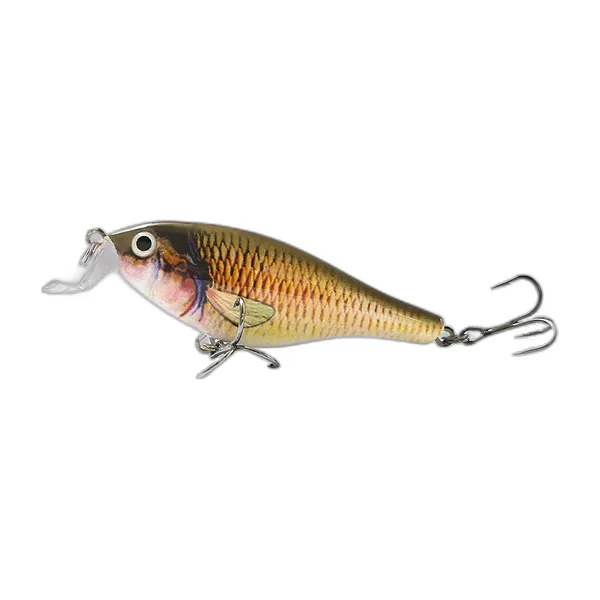 Minnow Crankbaits 8.3 cm, Pack of 5
Suited to: Brown trout, Rainbow trout, Smallmouth bass.
€31.90£17.90Not shipped to the United States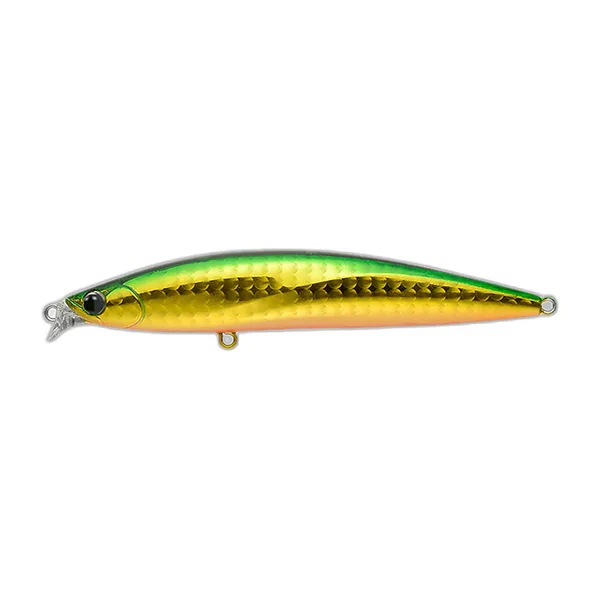 Floating Minnow Crankbaits 9.8 cm, Pack of 5
Suited to: Northern pike, Smallmouth bass, Brown trout, Rainbow trout.
€30.90£16.90Not shipped to the United States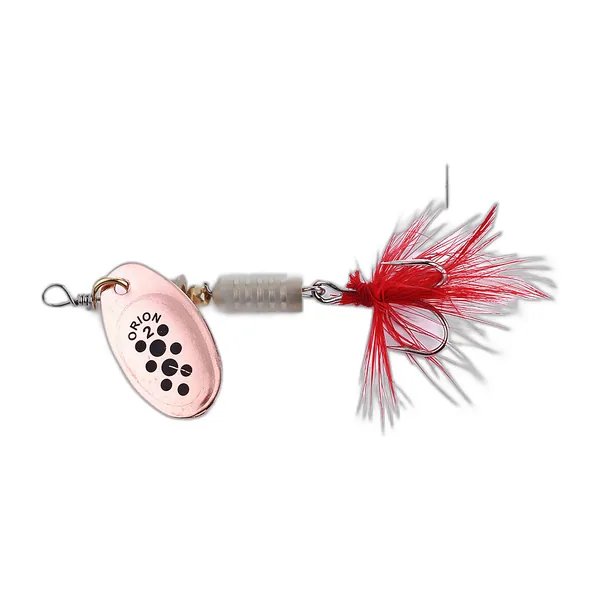 Inline Spinners, Pack of 6
Suited to: Brown trout, Rainbow trout, Chub, Northern pike.
€27.90£14.90Not shipped to the United States
Casting almost nothing
In fly fishing, a weighted fly line carries the cast, not a weight on the end. That lets you present imitations that weigh almost nothing: adult insects on the surface (dry flies), larvae below it (nymphs) and small fish (streamers). It is the classic way to catch trout and grayling, but also salmon, char, bluegill, bass, chub and even pike.
Tackle
A 3-6 weight rod for trout and grayling, heavier for bigger fish; a simple reel; a floating line to start; and a tapered leader ending in fine tippet. Add a small fly box, forceps, a rubber-mesh net, waders and polarised glasses.
Dry flies: fishing what you see
When insects hatch and fish rise, look at what is flying or drifting. Match size first, then silhouette and colour. Position yourself downstream or quartering, cast slightly upstream of the fish and let the fly drift at exactly the speed of the current. Drag, the unnatural skating caused by the line, is enemy number one: a wary fish will refuse a fly that does not drift naturally.
Nymphs: fishing below the surface
Most of the time fish feed underwater. A weighted nymph drifting near the bottom, watched through an indicator or the line tip, is then far more effective. A take shows as a pause, a twitch or a sudden dart: strike whenever in doubt. Tight-line or Euro-nymphing techniques are deadly on grayling and trout in fast rivers.
Releasing fish well
Flies usually hook fish in the lip, which suits catch-and-release. Meka (2004) studied how hook type, angler experience and fish size affected injury rates and capture time in an Alaskan catch-and-release rainbow trout fishery. Schill and Scarpella (1997) concluded that barbless-hook rules are largely a social issue, though barbless hooks do make unhooking easier. Ferguson and Tufts (1992) showed the physiological effect of brief air exposure on exhausted trout: unhook in the water and keep photos short.
Rules
Many waters are fly-only, require a single barbless fly or are catch-and-release. Trout, grayling and salmon seasons often differ, and in England and Wales you need a rod licence covering the species you fish for. Check the regulation page and the beat rules.
The gear, item by item
- 3-6 weight fly rod for trout and grayling, heavier for pike or salmon
- Fly reel with a smooth drag
- Floating line (dries, indicator nymphing) or sinking line
- Tapered leader and fine tippet
- Dry flies, weighted nymphs, emergers, streamers
- Forceps to unhook and crush barbs
- Rubber-mesh net
- Waders and wading boots
- Polarised glasses to spot fish and protect your eyes
Step by step
- Read the water: rises, insects on or in it, holding spots.
- Match what is hatching or drifting (size first, then colour).
- Position yourself downstream or quartering, out of sight.
- Cast slightly upstream of the fish and let the fly drift without drag.
- When nymphing, watch the indicator or line tip and strike at any hesitation.
- Set the hook, play the fish briefly, net it and unhook it in the water.
Common mistakes
- Drag: a fly pulled by the line looks unnatural.
- Being seen or heavy-footed on the bank.
- Tippet too thick for educated fish.
- Over-long fights and photos out of water.
Rules to check before you go
- Fly-only and catch-and-release beats.
- Barbless and single-fly rules on some waters.
- Number of flies allowed on the leader.
- Trout, grayling and salmon seasons and size limits.
Fishing regulations by country
Frequently asked questions
Why fly fish?
Anglers choose fly fishing because it presents very light, lifelike imitations that other methods cannot cast, works well for trout, grayling, bass and panfish, and suits catch-and-release: flies usually hook fish in the mouth, and studies found lower hooking mortality than with bait.
Take Me Fishing describes fly fishing as fulfilling and possible almost anywhere fish live, in streams, lakes and even the ocean, and highlights the satisfaction of catching fish on flies you tie yourself. Beyond the experience, there is a conservation argument. Research on trout shows that bait fishing causes more deep hooking and death than artificial lures and flies: Schill (1996) measured hooking mortality in bait-caught rainbow trout, and DuBois and Kuklinski (2004) compared hook types in active bait fishing for wild stream trout. Meka (2004) found injury rates in a catch-and-release rainbow trout fishery depended on hook type and angler experience. That is why many special-regulation waters are fly-only or artificial-only, such as France's labelled fly stretches. Fly fishing is not always 'better' for catching more fish; its advantages are presentation of small, light imitations and gentler hooking for release.
Official sources : Take Me Fishing (RBFF) – Fly fishing FAQ ; Schill 1996 – hooking mortality of bait-caught rainbow trout, NAJFM ; DuBois & Kuklinski 2004 – hook type and wild stream trout caught by active bait fishing, NAJFM ; Meka 2004 – hook type, angler experience and fish size in a catch-and-release rainbow trout fishery, NAJFM ; Corrèze fishing federation – labelled passion stretches (Vézère fly stretch)
How does fly fishing work?
In fly fishing the weight of the line, not of the lure, carries a very light artificial fly to the fish: the angler casts the line back and forth with a long, flexible fly rod, and a tapered leader and tippet present the fly. Flies imitate insects, nymphs or small fish.
Take Me Fishing explains that fly rods differ from other rods and that, in fly fishing, the line provides the weight that delivers the fly on the cast; larger, more wind-resistant flies need heavier lines. A leader connects the fly line to the fly so it is presented like the insect it imitates, and a tippet at the end helps the fly turn over at the end of the cast. The three basic groups of flies are dry flies, which float, nymphs, fished below the surface, and streamers, which imitate baitfish or leeches. Casting follows a sequence of back and forward strokes; the roll cast suits tight spaces and the haul cast wind. Anglers 'match the hatch', choosing a fly that imitates the insects present. Compared with bait or spinning gear, where the lure's weight pulls the line off the reel, fly casting relies on line weight, which is why rod and line weights must match.
Official sources : Take Me Fishing (RBFF) – Fly fishing FAQ ; Take Me Fishing (RBFF) – Fly fishing rods ; Take Me Fishing (RBFF) – How to choose fly line
When is the best time to go fly fishing?
Fish when insects hatch and fish rise, often early morning and evening, and avoid extreme heat or cold. In rivers, trout move into shallows to feed in early morning or late evening, and overcast days and light rain can improve activity. Legal seasons, especially for trout, depend on local rules.
Take Me Fishing notes that fish generally prefer early morning and evening light to bright midday sun, when surface water warms and fish move deeper, and that extreme water temperatures make them less active. Cloudy skies and light rain often increase feeding, and fishing activity rises before a cold front and drops during and after it. Its fly-fishing guidance adds that stream trout feed in eddies, along weed beds, behind boulders and at the tails of pools, and in early morning or late evening in the shallows, and that rising fish betray feeding. Fly anglers 'match the hatch', so timing follows insect emergence, which varies by river and season; local fly shops are the best source. Legal timing matters too: many trout waters have closed seasons, for example first-category waters in France are open from 14 March to 20 September 2026, and some US waters restrict trout to daylight hours, as in Oregon.
Official sources : Take Me Fishing (RBFF) – Best times to fish ; Take Me Fishing (RBFF) – Where to fly fish ; Take Me Fishing (RBFF) – Fly fishing FAQ ; Génération Pêche (FNPF) – rules to know 2026 ; Oregon Sport Fishing Regulations 2026 – general statewide regulations (ODFW)
What is the best fly fishing rod for a beginner?
Choose a balanced outfit: a rod and line of the same weight. Take Me Fishing says most beginners start with a 5- or 6-weight for trout and panfish, 6 to 8 ft rods for small brushy streams and 9 ft rods for big rivers or saltwater. Bass anglers use 6- to 10-weights.
Take Me Fishing's fly rod guide sets out the criteria. Weight: the line provides the casting weight, so the rod must match the line (a 6-weight rod with a 6-weight line); a 5- or 6-weight is the usual beginner choice because it casts small flies delicately and larger flies at distance; trout anglers use 1- to 8-weights and bass anglers mostly 6- to 10-weights. Length: 6 to 8 ft rods suit small, brush-lined streams; 9 ft rods suit big rivers and saltwater and give easier line control. Material: graphite, fiberglass or bamboo; inexpensive graphite or fiberglass rods may be best for learners. Pieces: 2-piece rods for local fishing, 4-piece travel rods for flying. Buying from a fly shop where staff can help assemble and test the outfit is recommended. There is no official ranking of brands, so we do not name any.
Official sources : Take Me Fishing (RBFF) – Fly fishing rods ; Take Me Fishing (RBFF) – Fly fishing FAQ ; Take Me Fishing (RBFF) – How to choose fly line
Where is the best fly fishing in France?
There is no official ranking, but French federations label 'passion' fly stretches and fly-only no-kill waters, for example on the Risle and Andelle (Eure), the Auvézère gorges (Dordogne), the Vézère (Corrèze), the Eure at Fontenay-sur-Eure and several Cévennes rivers in the Gard such as the Vis and Dourbie.
French departmental federations publish specialised fly waters. Examples from federation pages: in the Eure, the labelled passion fly stretches of Radepont on the Andelle (5.2 km, no-kill) and Henri Langlais on the Risle; in Eure-et-Loir, the Les Chênes site at Fontenay-sur-Eure, a 535 m fly-only no-kill stretch of the Eure; in Dordogne, the Auvézère gorges at Saint-Mesmin, a 1 km passion stretch with compulsory release of salmonids and barbless single hooks; in the Gard, fly-only no-kill stretches on the Arre at Le Vigan, the Vis at Navacelles, the Dourbie, the Hérault at Valleraugue and the Gardon at Alès, Mialet and Saint-André-de-Valborgne; in Corrèze, a Vézère fly stretch; in the Yonne, the Griottier Blanc fly-only reservoir. A fishing card from cartedepeche.fr is required, and first-category waters open from 14 March to 20 September 2026. Salmon fishing is closed in France in 2025 and 2026.
Official sources : Eure fishing federation – interactive map (fly-only no-kill stretches) ; Génération Pêche – Les Chênes site, Fontenay-sur-Eure (fly-only no-kill) ; Dordogne fishing federation – Auvézère gorges passion stretch (catch and release) ; Gard fishing federation – no-kill stretches (fly only) ; Corrèze fishing federation – labelled passion stretches (Vézère fly stretch) ; Yonne fishing federation – labelled stretches (Griottier Blanc fly-only reservoir) ; Génération Pêche (FNPF) – rules to know 2026
Where can you go fly fishing?
Almost anywhere fish live: trout streams, lakes and ponds for trout, bass and panfish, and even saltwater flats. Many authorities also designate fly-only or catch-and-release stretches. Check the local licence, season and method rules for the water you choose.
Take Me Fishing says you can fly fish just about anywhere fish live, in streams and lakes and even in the ocean, and that there is probably a suitable spot close to home. It advises looking for trout in cold water year round, in pools, under banks, behind boulders and at the tails of pools; for bass and pickerel around lily pads, weed beds, docks and logs; for panfish in shallow weedy areas; and for saltwater fish on tidal flats, inlets and beaches. Many agencies create special waters: in France, federations label fly stretches such as the Vézère stretch in Corrèze, the Griottier Blanc reservoir in the Yonne (fly only) or fly-only no-kill stretches on the Risle and Andelle in the Eure; in the Gard, several Cévennes rivers (Arre, Vis, Dourbie, Gardon) have fly-only no-kill stretches. Swiss cantons also reserve some waters for fly fishing. Local fly shops and agency maps help find access.
Official sources : Take Me Fishing (RBFF) – Fly fishing FAQ ; Take Me Fishing (RBFF) – Where to fly fish ; Corrèze fishing federation – labelled passion stretches (Vézère fly stretch) ; Yonne fishing federation – labelled stretches (Griottier Blanc fly-only reservoir) ; Eure fishing federation – interactive map (fly-only no-kill stretches) ; Gard fishing federation – no-kill stretches (fly only) ; Canton of Schwyz – rules for angling in running waters (fly-only waters)
Where is the best fly fishing in the US?
No federal agency ranks fly-fishing waters. Take Me Fishing advises looking close to home for cold trout streams, lakes and ponds, bass and panfish waters, and saltwater flats, and state agencies designate fly-only or catch-and-release waters. Choose by species and check each state's licence and special regulations.
Take Me Fishing, run by the Recreational Boating and Fishing Foundation, says you can fly fish almost anywhere fish live and that there is probably a good spot near you. It describes where to look: trout only in water that stays cold all year, holding in pools, under banks and behind boulders and feeding in eddies and riffles; bass and pickerel around lily pads, weed beds and docks; panfish in shallow weedy water; and saltwater species such as bonefish, redfish and tarpon on the tidal flats of Texas and Florida. State agencies manage special trout waters with gear rules; Oregon, for example, restricts some rivers to artificial flies or lures with a single-point hook and limits trout fishing to daylight hours. Because state rules and species differ widely, start from your state wildlife agency's regulations and maps, and ask local fly shops, which Take Me Fishing calls the best local source.
Official sources : Take Me Fishing (RBFF) – Where to fly fish ; Take Me Fishing (RBFF) – Fly fishing FAQ ; Take Me Fishing (RBFF) – Fly fishing for beginners ; Oregon Sport Fishing Regulations 2026 – general statewide regulations (ODFW)
Is fly fishing hard to learn?
It takes more practice than basic bait fishing, mainly because of casting, but Take Me Fishing says beginners can learn it with the right gear and a few basics. Practise casting on a lawn, take a lesson, and start with a balanced 5- or 6-weight outfit.
Take Me Fishing's beginner guide rejects the idea that fly fishing is too difficult for beginners: with a rod, reel and fly line, quality beginner gear and a few lessons, it says starting can be easy. Its practical tips: practise one or two casts in a backyard before going to the water, because learning to cast while trying to catch fish is frustrating; ask local fly shops about the water; watch water levels and footing; and cast upstream, working seams and structure where trout hold. Its FAQ breaks casting into five steps and explains the roll cast for tight spaces and the haul cast for wind. Its rod guide notes that most people start with a 5-weight for trout and panfish, and that a 5- or 6-weight is the usual beginner choice. French federations also organise introductions to fly fishing, as the Cher federation's 2026 guide shows. For release, handle fish with wet hands and land them quickly.
Official sources : Take Me Fishing (RBFF) – Fly fishing for beginners ; Take Me Fishing (RBFF) – Fly fishing FAQ ; Take Me Fishing (RBFF) – Fly fishing rods ; Cher fishing federation – 2026 guide (fly-fishing introductions)
Is fly fishing expensive?
It can be done on a modest budget: Take Me Fishing says inexpensive graphite or fiberglass rods may suit beginners, and many beginner rod, reel and line outfits come pre-matched. Costs rise with high-end rods, waders, travel and guides. A licence is needed in any case.
Take Me Fishing's rod guide notes that inexpensive graphite or fiberglass rods may be the best choice for beginners, that more expensive rods offer better materials and workmanship, and that 'you get what you pay for', especially for saltwater rods. It adds that a rod, reel and fly line are all a beginner really needs, and that most beginner outfits have the line and rod already matched. Its general costs page says basic freshwater rod and reel combos can cost about $30 to $40, but fly outfits are not priced there, so we give no figure for fly gear. Other costs are optional or situational: waders if you fish from the water, flies (which you can tie yourself), day tickets on private or club waters, and guided trips. Licence fees depend on the state or country; many US states offer free fishing days. The real investment is often time spent learning to cast.
Official sources : Take Me Fishing (RBFF) – Fly fishing rods ; Take Me Fishing (RBFF) – Fly fishing for beginners ; Take Me Fishing (RBFF) – What to know about fishing costs ; Take Me Fishing (RBFF) – Fly fishing FAQ
What fly line do I need?
Match the line weight to your rod (a 5-weight rod takes a 5-weight line). For most beginners a bright floating line is easiest, since it works with dry flies and some wet flies. Take Me Fishing suggests about a 5-weight for trout, lighter for panfish and 10 to 15 for big saltwater fish.
Take Me Fishing explains that fly lines are rated by weight on a scale from 1 to 14 or sometimes 15. The simplest approach is to start from your equipment: the rod and reel specifications (for example a 4-weight rod or a 4/5/6 reel) tell you the matching line weight, and matching exactly is safest while learning. By species, it gives examples: as light as a 1-weight for panfish, a 5-weight for trout, and 10 to 15 for large saltwater fish such as tuna or marlin. Density matters next: a floating line is the popular beginner choice because it is easy to use with dry flies and some wet flies, and a bright colour helps you see it on the water, while darker colours are used for sinking lines, which take flies deeper. You also need backing on the reel and a leader and tippet between line and fly. Personal casting feel may lead you to a slightly lighter or heavier line later.
Official sources : Take Me Fishing (RBFF) – How to choose fly line ; Take Me Fishing (RBFF) – Fly fishing rods ; Take Me Fishing (RBFF) – Fly fishing FAQ
What is a nymph in fly fishing?
A nymph is a fly that imitates the underwater larval stage of aquatic insects, fished below the surface where fish feed most of the time. It is one of the three basic fly groups, with dry flies (surface) and streamers (baitfish imitations). A strike indicator often shows the take.
Take Me Fishing lists three basic groups of fly patterns: dry flies, which float and are fished on the surface; nymphs, fished beneath the surface; and streamers, which imitate small baitfish or leeches. It describes 'nymphing trout' as fish eating nymphs below the surface, which you can spot by looking into the water with polarized glasses, whereas rising trout leave riseforms on the surface. Because takes on a sunken nymph are hard to feel, fly anglers often add a strike indicator, described by Take Me Fishing as a small piece of yarn that acts as a micro bobber, and a floating line can help hold the nymph at the desired drifting depth. Fly anglers choose patterns by 'matching the hatch', imitating the insects abundant in the water, and local fly shops know which nymphs work. Barbless hooks are required on many special trout waters, which suits the frequent catch-and-release fishing with nymphs.
Official sources : Take Me Fishing (RBFF) – Fly fishing FAQ ; Take Me Fishing (RBFF) – Where to fly fish ; Take Me Fishing (RBFF) – Traditional fishing floats: the bobber
Studies cited
- Meka (2004) The Influence of Hook Type, Angler Experience, and Fish Size on Injury Rates and the Duration of Capture in an Alaskan Catch-and-Release Rainbow Trout Fishery North American Journal of Fisheries Management doi:10.1577/m03-108.1
Examines how hook type, angler experience and fish size affect injury rates and capture time in an Alaskan catch-and-release rainbow trout fishery. - Schill & Scarpella (1997) Barbed Hook Restrictions in Catch-and-Release Trout Fisheries: A Social Issue North American Journal of Fisheries Management doi:10.1577/1548-8675(1997)017<0873:bhrica>2.3.co;2
Analyses barbless-hook restrictions in catch-and-release trout fisheries and concludes they are largely a social issue. - Ferguson & Tufts (1992) Physiological Effects of Brief Air Exposure in Exhaustively Exercised Rainbow Trout (Oncorhynchus mykiss): Implications for "Catch and Release" Fisheries Canadian Journal of Fisheries and Aquatic Sciences doi:10.1139/f92-129
Shows the physiological effect of brief air exposure on exhausted trout: the basis for keeping fish in the water.