Grayling
Thymallus thymallus
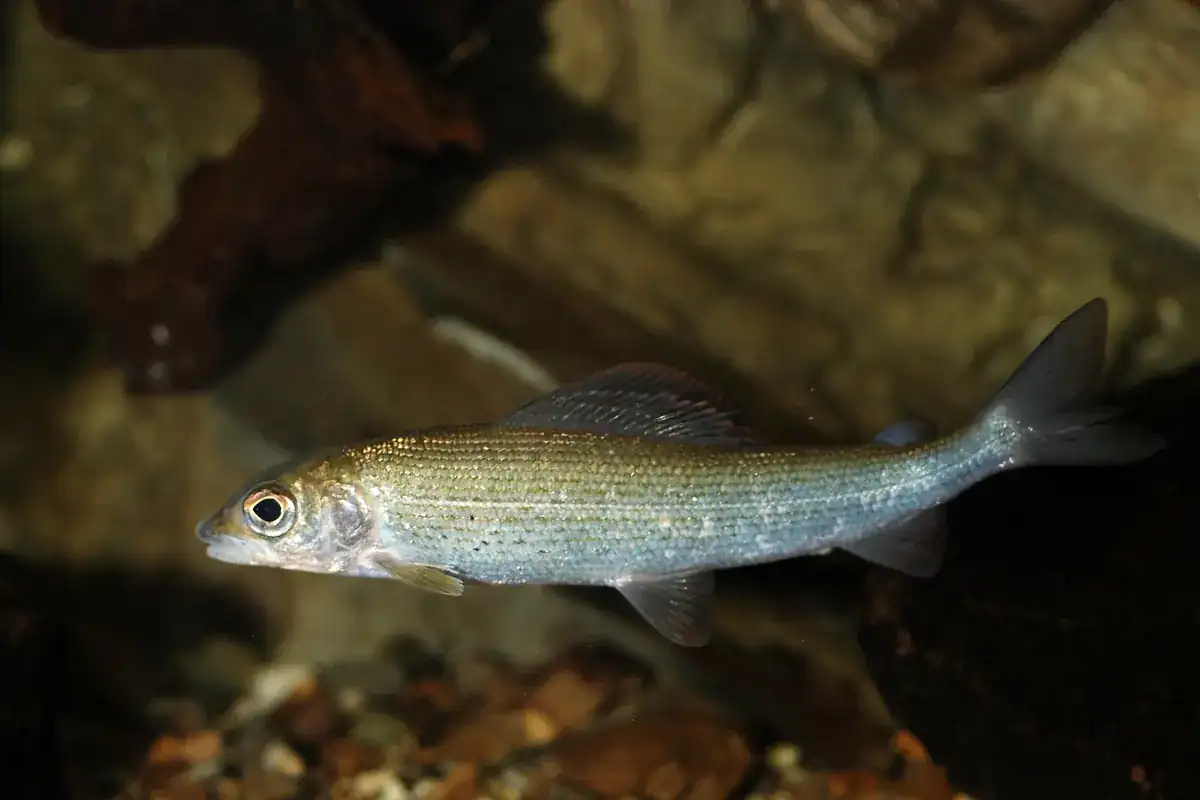

Very sensitive to pollution and warming; declining in many rivers and locally protected.
Related gear
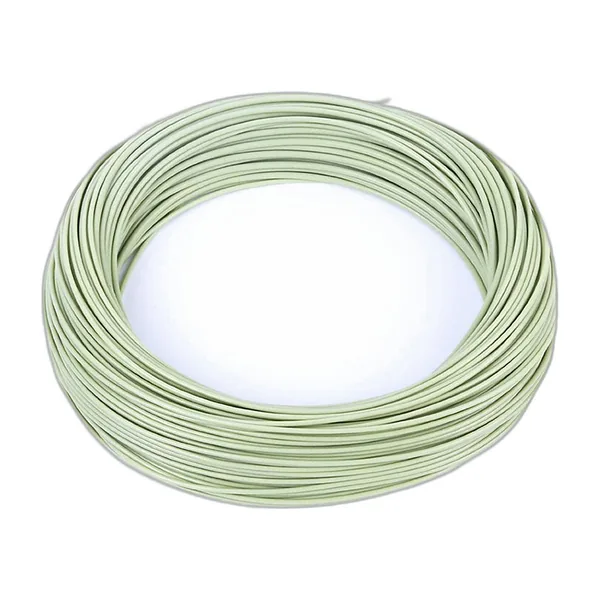 Floating weight-forward fly line, 30 m
Suited to: Grayling.
€27.90£13.90Not shipped to the United States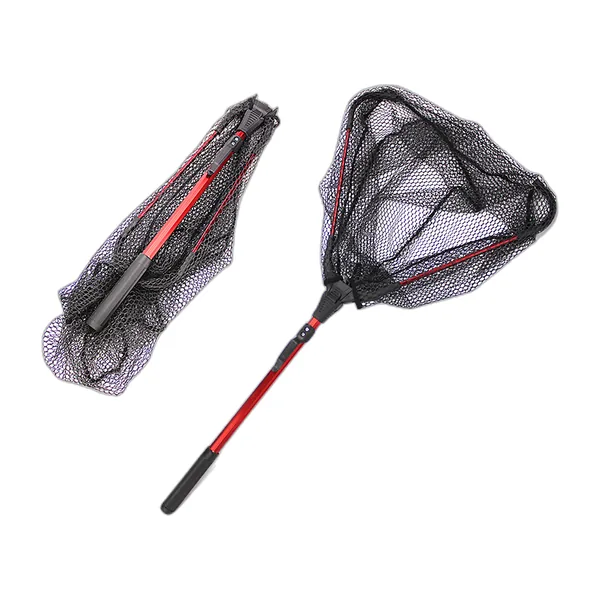 Folding Triangle Landing Net, 47 cm Folded
For: Fly fishing (dry fly and nymph), Float fishing (waggler and stick float).
€37.90£18.90Not shipped to the United States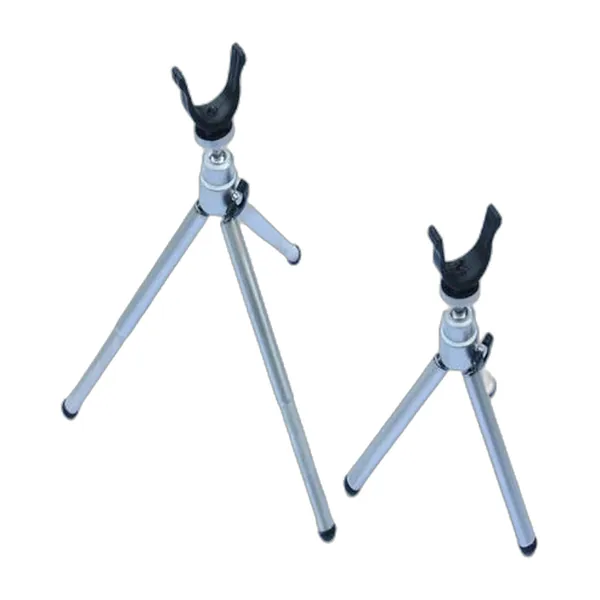 Small Folding Aluminium Rod Tripods, Pack of 2
For: Float fishing (waggler and stick float).
€26.90£13.90Not shipped to the United States
The lady of the stream
The European grayling, easy to recognise by its large sail-like dorsal fin, is a salmonid of sub-montane rivers. FishBase describes it in cold, fast, well-oxygenated water over hard sand or stone, often holding behind boulders or in the shade of overhanging vegetation. Unlike trout, grayling live in shoals: if you see one rising, others are probably nearby. They are very sensitive to pollution, which makes them a good indicator of river health.
Sizes
Common length is 30 cm (11.8 in); the maximum published is 60 cm (23.6 in) and 6.7 kg (14.8 lb), with a maximum age of 14 years (FishBase). A grayling over 40 cm (16 in) is an outstanding fish.
A spring spawner
Grayling spawn in spring on shallow riffles 20-40 cm (8-16 in) deep, with moderate current and clean gravel (FishBase). That is why grayling seasons often differ from trout seasons on rivers where both live. In England and Wales, grayling are treated as a coarse fish, so the river close season applies to them. Elsewhere, dates and minimum sizes vary by country and region, and some rivers are catch-and-release only. Check the regulation page for your river.
Where and when
Grayling feed mainly on insects, nymphs, small worms and crustaceans. They tend to hold in even glides over gravel, often further out in the river than trout. Their big advantage is that they keep feeding in cold water: autumn and early winter can be superb, especially in the middle of the day. In summer, evening hatches are best, as long as the water stays cool.
Methods
Small dry flies on fine tippets are the classic approach. Euro-nymphing with weighted nymphs drifting close to the bottom is deadly in deeper runs. Where bait is allowed, maggots trotted under a stick float are a traditional British winter method.
Releasing grayling
Grayling are more delicate than trout. Pinder and colleagues (2019) studied how temperature affects the physiological status and reflexes of released grayling; when the water is warm, it is better not to target them. Use barbless hooks, unhook the fish in the water without squeezing and release it in slack water. Northcote's (1995) review covers grayling biology and management in depth.
Lures and baits
- Small dry flies
- Weighted nymphs, Euro-nymphing
- Wet flies
- Maggots or larvae trotted where bait is allowed
Catch and release
- Small barbless hooks.
- Grayling are delicate: unhook in the water and do not squeeze.
- Avoid targeting grayling when water is warm in summer.
- Release in slack water, head upstream.
Frequently asked questions
Can you eat grayling?
Yes, grayling are edible, and Take Me Fishing calls Arctic grayling a superb sport and food fish with firm white flesh. But limits are strict: in England and Wales you may keep only 2 grayling a day from rivers, between 30 and 38 cm. US states count grayling within trout limits, such as 4 combined in Colorado and Utah.
European grayling (Thymallus thymallus): in England, GOV.UK allows anglers to take up to 2 grayling per day from rivers, each between 30 and 38 cm; fish outside that slot must be returned. Wales applies the same limit (NRW). The species is sensitive: FishBase says it is very sensitive to pollution. The Canal & River Trust notes grayling are more sensitive to pollution and rising water temperature than salmon and trout, which is why many anglers release them. Arctic grayling (Thymallus arcticus): Take Me Fishing calls it 'a superb sport and food fish' whose firm, white flesh has a uniquely delicate flavour. FishBase notes it is used fresh and can be fried, broiled, boiled and baked. US limits: Colorado counts grayling in its aggregate of 4 trout, char, grayling, salmon and whitefish a day. Utah allows 4 trout, kokanee and Arctic grayling combined. Alaska and other states set their own rules. We give no cooking advice; check local consumption advisories if any apply.
Official sources : GOV.UK — Freshwater rod fishing rules: fish size and catch limits ; Natural Resources Wales — Minimum fish size and catch limits ; FishBase — Thymallus thymallus (species summary) ; Canal & River Trust — Grayling (freshwater fish species) ; Take Me Fishing (RBFF) — Arctic Grayling ; FishBase — Thymallus arcticus (species summary) ; Colorado Parks and Wildlife — 2026-27 fishing brochure ; Utah Division of Wildlife Resources — 2026 fishing guidebook
How big do grayling get?
FishBase lists European grayling at a common length of 30 cm and a maximum of 60 cm, 6.7 kg and 14 years; the Canal & River Trust says they are rarely over 2 lb, with a record of 4 lb 4 oz 8 dr. Arctic grayling reach up to 76 cm and 3.8 kg according to FishBase.
European grayling (Thymallus thymallus): FishBase lists a common length of 30 cm, a maximum of 60 cm, a maximum published weight of 6.7 kg and a maximum reported age of 14 years. In Britain, the Canal & River Trust gives a typical size of 30 cm, notes they are rarely over 2 lb and lists a record weight of 4 lb 4 oz 8 dr, with a lifespan of 8-14 years. Arctic grayling (Thymallus arcticus): FishBase gives a common length of 34.3 cm, a maximum of 76 cm, 3.8 kg and 18 years. Size rules: in England and Wales, a kept grayling must measure between 30 and 38 cm, 2 per day on rivers (GOV.UK, NRW). Across Europe minimum sizes vary, for example 30 cm in France, 28 cm under Swiss federal law and 35 cm in Bavaria. US states usually include grayling within trout limits. Males have brighter red fins; both sexes carry the large sail-like dorsal fin (Canal & River Trust).
Official sources : FishBase — Thymallus thymallus (species summary) ; Canal & River Trust — Grayling (freshwater fish species) ; FishBase — Thymallus arcticus (species summary) ; GOV.UK — Freshwater rod fishing rules: fish size and catch limits ; Natural Resources Wales — Minimum fish size and catch limits ; France — Code de l'environnement, art. R436-18 (minimum sizes) ; Switzerland — Ordinance on fishing (VBGF), minimum sizes ; Bavaria — fisheries law (minimum sizes)
How do you catch grayling?
The Canal & River Trust says fly fishing is the preferred tactic for grayling, and they can also be caught trotting a stick float with maggots, worms or bread. FishBase notes natural bait such as insect larvae or an artificial fly. Look in cool, fast, clean rivers such as the Severn and Calder.
The Canal & River Trust describes the grayling as a river fish of fast, clean water, mainly in upper reaches, tolerating clean middle reaches. It says fly fishing is the preferred tactic, and that grayling can also be caught with stick float tactics and traditional baits like maggots, worms and bread. It names the River Severn and River Calder as holding good populations. FishBase adds that grayling can be captured with natural bait (insect larvae) or an artificial fly. It notes they feed mainly on insects, nymphs, small worms and crustaceans and live in hollows behind boulders and shaded water under overhanging vegetation, often in schools. For Arctic grayling, Take Me Fishing says they are primarily taken by fly fishing, and lists flies, plugs, spoons, insects and spinner baits. Handling: grayling are sensitive to heat; a study shows temperature affects their physiology and reflex impairment after capture (Pinder et al. 2019). Release them quickly in the water. Rules: in England and Wales, only 2 grayling a day between 30 and 38 cm may be kept from rivers.
Official sources : Canal & River Trust — Grayling (freshwater fish species) ; FishBase — Thymallus thymallus (species summary) ; Take Me Fishing (RBFF) — Arctic Grayling ; Pinder et al. 2019, Temperature effects on the physiological status and reflex impairment in European grayling Thymallus thymallus from catch-and release angling, Fisheries Research ; GOV.UK — Freshwater rod fishing rules: fish size and catch limits
What is the best bait for grayling?
The Canal & River Trust lists maggots, worms and bread fished on a stick float, and FishBase notes insect larvae as natural bait. No source ranks baits. Many grayling rivers are fly-only or restrict bait, so check the fishery rules first.
The Canal & River Trust says grayling can be caught with stick float tactics and traditional baits like maggots, worms and bread, although fly fishing is the preferred method. FishBase states that grayling can be captured with natural bait (insect larvae) or an artificial fly. It describes a diet mainly of insects, nymphs, small worms and crustaceans; the Trust lists shrimp, midge and caddis fly larvae. No official source ranks baits, so we do not name one best bait. Many rivers holding grayling are managed as game fisheries where bait is restricted or only fly fishing is allowed; read the permit conditions. Grayling are sensitive to warm water and pollution (FishBase, Canal & River Trust). A study reports that temperature affects their physiological state and reflex impairment after angling (Pinder et al. 2019), so unhook them in the water and release quickly. England and Wales: you may keep at most 2 grayling a day from rivers, only between 30 and 38 cm.
Official sources : Canal & River Trust — Grayling (freshwater fish species) ; FishBase — Thymallus thymallus (species summary) ; Pinder et al. 2019, Temperature effects on the physiological status and reflex impairment in European grayling Thymallus thymallus from catch-and release angling, Fisheries Research ; GOV.UK — Freshwater rod fishing rules: fish size and catch limits
Is a grayling a trout?
No. Grayling belong to the same family as trout and salmon (salmonids) and share the small adipose fin, but they are a separate genus, Thymallus, while trout belong to Salmo, Oncorhynchus and Salvelinus. The Canal & River Trust and Take Me Fishing both describe grayling as members of the salmon family.
The Canal & River Trust lists the grayling's family as salmonid and notes that, like all salmonids, it has an adipose fin, a small fleshy fin between the dorsal fin and the tail. Take Me Fishing says the small adipose fin behind the sail-like dorsal fin identifies the Arctic grayling as a member of the salmon family. Grayling are nonetheless not trout: the European grayling is Thymallus thymallus and the Arctic grayling Thymallus arcticus. Trout belong to other genera: brown trout is Salmo trutta and rainbow trout is Oncorhynchus mykiss (FishBase). A scientific review compares the biology and management of Arctic and European grayling (Northcote 1995). Grayling are recognised by their huge, colourful sail-like dorsal fin, large scales, small head and underslung mouth (Canal & River Trust). Rules can differ from trout: in England and Wales, grayling are covered by a specific river limit of 2 a day between 30 and 38 cm. Wales groups grayling with coarse fish for its size and removal rules. In the US, grayling are often counted within trout limits.
Official sources : Canal & River Trust — Grayling (freshwater fish species) ; Take Me Fishing (RBFF) — Arctic Grayling ; FishBase — Thymallus thymallus (species summary) ; FishBase — Thymallus arcticus (species summary) ; FishBase — Salmo trutta (species summary) ; FishBase — Oncorhynchus mykiss (species summary) ; Northcote 1995, Comparative biology and management of Arctic and European grayling (Salmonidae, Thymallus), Reviews in Fish Biology and Fisheries ; GOV.UK — Freshwater rod fishing rules: fish size and catch limits ; Natural Resources Wales — Minimum fish size and catch limits ; Colorado Parks and Wildlife — 2026-27 fishing brochure
What is the best lure for grayling?
The Canal & River Trust and FishBase both point to the artificial fly as the classic method for European grayling; small nymphs and insect imitations match their diet. For Arctic grayling, Take Me Fishing lists flies, plugs, spoons and spinner baits. No official source ranks specific lures.
European grayling (Thymallus thymallus) feed mainly on insects, nymphs, small worms and crustaceans (FishBase). The Canal & River Trust says fly fishing, with a hook dressed to resemble an insect, is the preferred tactic for this game fish, and FishBase lists the artificial fly as a capture method. We found no source recommending spinning lures for European grayling or ranking fly patterns, so we do not name one best lure. Some grayling waters are fly-only. For Arctic grayling (Thymallus arcticus), Take Me Fishing lists flies, plugs, spoons, insects and spinner baits, and says the species is primarily taken by fly fishing. FishBase notes adults feed mainly on surface insects, which explains the effectiveness of dry flies. Handle grayling gently: they are sensitive to temperature and pollution (Canal & River Trust), and warm water worsens their post-release condition (Pinder et al. 2019). In England and Wales, grayling kept from rivers must be 30-38 cm, 2 a day.
Official sources : FishBase — Thymallus thymallus (species summary) ; Canal & River Trust — Grayling (freshwater fish species) ; Take Me Fishing (RBFF) — Arctic Grayling ; FishBase — Thymallus arcticus (species summary) ; Pinder et al. 2019, Temperature effects on the physiological status and reflex impairment in European grayling Thymallus thymallus from catch-and release angling, Fisheries Research ; GOV.UK — Freshwater rod fishing rules: fish size and catch limits
What do grayling eat?
FishBase says European grayling feed mainly on insects, nymphs, small worms and crustaceans; the Canal & River Trust lists shrimp, midge and caddis fly larvae. Arctic grayling adults feed mainly on surface insects but also take fish, fish eggs, lemmings and plankton (FishBase).
European grayling (Thymallus thymallus): FishBase states that it feeds mainly on insects, nymphs, small worms and crustaceans. The Canal & River Trust lists its diet as shrimp, midge and caddis fly larvae, and describes grayling easily negotiating fast currents as they search for small invertebrates. They live in schools in hollows behind boulders and in shaded water under overhanging vegetation, in cold, fast, well-oxygenated rivers (FishBase). Arctic grayling (Thymallus arcticus): FishBase says young fish feed on zooplankton and shift gradually to immature insects. Adults feed mainly on surface insects but also take fishes, fish eggs, lemmings and planktonic crustaceans. This diet is why fly fishing is the classic method for both species (Canal & River Trust; Take Me Fishing), with small nymphs, insect imitations and surface flies. Bait anglers use maggots, worms or bread on a stick float, according to the Canal & River Trust.
Official sources : FishBase — Thymallus thymallus (species summary) ; Canal & River Trust — Grayling (freshwater fish species) ; FishBase — Thymallus arcticus (species summary) ; Take Me Fishing (RBFF) — Arctic Grayling
When is the best time to fish for grayling?
Grayling spawn in spring (March to May, according to the Canal & River Trust), which is why many rivers protect them then. In England and Wales, the river close season for coarse fish runs from 15 March to 15 June; Wales groups grayling with coarse fish. They are cold-water fish, sensitive to warm water.
Spawning: the Canal & River Trust says grayling spawn between March and May, with females laying eggs in gravel beds that hatch in 3-4 weeks depending on temperature. FishBase notes they breed on shallow riffles 20-40 cm deep with moderate current and clean gravel. Legal seasons: in England and Wales, coarse fish in rivers may not be fished from 15 March to 15 June inclusive (GOV.UK). Natural Resources Wales groups grayling with coarse fish in its rules. Local byelaws and fishery rules may set specific dates for grayling, so read them before fishing. Temperature: FishBase lists a range of 6-18 °C and describes grayling as a fish of cold, fast, well-oxygenated water. The Canal & River Trust says they are more sensitive to rising water temperatures than salmon and trout. A study shows temperature affects their stress and reflex impairment after capture (Pinder et al. 2019), so avoid hot spells. No official source names the best month, so we do not state one. US Arctic grayling seasons follow each state's trout rules.
Official sources : Canal & River Trust — Grayling (freshwater fish species) ; FishBase — Thymallus thymallus (species summary) ; GOV.UK — Freshwater rod fishing rules: when and where you can fish ; Natural Resources Wales — Minimum fish size and catch limits ; Pinder et al. 2019, Temperature effects on the physiological status and reflex impairment in European grayling Thymallus thymallus from catch-and release angling, Fisheries Research
How long do grayling live?
FishBase gives a maximum reported age of 14 years for European grayling and 18 years for Arctic grayling. The Canal & River Trust gives a typical lifespan of 8-14 years, with males maturing at 2-3 years and females at 3-5 years.
European grayling (Thymallus thymallus): FishBase lists a maximum reported age of 14 years. The Canal & River Trust gives a lifespan of 8-14 years and explains the life cycle. Grayling spawn between March and May, females lay eggs in gravel beds, and eggs hatch in 3-4 weeks depending on temperature. Larvae grow rapidly in the first year, males mature at two to three years and females at three to five. Arctic grayling (Thymallus arcticus): FishBase lists a maximum reported age of 18 years, with first maturity at about 24.5 cm. Survival in a given river depends heavily on water quality and temperature. The Canal & River Trust notes grayling live only in cool, clear, well-oxygenated rivers and are more sensitive to pollution and rising temperatures than salmon and trout. It warns that climate change may make some waters unsuitable. Because they are long-lived and sensitive, many anglers release grayling. In England and Wales, only 2 per day between 30 and 38 cm may be kept from rivers.
Official sources : FishBase — Thymallus thymallus (species summary) ; Canal & River Trust — Grayling (freshwater fish species) ; FishBase — Thymallus arcticus (species summary) ; GOV.UK — Freshwater rod fishing rules: fish size and catch limits
Where can you fish for grayling?
European grayling live in cool, clean, fast rivers; in Britain the Canal & River Trust says they are most common in rivers of the Midlands, northern England and parts of Wales, especially the Severn and Calder. Arctic grayling are best fished in Alaska and northern Canada, with small populations in Montana and other western states.
Great Britain: the Canal & River Trust says grayling are native to the UK and live in cool, clean rivers and streams with fast-flowing water. They are most commonly found in rivers across the Midlands, the north of England and parts of Wales, and are particularly abundant in the River Severn and River Calder. They are found mainly in upper reaches and tolerate clean middle reaches, occasionally some canals; their presence indicates healthy water. You need an Environment Agency rod licence (England and Wales) and a permit from the fishery. North America: Take Me Fishing says Arctic grayling range from Hudson Bay through northern and central Canada to Alaska and Siberia. Small natural populations occur in Montana and Idaho, and very small transplanted populations in Vermont, Wyoming, Colorado, Utah, Arizona, Nevada and California. The best fishing is in Alaska and northern Canada. Good lies include outsides of bends, eddies, undercuts, boulder pockets and current edges. US states set licences and limits.
Official sources : Canal & River Trust — Grayling (freshwater fish species) ; GOV.UK — Buy a fishing licence ; Take Me Fishing (RBFF) — Arctic Grayling ; FishBase — Thymallus thymallus (species summary)
What size hook do you need for grayling?
No official source gives a hook size for grayling. They have a small, underslung mouth (Canal & River Trust) and feed on small insects and larvae (FishBase), so anglers use small flies and hooks. Barbless hooks make release easier for this sensitive fish.
We found no agency or study specifying a hook size for grayling, so we give no number. The relevant facts: the Canal & River Trust describes a small head with an underslung mouth. It recommends fly fishing or stick float fishing with maggots, worms or bread, while FishBase lists a diet of insects, nymphs, small worms and crustaceans. Small baits and flies therefore call for small hooks. Grayling are sensitive fish: the Canal & River Trust notes they are more sensitive to pollution and rising temperatures than salmon and trout. A study found that temperature affects their physiology and reflex impairment after angling (Pinder et al. 2019). Research on trout shows that hook type changes injury and mortality (DuBois and Dubielzig 2004), supporting barbless or single hooks when releasing fish. Many grayling fisheries require barbless hooks; check the permit conditions. England and Wales: at most 2 grayling a day from rivers, only between 30 and 38 cm.
Official sources : Canal & River Trust — Grayling (freshwater fish species) ; FishBase — Thymallus thymallus (species summary) ; Pinder et al. 2019, Temperature effects on the physiological status and reflex impairment in European grayling Thymallus thymallus from catch-and release angling, Fisheries Research ; DuBois & Dubielzig 2004, Effect of Hook Type on Mortality, Trauma, and Capture Efficiency of Wild Stream Trout Caught by Angling with Spinners, North American Journal of Fisheries Management ; GOV.UK — Freshwater rod fishing rules: fish size and catch limits
Minimum size for Grayling by area
France : 30–38 cm (97)
Luxembourg : 35 cm (2)
Germany : 30–35 cm (15)
| Baden-Württemberg | 30 cm |
| Bayern | 35 cm |
| Berlin | 30 cm |
| Brandenburg | 30 cm |
| Freie Hansestadt Bremen | 35 cm |
| Hessen | 30 cm |
| Mecklenburg-Vorpommern | 30 cm |
| Niedersachsen | 30 cm |
| Nordrhein-Westfalen | 30 cm |
| Rheinland-Pfalz | 30 cm |
| Saarland | 30 cm |
| Sachsen | 35 cm |
| Sachsen-Anhalt | 30 cm |
| Schleswig-Holstein | 35 cm |
| Thüringen | 35 cm |
Austria : 30–42 cm (9)
| Burgenland | 30 cm |
| Kärnten | 35 cm |
| Niederösterreich | 30 cm |
| Oberösterreich | 30 cm |
| Salzburg | 33 cm |
| Steiermark | 32 cm |
| Tirol | 42 cm |
| Vorarlberg | 35 cm |
| Wien | 30 cm |
Italy : 20–60 cm (8)
Slovenia : 30 cm (1)
Switzerland : 28–40 cm (17)
Studies cited
- Northcote (1995) Comparative biology and management of Arctic and European grayling (Salmonidae, Thymallus) Reviews in Fish Biology and Fisheries doi:10.1007/bf00179755
Review comparing the biology and management of Arctic and European grayling: habitat, reproduction and population management. - Pinder et al. (2019) Temperature effects on the physiological status and reflex impairment in European grayling Thymallus thymallus from catch-and release angling Fisheries Research doi:10.1016/j.fishres.2018.11.014
Studies how water temperature affects the physiological status and reflex impairment of grayling after catch-and-release: a reason to avoid fishing warm water.
Official sources
- FishBase – Thymallus thymallus (fiche espèce ; statut IUCN Red List 2025-2 repris par FishBase) (accessed on 23 September 2026)