Responsible fishing
Respecting sizes and spawning seasons, releasing fish unharmed, knowing protected species: what the rules and the studies say.
Spawning period
Minimum sizes and closed seasons exist so that every fish can spawn at least once. Species by species, here is when spawning happens and why the rules close fishing at that time.
Northern pike Esox lucius
Late winter to early spring, shortly after ice-out, over shallow vegetation and flooded meadows. Timing depends on latitude and water temperature.
Spawners gather in shallow water and are very easy to catch; closed seasons protect reproduction. Many countries and regions have a specific pike (or predator) closed season over this period.
Zander Sander lucioperca
April-May, exceptionally from late February to July depending on latitude and altitude, when water on the spawning grounds reaches 10-14 °C (50-57 °F). The male guards the nest.
The male guards the eggs; if he is caught, the nest is quickly raided. Predator closed seasons usually cover this period.
European perch Perca fluviatilis
February to July depending on region (FishBase); eggs are laid in long white ribbons over submerged objects.
Perch often have no specific closed season, but predator closures or lure bans in spring may apply in some countries.
Brown trout Salmo trutta
Autumn to early winter on gravel in flowing water, where the female cuts a nest (redd); fry stay in the gravel for weeks after hatching.
The winter closure protects spawners on the redds and eggs in the gravel; anglers should also avoid wading over redds.
Rainbow trout Oncorhynchus mykiss
In its native range, late winter to spring after short spawning migrations. Outside it, many populations are maintained by stocking.
In Europe it usually follows trout-water rules; some stocked lakes and put-and-take fisheries are open all year. In North America seasons protect wild spawners.
Grayling Thymallus thymallus
Spring, on shallow riffles about 20-40 cm (8-16 in) deep with moderate current and clean gravel (FishBase).
Unlike trout, grayling spawn in spring, so grayling seasons often open later than trout seasons (in the UK they follow the coarse-fish calendar on rivers).
Atlantic salmon Salmo salar
Autumn to winter on river gravels; young stay 1-6 years in fresh water, then 1-4 years at sea (FishBase).
Seasons protect spawners at the end of their migration and on the redds; quotas and tagging cap the harvest of a declining species.
Largemouth bass Micropterus salmoides
Spring to summer, when water reaches about 15 °C (59 °F); the male builds a nest in shallow water and guards and fans the eggs for about 29 days (FishBase).
Nest-guarding males strike anything near the nest, so they are easy to catch, and every male removed leaves the brood exposed to predators.
Common carp Cyprinus carpio
Late spring to summer in warm water along shores, backwaters and flooded meadows; larvae survive only in very warm, shallow, weedy water (FishBase).
Carp often have no specific closed season on stillwaters, but river close seasons (e.g. England and Wales) and local rules protect spawning fish.
Grass carp Ctenopharyngodon idella
In its native range, on gravel river beds with very strong current; eggs drift for 2-3 days before hatching. It rarely reproduces in most introduced waters, where populations come from stocking.
No spawning-related closure in most introduced ranges; general water rules apply.
Wels catfish Silurus glanis
Late spring to summer in warm water; the male builds a nest of plant material or cleans willow roots and guards it until the larvae emerge. Eggs hatch in 2-3 days (FishBase).
In its native range, closed seasons protect nest-guarding males; FishBase notes local declines where river engineering destroys shallow spawning sites.
Roach Rutilus rutilus
Spring, in shoals, among dense vegetation in backwaters and lakes, on flooded meadows or over gravel in fast water; sticky eggs hatch in about 12 days (FishBase).
Usually no species-specific closure; in England and Wales the coarse-fish river close season covers its spawning.
Common bream Abramis brama
Spring, in backwaters, floodplains and densely vegetated lake shores; some populations migrate long distances. Often hybridises with roach (FishBase).
Usually no species-specific closure; the England and Wales coarse river close season applies.
Tench Tinca tinca
May to September depending on latitude, at 19-20 °C (66-68 °F); spawns every 1-5 days for about two months, laying sticky green eggs on plants (FishBase).
Usually no specific closure; because spawning is spread through summer, avoid disturbing shallow weedy spawning areas.
Chub Squalius cephalus
Spring, in fast water over gravel; females spawn more than once per season with several males, often with a lot of splashing (FishBase).
No species-specific closure in most places; in England and Wales the river coarse close season covers spawning.
Barbel Barbus barbus
May to July after an upstream migration, on very shallow, fast riffles; the eggs are poisonous (FishBase).
Barbel concentrate on shallow spawning riffles; in England and Wales the river close season (15 March-15 June) covers most of this period.
European eel Anguilla anguilla
Never observed; believed to occur only in the Sargasso Sea, probably March to June. Adults (silver eels) leave rivers mainly in the second half of the year on dark nights; they spawn once and die (FishBase).
Every silver eel that fails to reach the sea is a lost spawner for a critically endangered species; hence bans on silver-eel and glass-eel fishing and, often, on any eel fishing.
Walleye Sander vitreus
Early spring, soon after ice-out, in small groups that move into shallow water at night; eggs are usually deposited in a single night (FishBase).
Spawners concentrate on spawning areas, so most states and provinces close walleye season in spring until the opener.
Muskellunge Esox masquinongy
Spring, as the ice melts (FishBase), usually a little after northern pike.
Late openers protect spawners and post-spawn recovery; minimum sizes are often very high to protect a slow-growing trophy species.
Smallmouth bass Micropterus dolomieu
Spring; the male builds a nest on sand, gravel or rock, often at three to four feet deep and within 150 yards of his previous nest, then guards it (FishBase).
As with largemouth, nest-guarding males are vulnerable; many states and provinces close the season or require catch-and-release during nesting.
Black crappie Pomoxis nigromaculatus
Spring; the male clears a nest on sand, mud or gravel and guards the eggs for about 5 days; females probably spawn in several nests (FishBase).
Few states close crappie season, but many set daily limits and sometimes minimum lengths, because spring schools are easy to overharvest.
Bluegill Lepomis macrochirus
Late spring and summer, in colonies of nests in shallow water; the male guards the eggs for about 7 days (FishBase).
Seasons are rarely closed; daily limits are common. Heavy harvest of large nest-guarding males can reduce average size in a population.
Channel catfish Ictalurus punctatus
April to July depending on latitude, at 27-28 °C (81-82 °F); eggs laid in a cavity dug in sand, guarded by the male; incubation 3-8 days (FishBase).
Closed seasons are rare; states mostly set daily limits, sometimes with restrictions on very large fish.
Lake trout Salvelinus namaycush
Autumn, over rocky shoals in lakes; a slow-growing, late-maturing species.
Slow growth and long life (up to 50 years) make populations sensitive to overfishing: autumn closures, minimum sizes and low bag limits are common.
Asp Leuciscus aspius
April to June after an upstream migration, in fast water over gravel or vegetation; spawning lasts about two weeks (FishBase).
Spawners concentrate on a few spawning grounds; where native, closed seasons and minimum sizes protect this period.
Rudd Scardinius erythrophthalmus
Spring to early summer: males drive females into dense vegetation; very sticky eggs are attached to plants in shallow water (FishBase).
Usually no specific closure; spawning weed beds deserve care.
Crucian carp Carassius carassius
May-June in shallow, weedy water; females spawn several times, eggs stick to plants and hatch in 4-8 days (FishBase).
Usually no specific closure; some regions set minimum sizes and protect pure populations.
Arctic char Salvelinus alpinus
Autumn to winter, usually over pebble and stone bottoms in lakes; sea-run populations enter rivers to breed in autumn and winter (FishBase).
Lake spawning grounds are localised; autumn-winter closures and minimum sizes protect spawners.
Huchen Hucho hucho
Spring, after a short upstream migration, on gravel in flowing water (FishBase; Holčík et al. 1988).
Overexploitation, pollution, diversions and missing or poor fish passes have depleted stocks (FishBase): spawners are precious and seasons are usually limited to autumn and winter.
Brook trout Salvelinus fontinalis
Autumn, on gravel where the female digs a redd while the male courts her and drives off rivals (FishBase).
Like brown trout it spawns in autumn, so winter trout-water closures protect the redds.
Burbot Lota lota
November to March in water below 6 °C (43 °F), often under ice: groups of up to 20 fish form a rolling ball on the bottom; eggs hatch after 40-70 days (FishBase).
Winter spawning concentrates adults; where burbot are fished, winter closures and size limits protect spawners.
Ide Leuciscus idus
Early spring: migration into tributaries, spawning in moderate current on gravel or vegetation; each female spawns once per season with several males (FishBase).
Ide run up to spawning sites in groups and are vulnerable there; some regions set minimum sizes or protect these areas.
Releasing fish unharmed
Northern pike
- Use a wire, titanium or heavy fluorocarbon leader: a bitten-off pike keeps the lure in its mouth.
- Keep long-nose pliers and hook cutters at hand; consider swapping trebles for singles.
- Rubber-mesh landing net; unhook in the water or on a wet mat.
- Hold the fish horizontally and support the belly, never by the eye sockets.
- Keep air exposure to a few seconds for photos.
Zander
- Unhook quickly: zander do not tolerate long handling.
- In cold weather, avoid leaving the fish in freezing air or on frozen ground.
- Leave guarded nests alone in spring, even for catch-and-release.
- Release slowly, head into the current.
European perch
- Use small, preferably barbless hooks for a quick unhooking.
- Perch caught deep can suffer barotrauma: avoid very deep water if you intend to release.
- Wet your hands before handling.
Brown trout
- Single barbless hooks (often mandatory on catch-and-release beats).
- Rubber-mesh net; keep the fish in the water.
- Avoid fishing during summer heat waves: trout recover poorly in warm water.
- Do not wade over redds in autumn and winter.
Rainbow trout
- Lures and flies hook more shallowly than swallowed bait; with worms, strike early.
- If the hook is swallowed, cut the line rather than tearing it out.
- Minimise air exposure after a long fight.
Grayling
- Small barbless hooks.
- Grayling are delicate: unhook in the water and do not squeeze.
- Avoid targeting grayling when water is warm in summer.
- Release in slack water, head upstream.
What studies say about catch and release
Published studies, checked by DOI, cited in our species pages:
- Arlinghaus et al. (2009) Physiological and behavioural consequences of catch-and-release angling on northern pike (Esox lucius L.) Fisheries Research doi:10.1016/j.fishres.2009.02.005
Examines the physiological and behavioural consequences of catch-and-release for pike; the basis for advice on short handling and quick release. - Arlinghaus et al. (2008) Size Selectivity, Injury, Handling Time, and Determinants of Initial Hooking Mortality in Recreational Angling for Northern Pike: The Influence of Type and Size of Bait North American Journal of Fisheries Management doi:10.1577/m06-263.1
Compares size selectivity, injury, handling time and initial hooking mortality by bait type and size: useful when choosing between live bait, dead bait and lures for release fishing. - Arlinghaus & Hallermann (2007) Effects of air exposure on mortality and growth of undersized pikeperch, Sander lucioperca, at low water temperatures with implications for catch‐and‐release fishing Fisheries Management and Ecology doi:10.1111/j.1365-2400.2007.00536.x
Examines how air exposure affects mortality and growth of undersized pikeperch released at low water temperatures: an argument for immediate release in winter. - Schill (1996) Hooking Mortality of Bait-Caught Rainbow Trout in an Idaho Trout Stream and a Hatchery: Implications for Special-Regulation Management North American Journal of Fisheries Management doi:10.1577/1548-8675(1996)016<0348:hmobcr>2.3.co;2
Measures hooking mortality of bait-caught rainbow trout in a stream and a hatchery, with implications for special-regulation waters. - Schisler & Bergersen (1996) Postrelease Hooking Mortality of Rainbow Trout Caught on Scented Artificial Baits North American Journal of Fisheries Management doi:10.1577/1548-8675(1996)016<0570:phmort>2.3.co;2
Studies post-release mortality of rainbow trout caught on scented artificial baits. - Ferguson & Tufts (1992) Physiological Effects of Brief Air Exposure in Exhaustively Exercised Rainbow Trout (Oncorhynchus mykiss): Implications for "Catch and Release" Fisheries Canadian Journal of Fisheries and Aquatic Sciences doi:10.1139/f92-129
Shows the physiological effect of brief air exposure on exhausted rainbow trout: the science behind keeping fish in the water for photos. - Pinder et al. (2019) Temperature effects on the physiological status and reflex impairment in European grayling Thymallus thymallus from catch-and release angling Fisheries Research doi:10.1016/j.fishres.2018.11.014
Studies how water temperature affects the physiological status and reflex impairment of grayling after catch-and-release: a reason to avoid fishing warm water. - Gargan et al. (2015) Survival of wild Atlantic salmon (Salmo salar) after catch and release angling in three Irish rivers Fisheries Research doi:10.1016/j.fishres.2014.08.005
Tracks the survival of wild Atlantic salmon after catch-and-release in three Irish rivers. - Havn et al. (2015) The effect of catch‐and‐release angling at high water temperatures on behaviour and survival of Atlantic salmon Salmo salar during spawning migration Journal of Fish Biology doi:10.1111/jfb.12722
Examines behaviour and survival of Atlantic salmon released at high water temperatures during their upstream migration: a case for pausing in warm water. - Jensen et al. (2010) Does catch-and-release angling alter the migratory behaviour of Atlantic salmon? Fisheries Research doi:10.1016/j.fishres.2010.08.013
Asks whether catch-and-release alters the migratory behaviour of Atlantic salmon. - SIEPKER et al. (2007) A review of the effects of catch‐and‐release angling on black bass, Micropterus spp.: implications for conservation and management of populations Fisheries Management and Ecology doi:10.1111/j.1365-2400.2007.00529.x
Review of catch-and-release effects on black bass and implications for population management. - HANSON et al. (2007) Effects of different angling practices on post‐release behaviour of nest‐guarding male black bass, Micropterus spp. Fisheries Management and Ecology doi:10.1111/j.1365-2400.2007.00534.x
Compares how different angling practices affect the post-release behaviour of nest-guarding male black bass. - Cucherousset et al. (2012) “Freshwater Killer Whales”: Beaching Behavior of an Alien Fish to Hunt Land Birds PLoS ONE doi:10.1371/journal.pone.0050840
Documents wels catfish in the River Tarn deliberately beaching themselves to catch pigeons. - Pottinger (1998) Changes in blood cortisol, glucose and lactate in carp retained in anglers’keepnets Journal of Fish Biology doi:10.1111/j.1095-8649.1998.tb01828.x
Measures stress indicators (cortisol, glucose, lactate) in fish (carp) held in anglers' keepnets: useful for match anglers who retain catches. - Litt et al. (2020) Does catch-and-release angling pose a threat to American eel? A hooking mortality experiment Endangered Species Research doi:10.3354/esr01002
Hooking mortality experiment on the closely related American eel, asking whether catch-and-release threatens eels. - Reeves & Bruesewitz (2007) Factors Influencing the Hooking Mortality of Walleyes Caught by Recreational Anglers on Mille Lacs, Minnesota North American Journal of Fisheries Management doi:10.1577/m05-209.1
Identifies the factors influencing hooking mortality of walleyes caught by anglers on Mille Lacs, Minnesota. - Twardek et al. (2017) The Postrelease Survival of Walleyes Following Ice-Angling on Lake Nipissing, Ontario North American Journal of Fisheries Management doi:10.1002/nafm.10009
Tracks post-release survival of walleyes after ice angling on Lake Nipissing, Ontario. - Landsman et al. (2011) Evaluation of the physiology, behaviour, and survival of adult muskellunge (Esox masquinongy) captured and released by specialized anglers Fisheries Research doi:10.1016/j.fishres.2011.05.005
Evaluates the physiology, behaviour and survival of adult muskellunge caught and released by specialist anglers. - Gravel & Cooke (2008) Severity of Barotrauma Influences the Physiological Status, Postrelease Behavior, and Fate of Tournament-Caught Smallmouth Bass North American Journal of Fisheries Management doi:10.1577/m07-013.1
Shows that barotrauma severity influences the physiological status, post-release behaviour and fate of tournament-caught smallmouth bass. - Muoneke (1992) Hooking mortality of white crappie, Pomoxis annularis Rafinesque, and spotted bass, Micropterus punctulatus (Rafinesque), in Texas reservoirs Aquaculture Research doi:10.1111/j.1365-2109.1992.tb00598.x
Measures hooking mortality of white crappie (a sister species) and spotted bass in Texas reservoirs. - Muoneke & Childress (1994) Hooking mortality: A review for recreational fisheries Reviews in Fisheries Science doi:10.1080/10641269409388555
General review of hooking mortality in recreational fisheries (no channel-catfish-specific study was verified for this page). - Cooke & Suski (2004) Are circle hooks an effective tool for conserving marine and freshwater recreational catch‐and‐release fisheries? Aquatic Conservation: Marine and Freshwater Ecosystems doi:10.1002/aqc.614
Assesses whether circle hooks reduce injury in catch-and-release fisheries, marine and freshwater: relevant to bait fisheries such as catfishing. - Dextrase & Ball (1991) Hooking Mortality of Lake Trout Angled through the Ice North American Journal of Fisheries Management doi:10.1577/1548-8675(1991)011<0477:hmolta>2.3.co;2
Measures hooking mortality of lake trout angled through the ice.
Protected and invasive species
Grayling : Very sensitive to pollution and warming; declining in many rivers and locally protected.
Atlantic salmon : Near Threatened (IUCN); tightly regulated with quotas, tagging, mandatory release or outright closures on many rivers.
Grass carp : Introduced species, considered a pest in most countries because of damage to submerged vegetation (FishBase). Stocking is often regulated (e.g. sterile triploid fish only in many US states).
European eel : Critically Endangered (IUCN), listed in CITES Appendix II and covered by the EU eel recovery regulation (EC 1100/2007). This page is about identification and rules: in many countries and regions recreational fishing for eels is banned or limited to immediate release.
Crucian carp : Declining in many waters, notably through competition and hybridisation with introduced gibel carp and goldfish; several conservation projects exist.
Huchen : Vulnerable (IUCN, criteria A3cde). Fishing is often banned or subject to very high minimum sizes and tiny annual quotas; harvest is not encouraged.
Burbot : Declining in several western European countries; protected or strictly regulated locally.
Areas in our pages whose rules include provisions on invasive species (no release, no transport…):
- Burgenland Austria
- Oberösterreich Austria
- Tirol Austria
- Vorarlberg Austria
- Région wallonne / Wallonie Belgium
- Vlaanderen (Vlaams Gewest) Belgium
- Région de Bruxelles-Capitale / Brussels Hoofdstedelijk Gewest Belgium
- Confédération suisse / Schweizerische Eidgenossenschaft / Confederazione Svizzera Switzerland
- République et canton de Genève Switzerland
- Canton de Vaud Switzerland
- Canton de Fribourg / Kanton Freiburg Switzerland
- Kanton Basel-Stadt Switzerland
- Kanton Basel-Landschaft Switzerland
- Repubblica e Cantone Ticino Switzerland
- Appenzell Innerrhoden Switzerland
- Baden-Württemberg Germany
- Berlin Germany
- Saarland Germany
- Sachsen-Anhalt Germany
- Thüringen Germany
- España — Licencia interautonómica de pesca en aguas continentales y Catálogo Español de Especies Exóticas Invasoras Spain
- Andalucía Spain
- Aragón Spain
- Principado de Asturias / Principáu d'Asturies Spain
- Cantabria Spain
- Castilla-La Mancha Spain
- Castilla y León Spain
- Catalunya / Cataluña Spain
- Comunitat Valenciana / Comunidad Valenciana Spain
- Extremadura Spain
- Galicia / Galiza Spain
- Comunidad de Madrid Spain
- Región de Murcia Spain
- Comunidad Foral de Navarra / Nafarroa Spain
- Euskadi / País Vasco (Araba/Álava, Bizkaia, Gipuzkoa) Spain
- La Rioja Spain
- Hrvatska — slatkovodno ribarstvo (sportski ribolov) Croatia
- Repubblica Italiana – quadro nazionale della pesca nelle acque interne Italy
- Regione Piemonte Italy
- Regione Lombardia Italy
- Autonome Provinz Bozen – Südtirol / Provincia autonoma di Bolzano – Alto Adige Italy
- Regione del Veneto Italy
- Regione autonoma Friuli Venezia Giulia – Ente Tutela Patrimonio Ittico (ETPI) Italy
- Regione Liguria Italy
- Regione Emilia-Romagna Italy
- Toscana Italy
- Umbria Italy
- Marche Italy
- Lazio Italy
- Abruzzo Italy
- Campania Italy
- Basilicata Italy
- Lietuva — mėgėjų žvejyba vidaus vandenyse Lithuania
- Grenzgewässer Mosel, Sauer und Our / eaux frontalières Luxembourg
- Latvija — makšķerēšanas, vēžošanas un zemūdens medību noteikumi Latvia
- Nederland Netherlands
- Portugal continental — águas interiores Portugal
- Slovenija — sladkovodno ribištvo Slovenia
- Slovensko — zákon č. 216/2018 Z. z. o rybárstve a vyhláška č. 381/2018 Z. z. Slovakia
Responsible gear
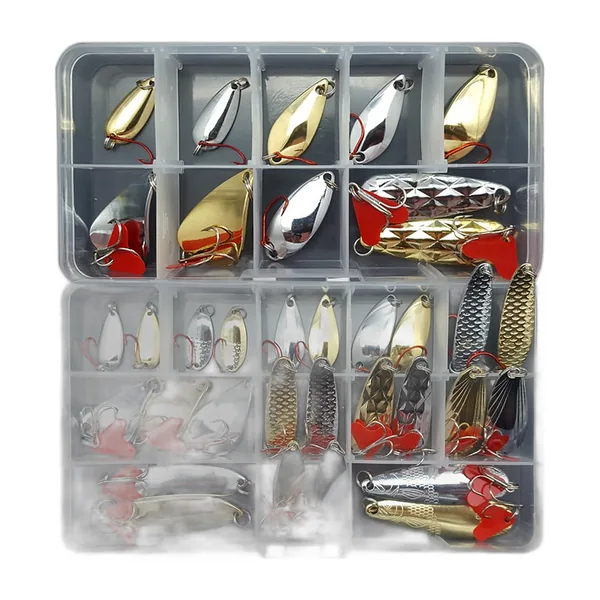 Assorted Wobbling Spoons in a Box
Suited to: Brown trout, Rainbow trout.
€32.90£17.90Not shipped to the United States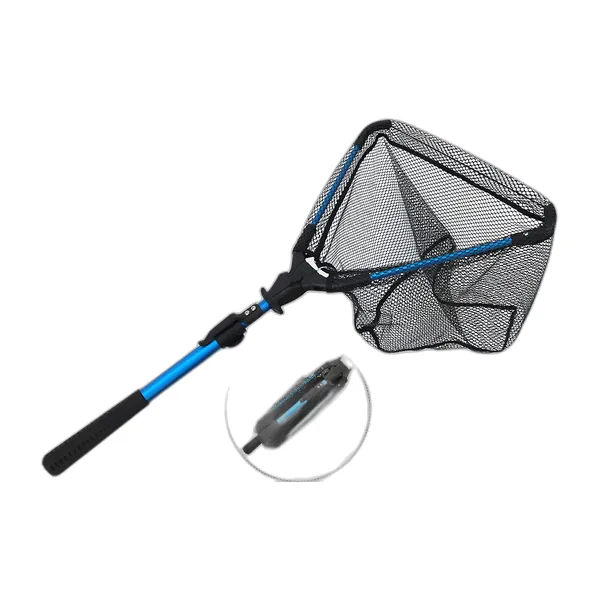 Folding Triangle Landing Net, Aluminium
Suited to: Northern pike, Zander.
€37.90£18.90Not shipped to the United States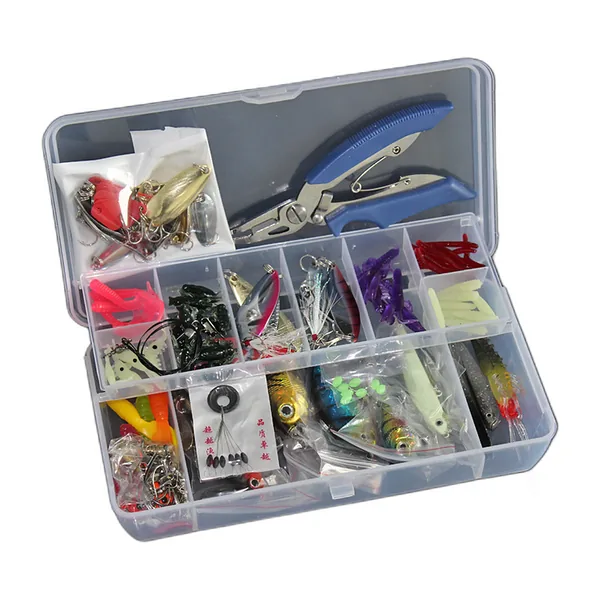 132-Piece Lure and Tackle Box
Suited to: Northern pike, Zander.
€51.90£29.90Not shipped to the United States