Common carp
Cyprinus carpio
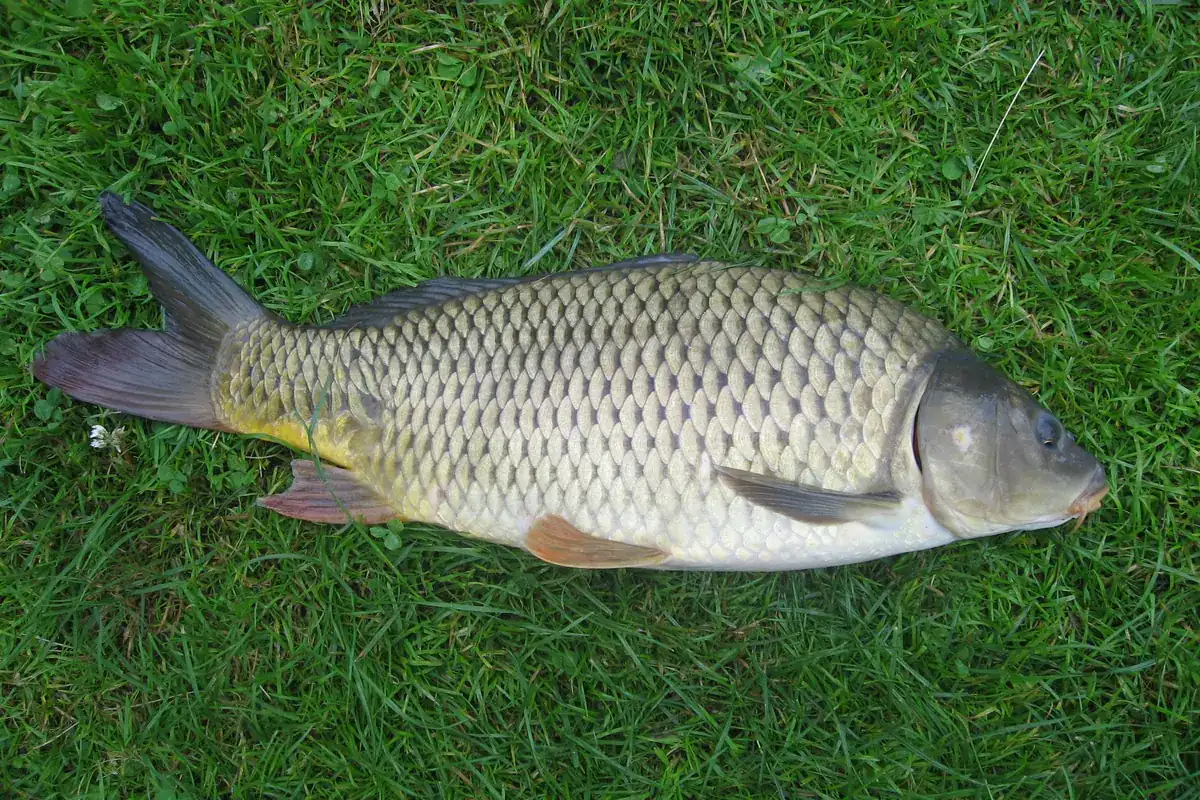

season calendar
Closed months recorded (share of areas closing the species that month) — 19 areas.
Related gear
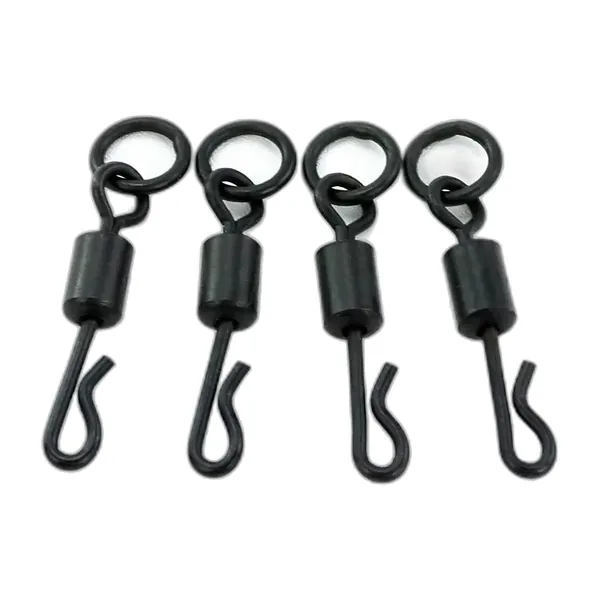 Carp Rig Kit: Ring Swivels, Pop-Up Beads, Shrink Tube
For : common carp, wels catfish · carp fishing with a hair rig
€42.90£24.90Not shipped to the United States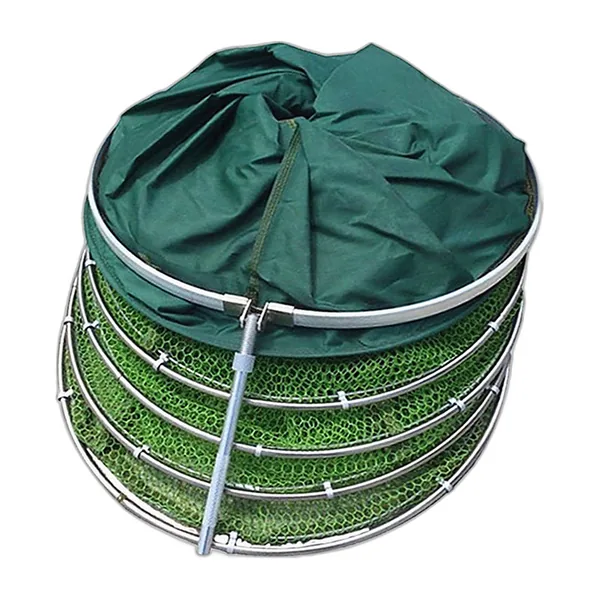 Responsible gearCoated Nylon Keepnet with Aluminium Rings
For : roach, common bream, european perch · float fishing (waggler and stick float)
€73.90£36.90Not shipped to the United States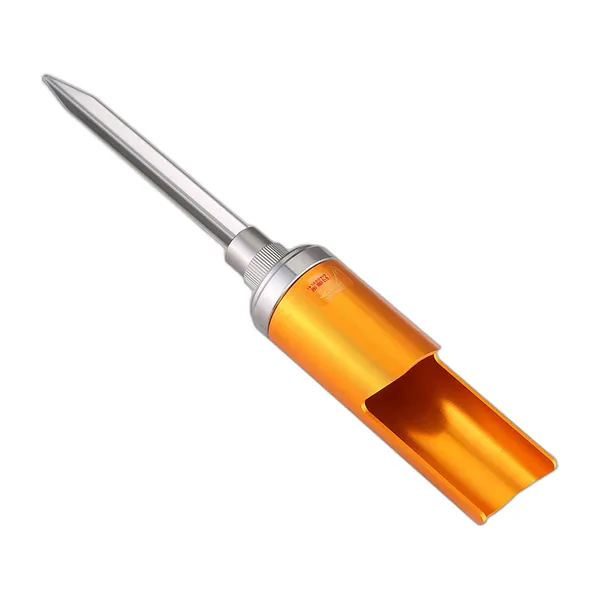 Aluminium Bank Rod Rests, Pack of 2
For : common carp, wels catfish, common bream · feeder fishing
€35.90£18.90Not shipped to the United States
What gear do you need for common carp?
A cautious bottom feeder
Common carp live in warm, slow or still water: lowland rivers, large weedy lakes and big turbid rivers over soft bottoms (FishBase). They root in the bottom for larvae, molluscs and crustaceans, eat plant material and sometimes suck insects from the surface. FishBase describes them as most active at dawn and dusk, which matches Žák's (2021) analysis of the timing of carp landings in angling competitions. Mirror and leather carp are farmed varieties of the same species. In North America, carp are widely regarded as an invasive species, but bowfishing and carp angling both have strong followings.
Sizes
Common length is 31 cm (12.2 in), but specialist anglers target far larger fish: the maximum published is 129 cm (50.8 in) and 40.1 kg (88.4 lb), with a maximum age of 38 years (FishBase). A single carp may be caught many times in its life, so handling quality matters enormously.
Spawning and seasons
Carp spawn in late spring and summer in warm water along the shores, in backwaters and on flooded meadows; larvae survive only in very warm, shallow, weedy water (FishBase). During and just after spawning fish are exhausted, and many anglers leave them alone. Pre-spawn spring and autumn are prime time. In England and Wales, a close season applies to coarse fishing on rivers from 15 March to 15 June; most stillwaters and canals are open all year, subject to fishery rules. Elsewhere, night fishing and closed seasons vary. Check the regulation page.
Methods and baits
The hair rig with boilies, pellets or particles is the foundation of modern carp fishing, usually with bite alarms and a rod pod. Method feeders and float fishing are very effective for average-sized carp, and pole fishing with paste or maggots catches plenty of fish. In summer, surface fishing with floating baits is thrilling. Particles must always be properly soaked and cooked.
Baiting without polluting
Arlinghaus and Niesar (2005) measured the digestibility of carp angling baits and discussed their role in eutrophication. The lesson: bait in proportion to the number of fish present and avoid excess that rots on the bottom.
Handling big carp
A wet unhooking mat, a large net and safe rigs that let the lead come free if the line breaks are standard. Rapp and colleagues (2008) studied the importance of hook size for large carp. Keep fish out of the water for as little time as possible.
Lures and baits
- Boilies
- Prepared particles (sweetcorn, hemp, properly prepared tiger nuts)
- Pellets
- Floating bread or dog biscuits
- Paste and maggots on the pole
Catch and release
- Use a wet unhooking mat (often mandatory).
- Large, deep landing net with fine mesh.
- Match hook size to the fish; Rapp et al. (2008) studied hook size for large carp.
- Use safe rigs: the lead must be able to release if the line breaks.
- Minimise time out of water; avoid long retention in sacks.
Frequently asked questions
What is the best bait for carp?
The Canal & River Trust says pellets, boilies and fjuka are current favourite carp baits, that bread or dog biscuits catch carp off the surface, and that small carp will eat almost anything. Take Me Fishing lists bread or dough balls. No source names one best bait; many fisheries restrict baits.
UK advice from the Canal & River Trust: pellets, boilies and fjuka are 'the current favourite bait for carp'. While carp are mainly bottom-feeders, they can often be caught off the surface with bread or dog biscuits, and smaller carp will eat almost anything. It quotes the oldest English angling text recommending earthworms and minnows. Take Me Fishing (US) lists bread or dough balls and flies for common carp. FishBase explains the choice: carp feed on a variety of benthic organisms and plant material and have been observed sucking floating insects from the surface. No official source ranks baits, so we do not name one best bait. Two cautions from research: bait and groundbait that is not eaten adds nutrients to the water and can contribute to eutrophication, so feed with restraint (Arlinghaus and Niesar 2005). Hook size also matters when targeting large carp (Rapp et al. 2008). Many fisheries ban certain baits (for example nuts or particles), set bait-boat rules or limit feeding: read the fishery rules. In England and Wales, carp in rivers may not be fished from 15 March to 15 June; most stillwaters and canals stay open, and each fishery sets its own rules.
Official sources : Canal & River Trust — Carp (freshwater fish species) ; Take Me Fishing (RBFF) — Common Carp ; FishBase — Cyprinus carpio (species summary) ; Arlinghaus & Niesar 2005, Nutrient digestibility of angling baits for carp, Cyprinus carpio, with implications for groundbait formulation and eutrophication control, Fisheries Management and Ecology ; Rapp et al. 2008, Exploitation of specialised fisheries resources: The importance of hook size in recreational angling for large common carp (Cyprinus carpio L.), Fisheries Research ; GOV.UK — Freshwater rod fishing rules: when and where you can fish
What do carp eat?
Carp are omnivorous bottom-feeders. FishBase says adults and juveniles eat a variety of bottom-dwelling organisms and plant material and sometimes suck floating insects from the surface. The Canal & River Trust lists water fleas, midge larvae, small insects, worms, small snails, mussels, small fish and fish spawn.
FishBase states that both adult and juvenile common carp (Cyprinus carpio) feed on a variety of benthic organisms and plant material. It adds that they have been found sucking in floating insects at the surface, and that they are most active at dusk and dawn. The Canal & River Trust lists their diet as water fleas, midge larvae, small insects, worms, small snails, mussels, small fish and fish spawn. It notes that carp are generally bottom-feeding fish, but can often be caught at the surface. Carp root in soft sediment while feeding, which is why they thrive in warm, turbid, soft-bottomed waters (FishBase). For anglers, this diet explains the range of baits that work, from bread and dog biscuits at the surface to pellets, boilies and particles on the bottom (Canal & River Trust), and bread or dough balls (Take Me Fishing). Heavy baiting adds nutrients to the water: a study on carp baits links undigested bait nutrients to eutrophication (Arlinghaus and Niesar 2005).
Official sources : FishBase — Cyprinus carpio (species summary) ; Canal & River Trust — Carp (freshwater fish species) ; Take Me Fishing (RBFF) — Common Carp ; Arlinghaus & Niesar 2005, Nutrient digestibility of angling baits for carp, Cyprinus carpio, with implications for groundbait formulation and eutrophication control, Fisheries Management and Ecology
Can you eat carp?
Carp are eaten in many countries and FishBase lists the species as highly commercial in fisheries and aquaculture. Whether you may keep one depends on rules: English and Welsh rivers allow only coarse fish up to 20 cm, 15 a day, and most UK carp fisheries are catch-and-release. Check local fish-consumption advisories.
FishBase records Cyprinus carpio as highly commercial in fisheries and a commercial aquaculture species; the Canal & River Trust says carp were introduced to the UK in the 13th or 14th centuries as a food item. Rules decide whether you may take one. England: on rivers, you may take up to 15 small coarse fish a day, each up to 20 cm, and common carp is on the list, so larger carp must be returned. On stillwaters you need the owner's permission, and most carp fisheries operate catch-and-release (GOV.UK). Wales applies equivalent rules (NRW). Elsewhere in Europe, some regions impose a minimum size (35 cm in Bavaria and in Burgenland, Austria) or even a maximum size, as in Wallonia, where carp over 30 cm may not be kept. In the United States, rules and consumption advisories are set by each state; some waters carry health advisories on eating fish, so check your state's advice before eating carp from a given lake. We give no cooking advice.
Official sources : FishBase — Cyprinus carpio (species summary) ; Canal & River Trust — Carp (freshwater fish species) ; GOV.UK — Freshwater rod fishing rules: fish size and catch limits ; Natural Resources Wales — Minimum fish size and catch limits ; Bavaria — fisheries law (minimum sizes) ; Wallonia — AGW of 8 December 2016 on fishing rules ; Burgenland (Austria) — Fischereiverordnung (minimum sizes)
Can you eat carp from Utah Lake?
We could not verify a current official consumption advisory for Utah Lake carp in our sources. Utah's Division of Wildlife Resources sets fishing rules statewide, and fish-consumption advisories are issued separately by state health and environment agencies: check them before eating carp from Utah Lake.
Our verified sources for Utah are the Division of Wildlife Resources 2026 fishing guidebook, which sets statewide rules. Utah waters are open year-round, 24 hours a day, with water-specific closures. We were not able to access an official Utah fish-consumption advisory during research, so we cannot state whether a specific advisory applies to carp from Utah Lake or what it recommends. We do not guess. Generally, fish-consumption advice in the United States is issued by state health and environmental agencies based on contaminant testing, and it can differ by lake and species. Before eating carp from Utah Lake, look up Utah's current fish-consumption advisories and follow any limits for women of childbearing age and children. Biologically, FishBase describes carp as bottom feeders that eat benthic organisms and plant material, and lists the species as a potential pest. Carp are not native to North America; Take Me Fishing describes them as widely distributed below the 50th parallel.
Official sources : Utah Division of Wildlife Resources — 2026 fishing guidebook ; FishBase — Cyprinus carpio (species summary) ; Take Me Fishing (RBFF) — Common Carp
How do you catch carp?
Carp are usually caught by still fishing on the bottom with pellets, boilies, particles or bread, or off the surface with bread or dog biscuits, according to the Canal & River Trust. They fight hard, so tackle must suit snags and weed. Take Me Fishing also lists fly fishing.
The Canal & River Trust describes carp as hard-fighting. In weedy places you need stronger line and a larger hook than in open water. Although carp are mainly bottom-feeders, they can often be caught off the surface with bread or dog biscuits, and pellets, boilies and fjuka are the current favourite baits. On warm, sunny days they can be seen basking near the surface. Take Me Fishing lists still fishing and fly fishing, with bread or dough balls and flies. FishBase notes carp are most active at dusk and dawn and favour warm, slow or still water with soft bottoms. Research relevant to carp anglers: hook size influences catch and handling in specialised fishing for large carp (Rapp et al. 2008). Undigested bait adds nutrients to the water (Arlinghaus and Niesar 2005). Keepnet retention raises stress indicators (Pottinger 1998), which is why many carp waters ban keepnets or sacks. Use an unhooking mat and keep fish wet. In England and Wales, carp in rivers may not be fished from 15 March to 15 June; most stillwaters and canals stay open, and each fishery sets its own rules. Night fishing is common on UK carp waters where permitted, but it is restricted in some countries (France allows it only on designated sections).
Official sources : Canal & River Trust — Carp (freshwater fish species) ; Take Me Fishing (RBFF) — Common Carp ; FishBase — Cyprinus carpio (species summary) ; Rapp et al. 2008, Exploitation of specialised fisheries resources: The importance of hook size in recreational angling for large common carp (Cyprinus carpio L.), Fisheries Research ; Arlinghaus & Niesar 2005, Nutrient digestibility of angling baits for carp, Cyprinus carpio, with implications for groundbait formulation and eutrophication control, Fisheries Management and Ecology ; Pottinger 1998, Changes in blood cortisol, glucose and lactate in carp retained in anglers’keepnets, Journal of Fish Biology ; GOV.UK — Freshwater rod fishing rules: when and where you can fish ; Génération Pêche (FNPF, France) — Règles à connaître 2026
What is the best lure for carp?
Carp are rarely caught on classic lures because they feed on bottom invertebrates and plants. Take Me Fishing lists flies (fly fishing) alongside bread or dough balls, and the Canal & River Trust notes surface fishing with bread or dog biscuits. No official source recommends a specific lure.
FishBase describes carp as omnivores feeding on bottom-dwelling organisms and plant material, occasionally sucking insects from the surface; they are not fish-eating predators. Official angling sources therefore recommend baits rather than lures. The Canal & River Trust lists pellets, boilies, fjuka, bread and dog biscuits, and Take Me Fishing lists bread or dough balls and flies, with fly fishing among the methods for common carp. Fly fishing with imitations of the small invertebrates carp eat is therefore the documented 'artificial' approach. We found no official recommendation of a specific lure or fly pattern, so we do not name one. Some carp fisheries forbid artificial baits or allow only specified methods; read the fishery rules. In England and Wales, carp in rivers may not be fished from 15 March to 15 June.
Official sources : FishBase — Cyprinus carpio (species summary) ; Canal & River Trust — Carp (freshwater fish species) ; Take Me Fishing (RBFF) — Common Carp ; GOV.UK — Freshwater rod fishing rules: when and where you can fish
How big do carp get?
FishBase lists common carp at a common length of 31 cm and a maximum of 129 cm, 40.1 kg and 38 years. The Canal & River Trust gives 40-100 cm and around 20 lb as typical sizes and a British record of 68 lb 1 oz (30.875 kg). Growth depends on warmth and food.
Reference figures: FishBase lists Cyprinus carpio at a common length of 31 cm, a maximum published length of 129 cm, a maximum weight of 40.1 kg and a maximum reported age of 38 years. In Britain, the Canal & River Trust gives a size range of 40-100 cm, a weight around 20 lb and a lifespan of 25-30 years; it says carp can live up to 40 years. It lists a British record of 68 lb 1 oz (30.875 kg). Selective breeding has produced common (fully scaled), mirror (partly scaled) and leather (almost scaleless) strains. Canal & River Trust commercial fisheries give real examples: carp at Drayton Reservoir average 14-18 lb, with a lake record of 35 lb. Naseby Reservoir holds carp to over 40 lb, typically 18-30 lb. Size rules for keeping carp: England and Wales rivers allow only small coarse fish up to 20 cm (15 a day). Some continental regions set their own rules, such as a 30 cm maximum size for keeping carp in Wallonia (Belgium). Many carp waters are catch-and-release.
Official sources : FishBase — Cyprinus carpio (species summary) ; Canal & River Trust — Carp (freshwater fish species) ; Canal & River Trust — Drayton Reservoir ; Canal & River Trust — Naseby Reservoir ; GOV.UK — Freshwater rod fishing rules: fish size and catch limits ; Wallonia — AGW of 8 December 2016 on fishing rules
When is the best time to fish for carp?
FishBase says carp are most active at dusk and dawn, and they spawn in late spring and summer at 15-20 °C. In England and Wales, carp in rivers can only be fished from 16 June to 14 March, while most stillwaters and canals are open all year. Fishery rules set their own seasons.
Legal calendar in Great Britain: the coarse fish close season on English rivers, streams, drains, most stillwater SSSIs, some canals and the Broads runs from 15 March to 15 June inclusive (GOV.UK). Most enclosed stillwaters and canals are open all year; private waters may set their own close season. Wales has the same river close season and no close season on most stillwaters and canals (NRW). Scotland has no close time for coarse fish. Biology: FishBase describes carp as most active at dusk and dawn. It says they breed at temperatures of 15-20 °C, as seasonal spawners in temperate waters, with larvae surviving only in very warm, shallow, weedy water. A study of carp competition catches found that landings follow the carp's assumed feeding rhythm, with marked activity around twilight and at night (Žák 2021). On warm, sunny days carp can be seen basking near the surface (Canal & River Trust). No source names a single best month. Where night fishing is allowed, carp anglers use it; some countries restrict night fishing to designated sections.
Official sources : GOV.UK — Freshwater rod fishing rules: when and where you can fish ; Natural Resources Wales — Non-migratory trout, charr, coarse fish and eels open seasons ; Scottish Government — Recreational fishing ; FishBase — Cyprinus carpio (species summary) ; Žák 2021, Diel pattern in common carp landings from angling competitions corresponds to their assumed foraging activity, Fisheries Research ; Canal & River Trust — Carp (freshwater fish species)
Where can you fish for carp?
In Britain, carp live in weedy ponds, flooded gravel pits, lakes and most canals, according to the Canal & River Trust, which also runs commercial fisheries such as Drayton, Naseby and Boddington reservoirs. In the US, carp are found widely below the 50th parallel. You need a licence and the owner's permission.
Great Britain: the Canal & River Trust says common carp are widespread across freshwater bodies in England and Wales. They live in weedy ponds, flooded gravel pits, lakes and most canals, often near overhanging vegetation or reed beds. It operates commercial fisheries with day tickets, including Blythe Waters, Boddington, Clattercote, Drayton, Harthill, Kiveton Waters and Naseby. Drayton Reservoir holds carp averaging 14-18 lb, Naseby carp to over 40 lb. You need an Environment Agency rod licence plus a permit or day ticket; the Trust's fishery search finds venues by postcode. United States: Take Me Fishing says common carp are widely distributed in North America below the 50th parallel south to the Florida panhandle, in lakes, rivers and ponds. It recommends areas such as overhanging trees and bushes, current edges, drop-offs and undercuts. Licences and rules are set by each state. FishBase describes the preferred habitat as warm, deep, slow-flowing and still waters with soft bottoms, including large turbid rivers.
Official sources : Canal & River Trust — Carp (freshwater fish species) ; Canal & River Trust — Our commercial fisheries ; Canal & River Trust — Drayton Reservoir ; Canal & River Trust — Naseby Reservoir ; Canal & River Trust — Where to fish ; GOV.UK — Buy a fishing licence ; Take Me Fishing (RBFF) — Common Carp ; FishBase — Cyprinus carpio (species summary)
At what temperature do carp stop feeding?
No official source gives a temperature at which common carp stop feeding. FishBase lists a tolerated range of 3-35 °C and says carp prefer warm water and breed at 15-20 °C. For grass carp, a US Geological Survey fact sheet reports that feeding declines sharply below 14 °C.
For common carp (Cyprinus carpio), FishBase gives an environmental temperature range of 3-35 °C and describes a preference for warm, deep, slow-flowing and still waters. It notes breeding at 15-20 °C and larvae that survive only in very warm, shallow water. We did not find an official figure for the temperature at which common carp stop feeding, so we do not give one; activity generally falls in cold water, but we have no source quantifying it. The Canal & River Trust notes that UK canals are not quite warm enough for carp to reproduce. For the related grass carp, the USGS Nonindigenous Aquatic Species fact sheet cites research reporting that feeding declines sharply below 14 °C. It gives a preferred temperature of 25.3 °C. Do not transfer the grass carp figure to common carp. Warm water also affects fish you release: high temperatures increase stress and mortality after catch-and-release (Gale et al. 2011).
Official sources : FishBase — Cyprinus carpio (species summary) ; Canal & River Trust — Carp (freshwater fish species) ; USGS Nonindigenous Aquatic Species — Grass Carp fact sheet ; Gale et al. 2011, The role of temperature in the capture and release of fish, Fish and Fisheries
At what temperature do carp spawn?
FishBase states that common carp breed at water temperatures of 15-20 °C, in spring and summer in temperate waters, in shallow, weedy margins; eggs hatch in about 4 days. The Canal & River Trust says carp spawn in spring as temperatures rise, and notes UK canals are usually too cool for successful breeding.
FishBase gives a breeding temperature range of 15 to 20 °C for Cyprinus carpio. Carp spawn in marginal, shallow, weed-infested areas; a spawning female is usually followed by several males. Females can lay more than a million eggs in a season, and eggs hatch in 4 days. In temperate waters carp are seasonal spawners, whereas under tropical conditions they breed throughout the year. Larvae survive only in very warm water among shallow submerged vegetation. The Canal & River Trust says carp typically lay about 300,000 eggs and spawn in spring as temperatures rise. It adds there is no evidence that common carp reproduce in its canals, which are not quite warm enough, though climate change might alter this. In England and Wales, the river close season for coarse fish (15 March to 15 June) covers part of the spawning period; many stillwater fisheries close briefly or restrict fishing when carp spawn. Always check the fishery's own rules.
Official sources : FishBase — Cyprinus carpio (species summary) ; Canal & River Trust — Carp (freshwater fish species) ; GOV.UK — Freshwater rod fishing rules: when and where you can fish
Minimum size for Common carp by area
Luxembourg : 35 cm (1)
Germany : 35–45 cm (14)
| Baden-Württemberg | 35 cm |
| Bayern | 35 cm |
| Berlin | 35 cm |
| Brandenburg | 35 cm |
| Freie und Hansestadt Hamburg | 35 cm |
| Hessen | 45 cm |
| Mecklenburg-Vorpommern | 40 cm |
| Nordrhein-Westfalen | 35 cm |
| Rheinland-Pfalz | 35 cm |
| Saarland | 35 cm |
| Sachsen | 40 cm |
| Sachsen-Anhalt | 35 cm |
| Schleswig-Holstein | 35 cm |
| Thüringen | 35 cm |
Austria : 35 cm (8)
| Burgenland | 35 cm |
| Kärnten | 35 cm |
| Niederösterreich | 35 cm |
| Oberösterreich | 35 cm |
| Steiermark | 35 cm |
| Tirol | 35 cm |
| Vorarlberg | 35 cm |
| Wien | 35 cm |
Italy : 25–100 cm (13)
Portugal : 20 cm (1)
Studies cited
- Rapp et al. (2008) Exploitation of specialised fisheries resources: The importance of hook size in recreational angling for large common carp (Cyprinus carpio L.) Fisheries Research doi:10.1016/j.fishres.2008.06.019
Shows the importance of hook size in specialised angling for large common carp. - Arlinghaus & Niesar (2005) Nutrient digestibility of angling baits for carp, Cyprinus carpio, with implications for groundbait formulation and eutrophication control Fisheries Management and Ecology doi:10.1111/j.1365-2400.2004.00425.x
Measures nutrient digestibility of angling baits for carp, with implications for groundbait formulation and eutrophication control. - Žák (2021) Diel pattern in common carp landings from angling competitions corresponds to their assumed foraging activity Fisheries Research doi:10.1016/j.fishres.2021.106086
Analyses the timing of carp landings in angling competitions and finds it matches their assumed feeding activity.
Official sources
- FishBase – Cyprinus carpio (fiche espèce ; statut IUCN Red List 2025-2 repris par FishBase) (accessed on 23 September 2026)
- GOV.UK – Freshwater rod fishing rules (close season coarse fish, England) (accessed on 23 September 2026)
- Préfecture de l'Aisne – réglementation de la pêche 2026 (heures de pêche, carpe de nuit, art. R436-14 du Code de l'environnement) (accessed on 23 September 2026)
- Préfecture de l'Aveyron – arrêté pêche 2026 (pêche de nuit de la carpe sur secteurs listés) (accessed on 23 September 2026)
- Sportvisunie – VISpas (Gezamenlijke Lijst van Nederlandse Viswateren, VISplanner, NachtVIStoestemming) (accessed on 23 September 2026)
- BOE – Real Decreto 630/2013, Catálogo español de especies exóticas invasoras (texto consolidado) (accessed on 23 September 2026)
- ICNF – Licenças de pesca lúdica e desportiva em águas interiores (licença geral obrigatória, exceto parques de pesca) (accessed on 23 September 2026)