Pole fishing
Related gear
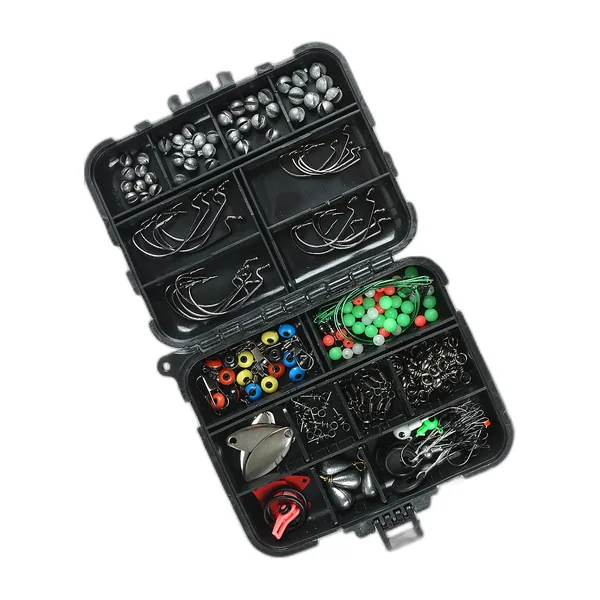 Box of 188 Fishing Accessories
Suited to: European perch, Common carp.
€32.90£17.90Not shipped to the United States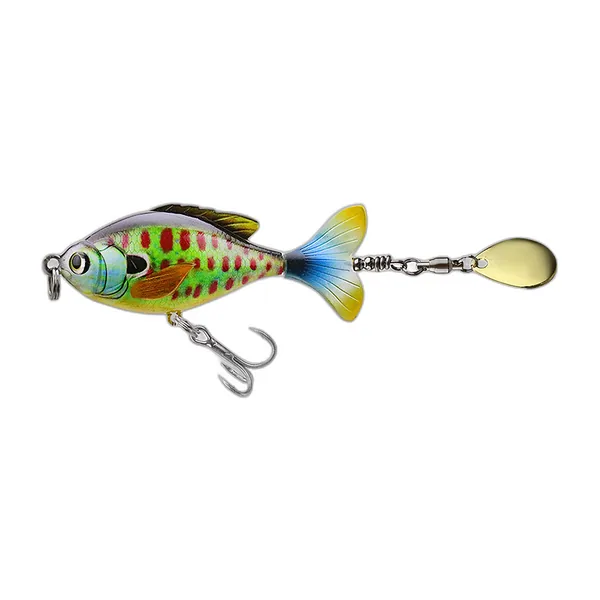 Small Floating Tail-Spinner Lures 6 cm, Pack of 5
Suited to: European perch, Chub.
€36.90£22.90Not shipped to the United States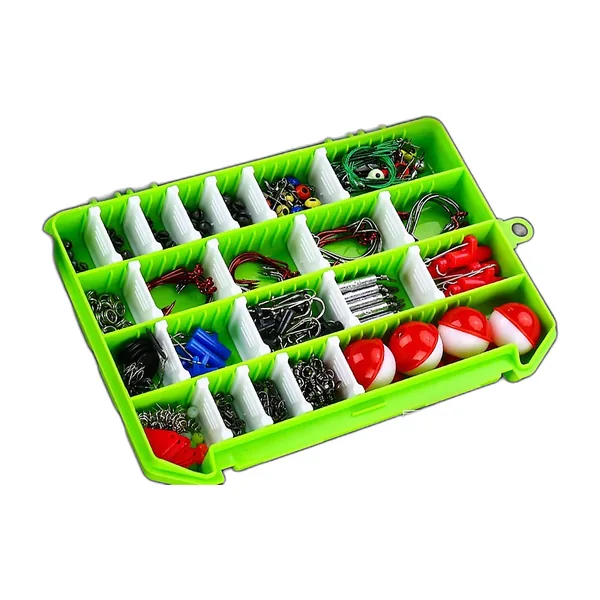 Fishing Accessory Box, 329 Pieces
Suited to: European perch, Common carp.
€45.90£25.90Not shipped to the United States
The idea
Pole fishing means fishing one exact spot, the swim, with a pole instead of a rod and reel and a fine rig under a very sensitive float. The bait is presented on or just off the bottom, and fish are drawn in with groundbait and loose feed. It is the method of choice for roach, bream, tench, crucian carp, rudd and perch, and the backbone of match fishing in the UK and continental Europe. Its strength is unmatched presentation, because the rig sits directly under the pole tip.
Tackle
A take-apart pole or a short whip matched to the distance you need; a shock-absorbing elastic in the top sections to cushion lunges; fine main line and hooklength; light pole floats; small shot; fine-wire hooks, ideally barbless. Baits include maggots, pinkies, bloodworm, hemp and bread punch, plus fine groundbait suited to the venue.
Settings that matter
Start by plumbing the depth accurately. Depending on the species, the bait should just trip the bottom (roach), lie on it (bream, tench) or fish mid-water (bleak, summer rudd). Shotting spreads weight along the line: bulked to get down fast, strung out for a natural fall. The better balanced the float, the more bites you will see.
Feeding
A few balls of groundbait to start, then small amounts little and often. Overfeeding fills fish up and, on a large scale, adds nutrients to the water; Arlinghaus and Niesar (2005) studied this for carp baits, and the same principle of moderation applies.
Keepnets
In matches, fish are kept in a keepnet until the weigh-in. Pottinger (1998) measured stress indicators (cortisol, glucose, lactate) in fish held in keepnets: the stress is real. Use a long, wide net fully submerged, never overcrowd it and release fish as soon as possible. Some fisheries restrict keepnets.
Lead
Scheuhammer and Norris (1996) reviewed the toxicity of lost lead fishing weights to wildlife, especially waterbirds. In the UK, lead shot in most sizes has long been restricted for anglers, and non-toxic alternatives are standard. Check the rules for your water, including the number of rods your licence covers and any size limits.
The gear, item by item
- Take-apart pole (or whip) matched to the distance you fish
- Fine main line and hooklength, shock-absorbing elastic in the top sections
- Light, sensitive pole floats matched to flow and wind
- Small shot (non-toxic where possible) to set the shotting pattern
- Fine-wire hooks, preferably barbless
- Maggots, pinkies, bloodworm, hemp, bread
- Fine groundbait suited to the venue
- Long, wide keepnet where permitted
- Small net on a long handle
Step by step
- Plumb the depth precisely in your swim.
- Set the rig so the bait just touches or trips the bottom depending on the species.
- Start with a few balls of groundbait, then feed little and often.
- Hook the bait neatly (one or two maggots, a bloodworm…).
- Lay the rig in and hold it slightly tight so the float settles.
- Strike at any movement: the float dipping, lifting or sliding away.
- Let the elastic tire the fish, net it and unhook with a disgorger.
Common mistakes
- Overfeeding and filling the fish up.
- Line too heavy for wary fish.
- Wrong depth: bait dragging or too high.
- Moving about or casting shadows on the water.
- Overcrowding the keepnet or keeping fish too long.
Rules to check before you go
- Number of rods or lines allowed for your licence and water.
- Keepnet use (allowed, limited or banned on some waters and in matches).
- Groundbait restrictions on some fisheries.
- Lead shot restrictions in some countries and waters.
- Minimum sizes and bag limits for species caught.
Fishing regulations by country
Studies cited
- Pottinger (1998) Changes in blood cortisol, glucose and lactate in carp retained in anglers’keepnets Journal of Fish Biology doi:10.1111/j.1095-8649.1998.tb01828.x
Measures cortisol, glucose and lactate in fish (carp) held in keepnets: keepnet retention is a measurable stressor. - Scheuhammer & Norris (1996) The ecotoxicology of lead shot and lead fishing weights Ecotoxicology doi:10.1007/bf00119051
Review of the ecotoxicology of lead shot and lead fishing weights: why non-toxic weights are preferable.