Rudd
Scardinius erythrophthalmus

season calendar
Closed months recorded (share of areas closing the species that month) — 4 areas.
Related gear
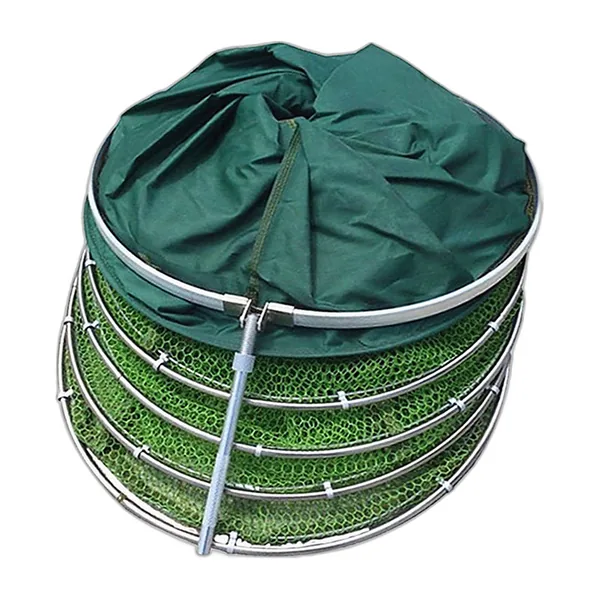 Responsible gearCoated Nylon Keepnet with Aluminium Rings
For : roach, common bream, european perch · float fishing (waggler and stick float)
€73.90£36.90Not shipped to the United States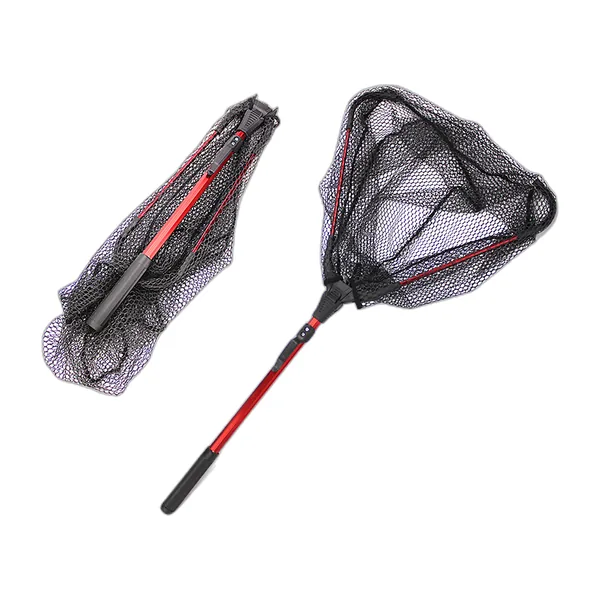 Responsible gearFolding Triangle Landing Net, 47 cm Folded
For : brown trout, rainbow trout, european perch · fly fishing (dry fly and nymph)
€37.90£18.90Not shipped to the United States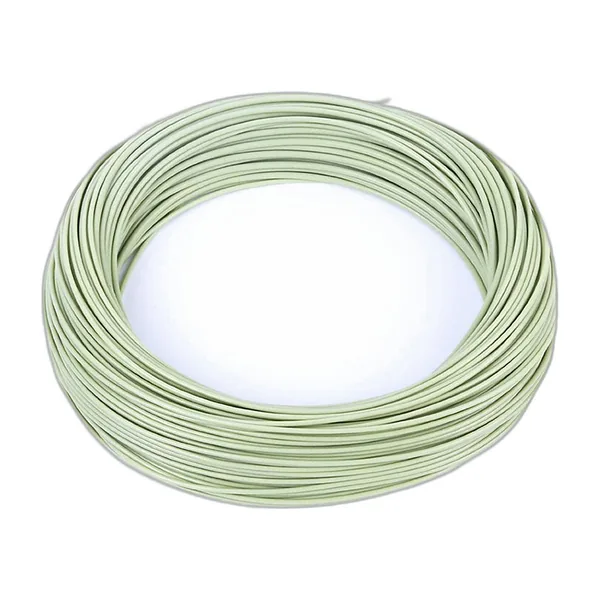 Floating weight-forward fly line, 30 m
For : brown trout, rainbow trout, grayling · fly fishing (dry fly and nymph)
€27.90£13.90Not shipped to the United States
The golden cousin of the roach
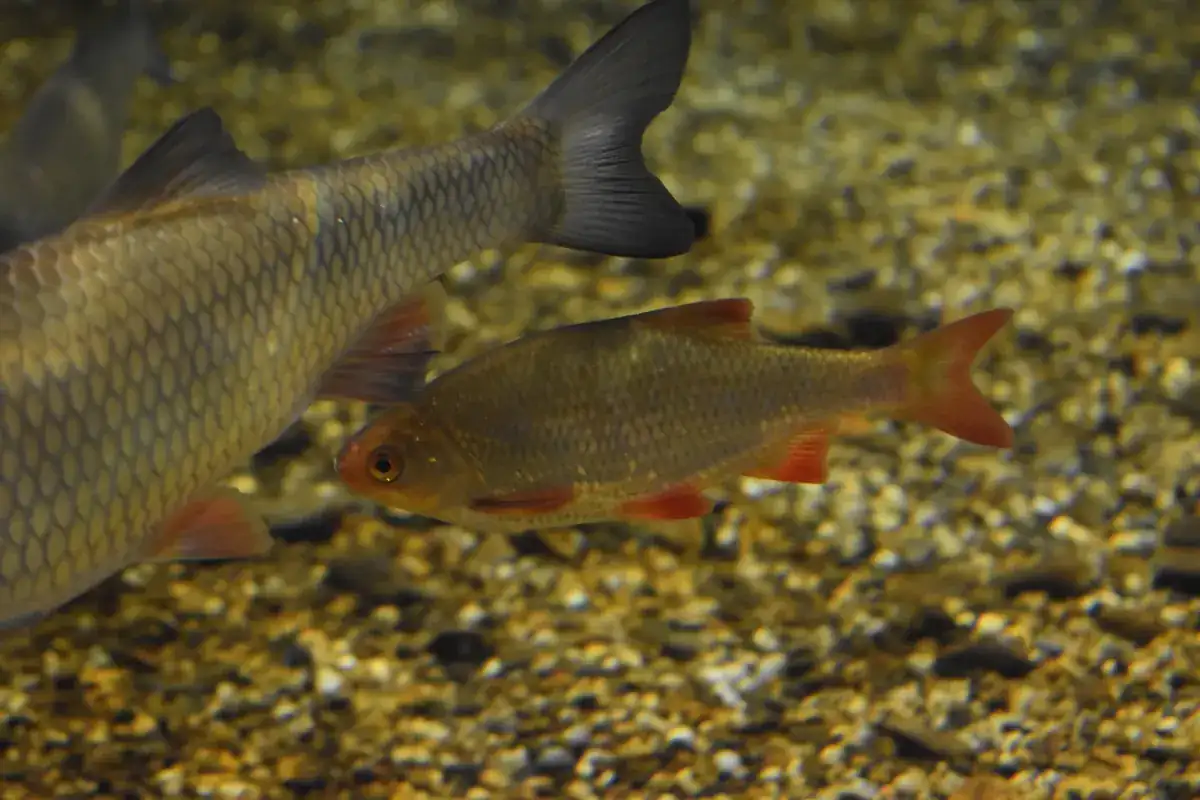
Rudd look like roach but have brighter red fins, a golden-orange eye and, above all, an upturned mouth built for surface feeding. The dorsal fin also starts well behind the pelvic fins. FishBase describes them in nutrient-rich, weedy lowland rivers, backwaters, oxbows, ponds and lakes, and notes that they adapt to poor conditions. In North America, where rudd were introduced, several states restrict their use or possession.
What they eat
Rudd eat plankton, terrestrial insects that fall into the water and plant material (FishBase). Nurminen and colleagues (2003) assessed the effect of rudd herbivory on submerged plants in a eutrophic lake, and García-Berthou and Moreno-Amich (2000) studied the feeding ecology of rudd introduced to Lake Banyoles in Catalonia. For anglers the lesson is simple: fish high in the water, near weed, with baits that float or sink slowly.
Sizes
Common length is 20 cm (7.9 in); the maximum published is 61.7 cm (24.3 in) for a female, with a maximum age of 19 years (FishBase). The FishBase summary gives no maximum weight.
Spawning
In spring and early summer, males gather and drive females into dense vegetation, often with a lot of splashing; the very sticky eggs attach to plants in shallow water (FishBase). In England and Wales, the coarse-fish river close season (15 March-15 June) applies; elsewhere there is usually no specific closure, but leaving spawning weed beds alone is good practice. Check the regulation page.
Methods
Rudd are fair-weather fish. On warm, sunny days they patrol near the surface along lilies and reeds. A single maggot or a pinch of bread flake fished a few centimetres down under a light float or on a pole is very effective, and floating bread draws shoals up. Fly anglers catch them on small dry flies and terrestrial patterns. Polarised glasses help spot the fish.
Release
Use small barbless hooks, wet your hands and return the fish immediately. FishBase notes that rudd can be threatened locally by introduced species.
Tackle checklist
A light float rod or a short pole, fine line, size 16-20 hooks, small wagglers or pole floats and a few slices of bread are enough. A 3-4 weight fly rod with small dry flies adds another dimension on summer days.
Lures and baits
- Floating bread and flake
- Maggots fished shallow
- Small dry flies
- Sweetcorn
Catch and release
- Small barbless hooks.
- Wet hands.
- Immediate release.
Minimum size for Rudd by area
Luxembourg : 15 cm (2)
Germany : 15–20 cm (4)
| Hessen | 20 cm |
| Rheinland-Pfalz | 15 cm |
| Sachsen | 20 cm |
| Thüringen | 15 cm |
Austria : 15 cm (1)
| Salzburg | 15 cm |
Italy : 20 cm (1)
| Regione Liguria | 20 cm |
Studies cited
- García-Berthou & Moreno-Amich (2000) Rudd (Scardinius erythrophthalmus) introduced to the Iberian peninsula: feeding ecology in Lake Banyoles Hydrobiologia doi:10.1023/a:1026587721375
Studies the feeding ecology of rudd introduced to Lake Banyoles (Catalonia). - Nurminen et al. (2003) Implications of rudd (Scardinius erythrophthalmus) herbivory on submerged macrophytes in a shallow eutrophic lake Hydrobiologia doi:10.1023/b:hydr.0000008577.16934.a9
Assesses the effect of rudd herbivory on submerged plants in a shallow eutrophic lake.
Official sources
- FishBase – Scardinius erythrophthalmus (fiche espèce ; statut IUCN Red List 2025-2 repris par FishBase) (accessed on 23 September 2026)
- BOE – Real Decreto 630/2013, Catálogo español de especies exóticas invasoras (texto consolidado) (accessed on 23 September 2026)
- Sportvisunie – VISpas (Gezamenlijke Lijst van Nederlandse Viswateren, VISplanner, NachtVIStoestemming) (accessed on 23 September 2026)
- Vlaamse overheid – Visverlof (verplicht voor recreatief vissen op de openbare binnenwateren van het Vlaamse Gewest) (accessed on 23 September 2026)
- ICNF – Licenças de pesca lúdica e desportiva em águas interiores (licença geral obrigatória, exceto parques de pesca) (accessed on 23 September 2026)