Zander
Sander lucioperca
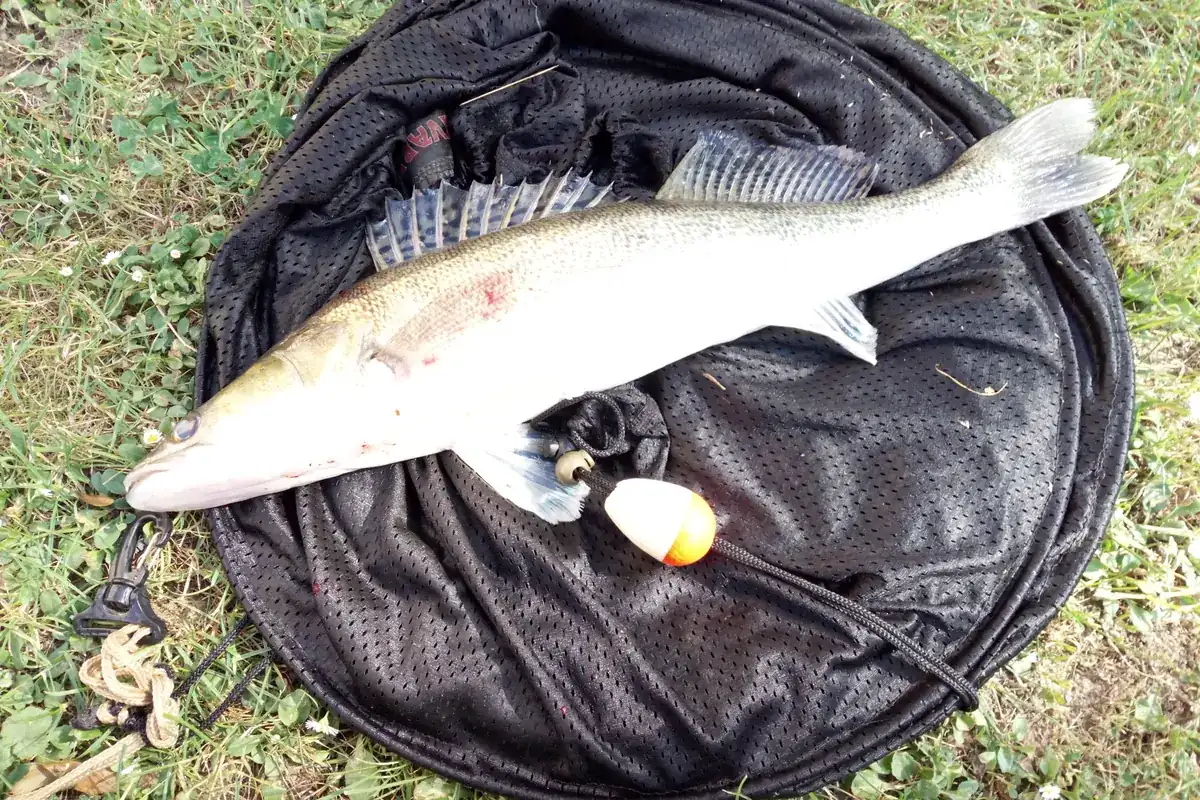
_01.jpg)
Related gear
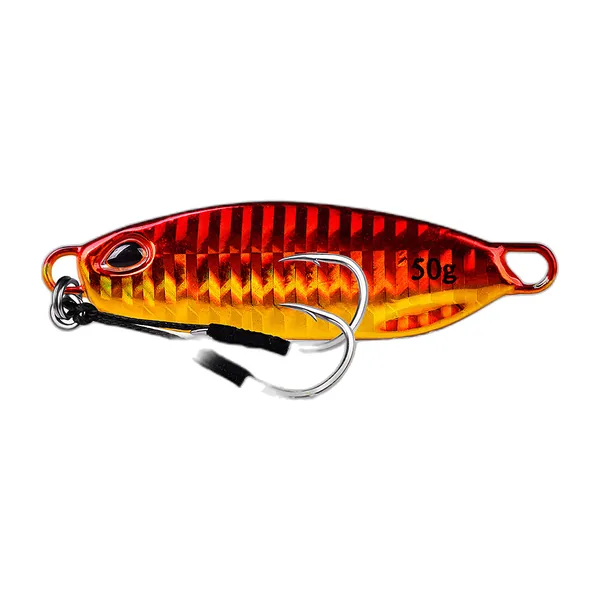 Flat Metal Jigs with Assist Hooks, Pack of 3
Suited to: Zander.
€24.90£12.90Not shipped to the United States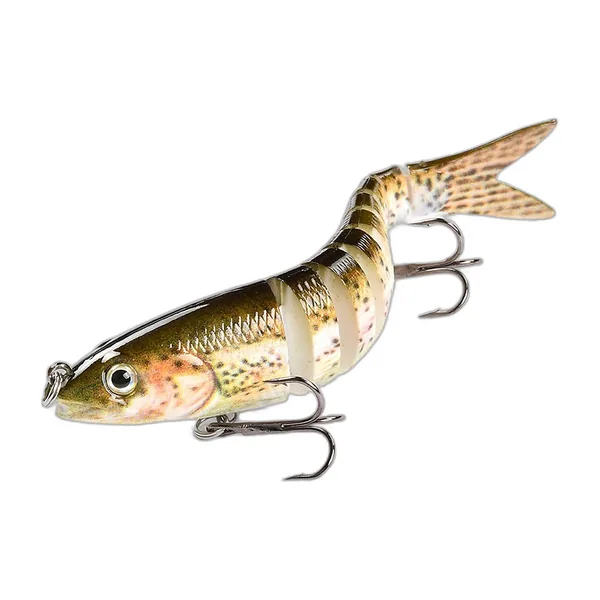 Jointed Loach Imitation Lures 10 cm, Pack of 5
Suited to: Zander.
€32.90£18.90Not shipped to the United States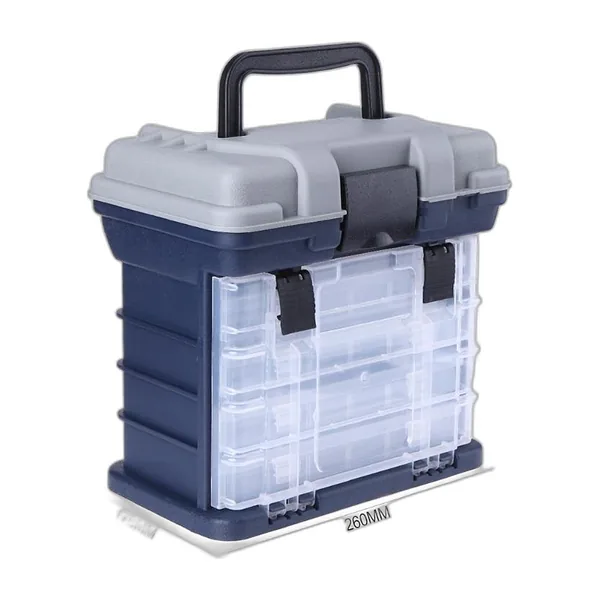 Fishing Seat Box with 4 Tackle Trays
Suited to: Zander.
€70.90£37.90Not shipped to the United States
What gear do you need for zander?
A low-light hunter
Zander (also called pikeperch) have eyes adapted to dim light. They hunt mostly at dawn, dusk and at night, or during the day when the water is coloured. FishBase describes them as fish of large, turbid rivers, eutrophic lakes, brackish lagoons and estuaries, feeding mainly on schooling open-water fish. The practical rule: find the baitfish shoals and you will usually find zander nearby, close to the bottom.
In the UK and the Netherlands zander are an introduced species, and in some areas local rules or fishery owners do not allow them to be returned. Always check.
Size and growth
Common length is around 50 cm (19.7 in). The maximum published size is 100 cm (39.4 in) standard length and 20 kg (44.1 lb), with a maximum reported age of 17 years (FishBase). Zander usually mature at about four years old.
Why the spring closure
Zander spawn in pairs at dawn or night, usually in April-May, sometimes from late February to July depending on latitude, when the water on the spawning grounds reaches 10-14 °C (50-57 °F), according to FishBase. The male then guards the nest; if he is caught, the eggs are quickly eaten. That is why many countries close predator fishing in spring. Dates and minimum sizes vary by country and region, so check the regulation page for your water. A review by Lappalainen and colleagues (2003) summarises the species' reproductive biology.
Methods that work
Soft plastics of 7-12 cm (3-5 in) on a jighead, worked on the bottom, are the standard approach. From a boat, vertical jigging over fish located with a sonar is deadly in winter. Drop-shot lets you hold a small bait still in front of a wary fish. At night, a slim minnow retrieved slowly along the margins works well where night fishing for predators is permitted. With deadbaits, bites are often delicate: give the fish a moment, but strike before it swallows deeply.
Releasing zander
Zander are widely considered more sensitive to handling than pike. Arlinghaus and Hallermann (2007) studied the effect of air exposure on undersized pikeperch released at low water temperatures. The takeaway: unhook immediately and never lay the fish on frozen ground. Pliers, a knotless net and a headlamp for night sessions are all you need.
Lures and baits
- Soft plastics 7-12 cm (3-5 in) on jigheads
- Finesse drop-shot baits
- Minnow crankbaits at night
- Dead or live bait where legal
Catch and release
- Unhook quickly: zander do not tolerate long handling.
- In cold weather, avoid leaving the fish in freezing air or on frozen ground.
- Leave guarded nests alone in spring, even for catch-and-release.
- Release slowly, head into the current.
Frequently asked questions
What are the best lures for zander, including soft baits and in the UK?
The most widely used zander lures are soft baits of about 7 to 12 cm on jig heads, worked close to the bottom, plus small finesse soft baits on a drop-shot and slim minnow-type crankbaits at night. Zander hunt shoaling fish near the bottom in low light, so slow, bottom-hugging presentations work best.
FishBase describes the zander as a predator of open-water shoaling fish in large, turbid rivers and lakes; its eyes are adapted to low light, so it hunts most at dusk, at night and in coloured water. Lures that imitate small prey fish close to the bottom are therefore most effective. Soft baits, paddle-tail or slim shad shapes around 7 to 12 cm on a jig head, are the main tool: cast, let them sink to the bottom, then lift and drop them, since many bites come as the lure falls. Small finesse baits on a drop-shot rig work well when zander are sluggish, in cold or clear water. At night, slim floating or suspending minnow crankbaits retrieved slowly over shallow gravel, steps or marinas catch feeding fish. In the UK, where zander were introduced, the same approaches apply, often with lighter lures in shallow canals. Use a sensitive rod and braid to feel bites, sharp hooks for the bony mouth, and a fluorocarbon leader or wire where pike are present. We found no study ranking lure types for zander, so this reflects the species' feeding and common practice. In England and Wales, rivers are closed to coarse fishing from 15 March to 15 June (GOV.UK).
Official sources : FishBase – Sander lucioperca (Zander) ; GOV.UK – Freshwater rod fishing rules: when and where you can fish
What is a zander, and is it a fish?
Yes, the zander (Sander lucioperca) is a freshwater fish of the perch family, native to central and eastern Europe and widely introduced elsewhere, including Britain. It is a predator of shoaling fish, commonly about 50 cm long and up to 20 kg according to FishBase. It is also called pikeperch; its North American relative is the walleye.
The zander, Sander lucioperca, is a predatory freshwater fish of the family Percidae, the perches. FishBase describes it as native to central and eastern Europe and western Asia, widely introduced across western Europe, including France, Spain, the Netherlands and Britain. It lives in large, turbid rivers, eutrophic lakes, brackish lagoons and estuaries and feeds mainly on open-water shoaling fish. Its common length is about 50 cm, with a published maximum of 100 cm standard length, 20 kg and 17 years (FishBase). The zander has large, light-sensitive eyes, so it hunts mainly at dusk, at night and in coloured water, and it has prominent canine teeth. Males guard the nest during spawning in spring, which is why many countries protect zander with a spring closed season; Lappalainen and colleagues (2003) reviewed its reproduction. English names include zander and pikeperch, though it is not a hybrid of pike and perch. Its close North American relative is the walleye, Sander vitreus. FishBase notes that several countries report adverse ecological effects after zander introductions, which is why some authorities restrict moving or releasing them.
Official sources : FishBase – Sander lucioperca (Zander) ; Lappalainen et al. 2003 – Reproduction biology of pikeperch (Ecol. Freshw. Fish) ; FishBase – Sander vitreus (walleye)
How big do zander get?
Zander commonly reach about 50 cm; FishBase gives a published maximum of 100 cm standard length, 20 kg and 17 years. Most zander caught are well below that. Minimum keeping sizes vary: France sets 40 cm nationally, and German states between 35 and 50 cm.
FishBase gives the zander (Sander lucioperca) a common length of 50 cm total length, a published maximum of 100 cm standard length, which excludes the tail, a maximum weight of 20 kg and a maximum reported age of 17 years. Growth depends on temperature and prey: in warm, productive rivers and lakes with abundant shoaling prey fish, zander grow fastest. Zander are native to central and eastern Europe and have been introduced elsewhere, including Britain; FishBase notes that several countries report adverse ecological impacts after introduction. Size limits vary by country: in France the national minimum size in second-category waters is 40 cm and a prefect can raise it to 50 cm; German states set between 35 cm, in Lower Saxony, and 50 cm, in Bavaria, Hesse, Saxony and Saxony-Anhalt. In England and Wales zander are covered by the coarse fish rules and local byelaws (GOV.UK). Zander handle stress poorly, especially in cold weather: Arlinghaus and Hallermann (2007) showed that air exposure at low temperatures harmed undersized zander, so keep them in the water while unhooking.
Official sources : FishBase – Sander lucioperca (Zander) ; Code de l'environnement, art. R436-6 à R436-16 (Fangzeiten, Nachtangeln auf Karpfen) ; Binnenfischereiordnung Niedersachsen (LAVES) ; StMELF – Merkblatt zu den fischereirechtlichen Bestimmungen in Bayern ; Arlinghaus & Hallermann 2007 – Air exposure of undersized pikeperch at low temperatures (Fish. Manag. Ecol.) ; GOV.UK – Freshwater rod fishing rules: fish size and catch limits
What is the best bait for zander?
The most effective natural bait for zander is a small dead fish or fish section, such as roach, rudd or smelt, fished on the bottom or under a float, because zander eat mainly shoaling fish. Use it where legal: live bait is banned in some countries and English regions restrict moving bait fish.
FishBase describes the zander as a predator of open-water shoaling fish, living in large, turbid rivers, eutrophic lakes and estuaries. Natural baits therefore work best when they imitate that prey: small, slim deadbaits or fish sections, such as roach, rudd, bleak or smelt, fished on the bottom near features or under a float in low light. Zander are wary of resistance, so a free-running rig or a baitrunner reel helps, and a fine wire trace is common where pike are present. Timing matters: zander feed mostly at dusk and dawn and in coloured water. Rules shape bait choice: in England and Wales you may use a fish as bait only on the water where you caught it (GOV.UK), so shop-bought or transported baitfish may be restricted; live bait is prohibited in Ireland (IFI) and in several German states. During closed seasons for predators, fish baits may be banned altogether in some German states, for example Saxony prohibits predator baits from 1 February to 30 April. We have no study ranking zander baits, so this reflects the species' diet. Strike early to avoid deep hooking and release carefully; Arlinghaus and Hallermann (2007) showed zander suffer from air exposure in cold weather.
Official sources : FishBase – Sander lucioperca (Zander) ; GOV.UK – Freshwater rod fishing rules: tackle you can use ; Inland Fisheries Ireland – Angling regulations reminder (pike bye-law 809/2006, coarse fish bye-law 806/2006) ; Sächsische Fischereiverordnung (SächsFischVO) ; Arlinghaus & Hallermann 2007 – Air exposure of undersized pikeperch at low temperatures (Fish. Manag. Ecol.)
What do zander eat?
Zander eat mainly open-water shoaling fish, according to FishBase, such as roach, bleak, smelt, small bream and young perch. Young zander first eat zooplankton and invertebrates before switching to fish. They hunt mostly at dusk, at night and in coloured water, often close to the bottom.
FishBase describes the zander's diet as mainly open-water shoaling fish. In European rivers and lakes that typically means small cyprinids such as roach and bleak, smelt where present, small bream and young perch, and also young zander. Zander larvae and juveniles feed first on zooplankton and small invertebrates, then switch to fish as they grow. Their eyes are adapted to low light, which gives them an advantage over prey at dusk and dawn, at night and in turbid water, when they are most active. They usually hunt close to the bottom and around features where prey fish gather, such as drop-offs, harbour mouths, bridge piers and snags. It is often said that zander prefer slim prey because their mouth is relatively small; we did not find this confirmed in our sources, so treat it as angling lore. For anglers, the practical consequence is to fish slim lures or deadbaits of prey size near the bottom in low light. FishBase notes that several countries report adverse ecological impacts after zander introductions, reflecting their effect on prey fish communities.
Official sources : FishBase – Sander lucioperca (Zander)
How do you catch zander?
Catch zander close to the bottom in low light: jig soft baits of about 7 to 12 cm, fish a drop-shot when fish are sluggish, retrieve slim crankbaits slowly at night, or ledger or float-fish a small deadbait. Dusk, night and coloured water are best, and autumn and winter are prime seasons.
FishBase describes zander as predators of shoaling fish in large, turbid rivers and lakes, and their light-sensitive eyes make them most active at dusk, dawn and night, or in coloured water. The main methods follow from that. With lures, jig a soft bait of roughly 7 to 12 cm along the bottom, lifting and letting it fall, and watch for a 'tap' on the drop; use a drop-shot with a small finesse bait when fish are lethargic; at night retrieve a slim minnow crankbait slowly over shallow features. With bait, fish a small dead roach, rudd or smelt, or a fish section, on a free-running ledger or under a float near drop-offs, harbour mouths and snags, and strike early. Zander have a bony mouth, so sharp hooks help, and a wire or strong fluorocarbon leader is wise where pike are present. Handle carefully: Arlinghaus and Hallermann (2007) showed that air exposure at low temperatures harms zander, so unhook them in the water. Rules differ: in England and Wales rivers close to coarse fishing from 15 March to 15 June (GOV.UK); in Germany zander have spring closed seasons set by each state, for example 15 February to 30 April in Bavaria; in France the national minimum size is 40 cm.
Official sources : FishBase – Sander lucioperca (Zander) ; Arlinghaus & Hallermann 2007 – Air exposure of undersized pikeperch at low temperatures (Fish. Manag. Ecol.) ; GOV.UK – Freshwater rod fishing rules: when and where you can fish ; StMELF – Merkblatt zu den fischereirechtlichen Bestimmungen in Bayern ; Code de l'environnement, art. R436-6 à R436-16 (Fangzeiten, Nachtangeln auf Karpfen)
When should you fish for zander?
Fish for zander at dusk, dawn and at night, or on days with coloured water, because they hunt in low light. Autumn and winter are usually the best seasons. Check closed seasons: in England and Wales rivers are closed to coarse fishing from 15 March to 15 June, and German states protect zander in spring.
The zander's eyes are adapted to low light; FishBase describes it as a predator of shoaling fish in large, turbid rivers and eutrophic lakes. In practice, the best times are dusk, dawn and the night, and whole days when the water is coloured after rain or in naturally turbid rivers and canals. In clear water and bright sunshine zander sit deeper and bite less. Over the year, autumn and winter are often the most productive, when prey fish and zander gather in deeper areas, while spawning in spring, which FishBase and Lappalainen and colleagues (2003) place mostly in April and May at 10 to 14 °C, is a period when males guard nests and should be left alone. Legal seasons reflect that: in England and Wales you cannot fish for coarse fish, including zander, on rivers from 15 March to 15 June, although most stillwaters and canals are open all year subject to local byelaws (GOV.UK). In Germany each state sets a spring closed season, for example Bavaria from 15 February to 30 April and North Rhine-Westphalia from 1 April to 31 May. In very cold water, slow your presentation and keep fish in the water when unhooking.
Official sources : FishBase – Sander lucioperca (Zander) ; Lappalainen et al. 2003 – Reproduction biology of pikeperch (Ecol. Freshw. Fish) ; GOV.UK – Freshwater rod fishing rules: when and where you can fish ; StMELF – Merkblatt zu den fischereirechtlichen Bestimmungen in Bayern ; Landesfischereiverordnung Nordrhein-Westfalen (Fassung 03.07.2026)
Where should you fish for zander?
Fish for zander in large, slow, coloured rivers, canals, drains, reservoirs and eutrophic lakes, where FishBase says they live. Look for places where prey fish gather: drop-offs, deep holes, harbour and marina entrances, bridge piers, lock cuttings and snags, usually close to the bottom.
FishBase describes zander as fish of large, turbid rivers, eutrophic lakes, brackish lagoons and estuaries that feed mainly on open-water shoaling fish. Native to central and eastern Europe, they have been introduced in Britain, France, Spain and the Netherlands. The general rule on the bank is to find the prey fish: zander are rarely far from shoals of roach, bleak or small bream. Productive features include drop-offs and channel edges, deep holes, harbour and marina entrances, bridge piers, lock cuttings, groyne fields, sunken trees and rock revetments, with fish usually close to the bottom by day and moving shallower at dusk and night. In Britain zander occur in some rivers, drains and canals; we could not verify an official list of venues, so ask local clubs and tackle shops. Access and rules: in England and Wales you need a rod licence from age 13 and the permission of the fishery, and rivers are closed to coarse fishing from 15 March to 15 June (GOV.UK). In Germany and France, zander waters require the relevant permit and are subject to spring closed seasons and minimum sizes.
Official sources : FishBase – Sander lucioperca (Zander) ; GOV.UK – Buy a rod fishing licence: when you need a licence ; GOV.UK – Freshwater rod fishing rules: when and where you can fish
What size reel should you use for zander?
For zander, most anglers use a medium spinning reel, commonly around size 2500 to 3000 in the usual sizing, with a smooth drag and braid, for lure fishing; for deadbaiting a slightly larger reel with a baitrunner or free-spool helps. These are conventions, not standards: reel sizes are not consistent between brands.
There is no official or scientific standard for reel size, and manufacturers use different sizing systems, so treat any number as a guide. What matters is function. For lure fishing with soft baits and jig heads, a medium spinning reel balanced with a rod of suitable casting weight, a smooth, finely adjustable drag and enough capacity for thin braid is ideal; many anglers choose models around size 2500 to 3000, which is a common convention rather than a measured requirement. For vertical jigging from a boat, a compact spinning or baitcasting reel works well. For deadbaiting on the bottom, a slightly larger reel with a baitrunner or free-spool mechanism lets a zander take line without feeling resistance, which matters because zander drop baits when they feel tension. Pair the reel with braid to detect bites on the drop and a fluorocarbon leader, or wire where pike are present. FishBase describes zander as predators that commonly reach about 50 cm and up to 20 kg, so gear should handle occasional big fish and allow quick landing; Arlinghaus and Hallermann (2007) showed that zander suffer from air exposure at low temperatures, so short fights and fast unhooking help.
Official sources : FishBase – Sander lucioperca (Zander) ; Arlinghaus & Hallermann 2007 – Air exposure of undersized pikeperch at low temperatures (Fish. Manag. Ecol.)
What size hook should you use for zander?
For zander, hook size should match the bait: small to medium single hooks or trebles for deadbaits, typically sized so the point stays exposed, and jig hooks matched to the soft bait length for lures. Sharpness matters more than exact size, because zander have bony mouths. No official standard or study fixes a size.
We found no official rule or study that prescribes a hook size for zander, so the answer is a set of principles. First, match the hook to the bait: with a small deadbait or fish section, the hook must be large enough that the point stays exposed and can penetrate, but not so large that it spoils the bait's presentation; many anglers use single hooks or small trebles, and some waters or countries restrict trebles. With soft baits, choose a jig head whose hook size fits the length of the lure so that the point sits about two thirds along the body. Second, sharpness: zander have a hard, bony mouth, and dull hooks lose fish. Third, fish welfare: strike early to avoid deep hooking, and consider barbless or crushed-barb hooks if you plan to release fish. Muoneke and Childress (1994) reviewed hooking mortality in recreational fisheries and identified deep hooking with bait as a major risk; Arlinghaus and Hallermann (2007) showed zander suffer from air exposure in cold weather. Check local rules: in England and Wales, fish that are foul-hooked must be returned alive (GOV.UK).
Official sources : Muoneke & Childress 1994 – Hooking mortality: a review for recreational fisheries (Rev. Fish. Sci.) ; Arlinghaus & Hallermann 2007 – Air exposure of undersized pikeperch at low temperatures (Fish. Manag. Ecol.) ; GOV.UK – Freshwater rod fishing rules: tackle you can use
Minimum size for Zander by area
France : 40–50 cm (97)
Belgium : 45–50 cm (2)
Luxembourg : 45 cm (2)
Germany : 35–50 cm (16)
| Baden-Württemberg | 45 cm |
| Bayern | 50 cm |
| Berlin | 45 cm |
| Brandenburg | 45 cm |
| Freie Hansestadt Bremen | 40 cm |
| Freie und Hansestadt Hamburg | 45 cm |
| Hessen | 50 cm |
| Mecklenburg-Vorpommern | 45 cm |
| Niedersachsen | 35 cm |
| Nordrhein-Westfalen | 40 cm |
| Rheinland-Pfalz | 45 cm |
| Saarland | 45 cm |
| Sachsen | 50 cm |
| Sachsen-Anhalt | 50 cm |
| Schleswig-Holstein | 45 cm |
| Thüringen | 45 cm |
Austria : 35–50 cm (9)
| Burgenland | 35 cm |
| Kärnten | 45 cm |
| Niederösterreich | 35 cm |
| Oberösterreich | 50 cm |
| Salzburg | 40 cm |
| Steiermark | 40 cm |
| Tirol | 45 cm |
| Vorarlberg | 40 cm |
| Wien | 45 cm |
Netherlands : 42 cm (1)
| Nederland | 42 cm |
Italy : 45 cm (1)
Finland : 42 cm (1)
Slovenia : 50 cm (1)
Switzerland : 40–45 cm (14)
| Canton de Fribourg / Kanton Freiburg | 40 cm |
| Kanton Basel-Landschaft | 45 cm |
| Kanton Basel-Stadt | 45 cm |
| Kanton Luzern | 40 cm |
| Nidwalden | 40 cm |
| Obwalden | 45 cm |
| Repubblica e Cantone Ticino | 40 cm |
| République et Canton de Neuchâtel | 40 cm |
| Schaffhausen | 40 cm |
| Schwyz | 45 cm |
| St. Gallen | 40 cm |
| Thurgau | 40 cm |
| Uri | 40 cm |
| Zürich | 40 cm |
Studies cited
- Lappalainen et al. (2003) Reproduction biology of pikeperch (Sander lucioperca (L.)) – a review Ecology of Freshwater Fish doi:10.1034/j.1600-0633.2003.00005.x
Review of pikeperch reproductive biology: timing, temperature and spawning behaviour that justify spring closures. - Arlinghaus & Hallermann (2007) Effects of air exposure on mortality and growth of undersized pikeperch, Sander lucioperca, at low water temperatures with implications for catch‐and‐release fishing Fisheries Management and Ecology doi:10.1111/j.1365-2400.2007.00536.x
Examines how air exposure affects mortality and growth of undersized pikeperch released at low water temperatures: an argument for immediate release in winter.
Official sources
- FishBase – Sander lucioperca (fiche espèce ; statut IUCN Red List 2025-2 repris par FishBase) (accessed on 23 September 2026)
- Préfecture de l'Aisne – réglementation de la pêche 2026 (heures de pêche, carpe de nuit, art. R436-14 du Code de l'environnement) (accessed on 23 September 2026)
- Préfecture de l'Aveyron – arrêté pêche 2026 (pêche de nuit de la carpe sur secteurs listés) (accessed on 23 September 2026)
- BOE – Real Decreto 630/2013, Catálogo español de especies exóticas invasoras (texto consolidado) (accessed on 23 September 2026)
- Vlaamse overheid – Visverlof (verplicht voor recreatief vissen op de openbare binnenwateren van het Vlaamse Gewest) (accessed on 23 September 2026)
- Sportvisunie – VISpas (Gezamenlijke Lijst van Nederlandse Viswateren, VISplanner, NachtVIStoestemming) (accessed on 23 September 2026)
- ICNF – Licenças de pesca lúdica e desportiva em águas interiores (licença geral obrigatória, exceto parques de pesca) (accessed on 23 September 2026)