Drop-shot fishing
Related gear
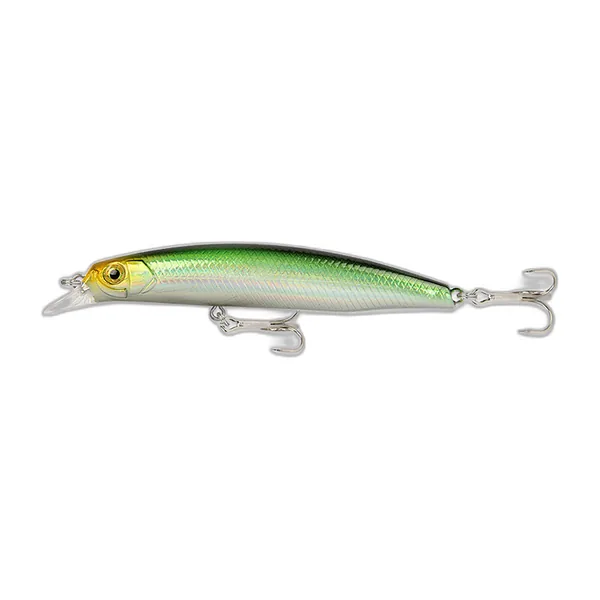 Minnow Crankbaits 9 cm, Pack of 5
Suited to: European perch, Largemouth bass, Smallmouth bass.
€30.90£16.90Not shipped to the United States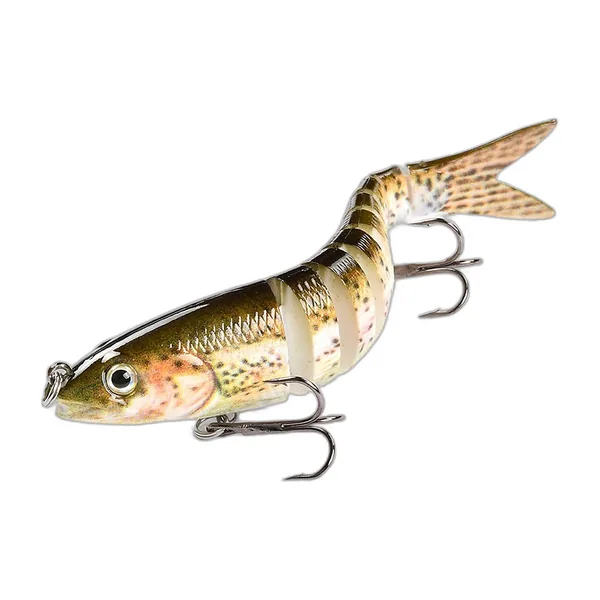 Jointed Loach Imitation Lures 10 cm, Pack of 5
Suited to: Zander, Walleye, European perch, Largemouth bass, Smallmouth bass.
€32.90£18.90Not shipped to the United States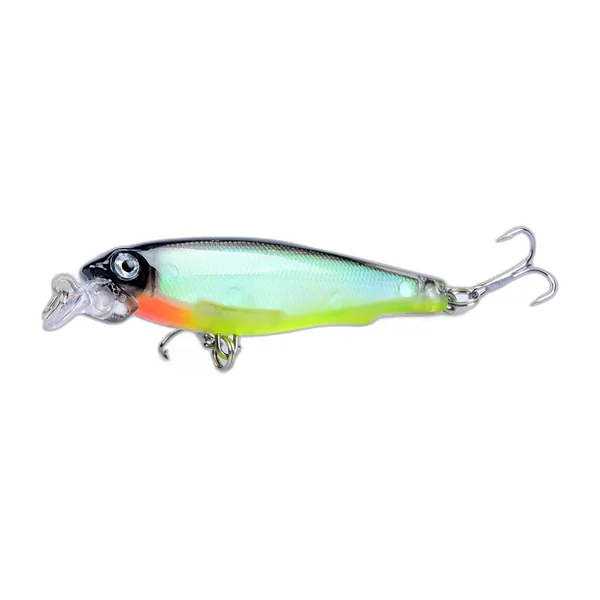 Laser-Finish VIB Lures 8 cm, Pack of 5
Suited to: European perch, Zander, Walleye, Largemouth bass, Smallmouth bass.
€25.90£12.90Not shipped to the United States
The idea
Drop-shot turns the usual rig upside down: the weight sits at the very end of the line and the hook is tied above it, standing out from the line. The bait hovers at a chosen height above the bottom and can be held almost still in front of a wary fish. Born in American bass fishing, it has become a key technique for smallmouth and largemouth bass, walleye and crappie in North America, and for perch and zander in Europe, especially in cold or clear water.
Tackle
A light rod with a sensitive tip, a light reel, thin braid and a fluorocarbon leader. Drop-shot hooks that stand out from the line, clip-on weights (non-toxic where possible) and small finesse soft plastics: worms, minnows, small craws. From a boat, sonar is a huge help to find fish holding on a drop-off or around cover.
Rigging
Tie the hook with a Palomar knot, leaving a long tag end below the hook. Clip the weight onto the tag: the distance between them sets the bait's height above the bottom, from a few inches for walleye and zander to a foot or more for suspended perch or bass. Nose-hook the bait so it hangs naturally.
Barely any action
Drop to the bottom, keep the weight in contact and the line slightly tight. Just shake the rod tip gently: the bait should quiver without moving. This slow presentation triggers inactive fish. You can also cast and drag the rig in short hops. When you feel weight, lift smoothly: a hard strike easily tears out fine hooks.
Care with deep fish
Drop-shotting often happens in 30 ft (10 m) of water or more. Gravel and Cooke (2008) showed in tournament-caught smallmouth bass that barotrauma severity influences physiological status, post-release behaviour and fate. Fish brought up fast from depth often have an expanded swim bladder. If you plan to release, fish moderate depths and bring fish up slowly; otherwise keep only what you will eat, within legal limits. Siepker and colleagues (2007) reviewed catch-and-release effects on black bass. Some agencies publish guidance on handling deep-caught fish; follow it where available.
Rules
Some countries ban lures during predator close seasons, and lead weights are increasingly restricted. Check the regulation page and size limits for your target species.
The gear, item by item
- Light rod with a sensitive tip
- Light reel with a fine drag
- Thin braid
- Fluorocarbon leader
- Drop-shot hooks that stand out from the line
- Clip-on drop-shot weights, ideally non-toxic
- Small finesse soft plastics (worms, minnows)
- Sonar to locate fish and structure
- Rubber-mesh net
Step by step
- Tie the hook with a Palomar knot, leaving a long tag end below it.
- Clip the weight on the tag at the distance you want below the bait.
- Nose-hook the soft plastic so it hangs naturally.
- Drop to the bottom and keep the weight in contact on a slightly tight line.
- Barely move it: tiny shakes of the tip, keeping the bait almost still.
- Set the hook with a smooth lift when you feel weight.
Common mistakes
- Overworking it: drop-shot works with an almost motionless bait.
- A weight-to-hook distance that does not match where fish hold.
- A violent strike that tears out the fine hook.
- Bringing deep fish up fast and then trying to release them.
Rules to check before you go
- Lure bans during predator close seasons in some countries.
- Lead weight restrictions.
- Number of hooks allowed per line.
- Size and bag limits for target species.
Fishing regulations by country
Frequently asked questions
What is drop shot fishing?
Drop shot fishing is a finesse lure technique in which the weight is tied at the end of the line and the hook, usually carrying a small soft plastic, is tied above it, so the bait hovers at a chosen height off the bottom. It originated in American bass fishing and is now widely used for perch and zander.
In a drop-shot rig the usual order is reversed: the sinker sits at the very end of the line and a special drop-shot hook is tied higher up, typically with a Palomar knot so that it stands out horizontally. The distance between hook and weight sets the bait's height above the bottom, a few centimetres for zander or a foot or more for suspended perch or bass. Baits are small finesse soft plastics, worms, minnows or creature baits, nose-hooked so they hang naturally. The angler keeps the weight on the bottom and the line slightly tight and shakes the rod tip gently, so the bait quivers almost in place, a presentation that tempts inactive or wary fish. The technique came from bass fishing in the United States and is now a staple for perch, zander, bass and other predators, especially in cold or clear water and from boats with sonar. Because drop-shotting is often done in deep water, handle released fish carefully: Gravel and Cooke (2008) showed that the severity of barotrauma affects the condition, behaviour and fate of tournament-caught bass after release. In some places lead weights are restricted; in England and Wales lead is only permitted below 0.06 g or above 28.35 g (GOV.UK).
Official sources : Gravel & Cooke 2008 – Severity of barotrauma in tournament-caught bass (NAJFM) ; GOV.UK – Freshwater rod fishing rules: tackle you can use
When should you use a drop shot rig?
Use a drop shot when fish are sluggish, wary or holding at a specific depth: in cold water, in clear water, on heavily fished waters, over deep structure seen on sonar, or when fish ignore faster lures. It keeps a small bait in the strike zone almost motionless. Check local closed seasons for predators.
The drop shot's strength is a small bait held nearly still at an exact depth, so it excels when active lures stop working. Typical situations: cold water in late autumn and winter when perch, zander and bass sit deep and lethargic; clear water where fish inspect baits closely; pressured waters where fish have seen many lures; fish suspended off the bottom or holding tight to cover such as docks, rocks, sunken trees and harbour walls; and deep structure found with sonar from a boat, where the rig can be dropped vertically onto fish. It is less efficient for covering large areas quickly, when a crankbait or spinnerbait is better. We found no study comparing drop shot with other techniques by situation, so this reflects common practice. Two cautions: fish brought up quickly from depth can suffer barotrauma, which Gravel and Cooke (2008) showed affects post-release fate in bass, so fish moderate depths if you plan to release. And check rules: in Germany several states ban predator lures during spring closed seasons, for example Saxony from 1 February to 30 April; in England and Wales rivers are closed to coarse fishing from 15 March to 15 June (GOV.UK).
Official sources : Gravel & Cooke 2008 – Severity of barotrauma in tournament-caught bass (NAJFM) ; Sächsische Fischereiverordnung (SächsFischVO) ; GOV.UK – Freshwater rod fishing rules: when and where you can fish
Is drop shot good for bass, and when should you use it?
Yes, drop shot is a highly effective bass technique, especially for pressured or inactive fish, in clear water, after cold fronts and on deep structure in summer and winter. Be careful with bass from deep water and with nest-guarding males: studies show barotrauma and angling during nesting can harm released bass.
The drop shot was developed in American bass fishing and remains a go-to finesse method. It excels when bass are reluctant to chase: in clear water, on heavily fished lakes, after cold fronts, and when fish hold on deep structure such as ledges, humps and brush piles in summer and winter; it also works around docks and rocks in shallower water. A small worm or minnow hovering just off the bottom stays in front of fish that ignore faster lures. We found no study comparing drop shot with other bass techniques, so this reflects common practice. Science does, however, give guidance on releasing bass. Gravel and Cooke (2008) showed that the severity of barotrauma influences the physiological status, post-release behaviour and fate of tournament-caught bass, which matters because drop shotting often targets deep fish; bring fish up slowly and release them quickly. Siepker and colleagues (2007) reviewed catch-and-release effects on black bass, and Hanson and colleagues (2007) showed that angling can affect the behaviour of nest-guarding males after release, so avoid targeting bass on nests during spawning. FishBase notes that largemouth bass do not feed while spawning. Check your state's bass seasons and limits.
Official sources : Gravel & Cooke 2008 – Severity of barotrauma in tournament-caught bass (NAJFM) ; Siepker et al. 2007 – Review of the effects of catch-and-release angling on black bass (Fish. Manag. Ecol.) ; Hanson et al. 2007 – Effects of angling practices on nest-guarding male black bass (Fish. Manag. Ecol.) ; FishBase – Micropterus salmoides (largemouth bass)
Where should you fish a drop shot rig?
Fish a drop shot where fish hold at a predictable depth or close to cover: drop-offs, ledges, humps, rock piles, brush piles, dock pilings, harbour walls, bridge piers and deep holes, often located with sonar. It also works vertically under a boat over fish seen on the screen and from shore along steep banks.
Because the drop shot keeps a bait at a set height in one spot, it is most effective where fish are concentrated and holding rather than roaming. From a boat, anglers use sonar to find fish or structure such as drop-offs, channel edges, humps, rock piles and brush piles, then lower the rig vertically onto them. From shore, it works along steep banks, harbour and marina walls, dock pilings, bridge piers, rip-rap and deep holes within casting range, where the bait can be hopped slowly along the bottom. In flowing water, use enough weight to hold bottom in eddies and current breaks. Target species also guide location: zander, which FishBase describes as predators of shoaling fish near the bottom in turbid rivers and lakes, often sit near drop-offs and harbour entrances; perch and bass gather around cover and structure. We found no study on drop-shot locations, so this is based on species habitat and common practice. If you fish deep water and plan to release fish, remember that barotrauma can affect their survival (Gravel and Cooke 2008). Respect access rules and local closed seasons, such as the coarse river close season from 15 March to 15 June in England and Wales (GOV.UK).
Official sources : FishBase – Sander lucioperca (Zander) ; Gravel & Cooke 2008 – Severity of barotrauma in tournament-caught bass (NAJFM) ; GOV.UK – Freshwater rod fishing rules: when and where you can fish
How do you drop shot fish?
Tie a drop-shot hook with a Palomar knot, leave a tag end below it and clip a weight on that end; the distance sets the bait's height. Nose-hook a small soft plastic, lower or cast it to the bottom, keep the line just tight and shake the tip; lift steadily when you feel weight.
Rig: tie a drop-shot hook with a Palomar knot so the point faces up, pass the tag end back through the eye so the hook stands out, and leave a long tag below it. Clip or tie the weight to the tag end: the gap between hook and weight is the height of your bait above the bottom, a few centimetres for bottom-hugging zander, more for suspended fish. Use non-toxic weights where possible; Scheuhammer and Norris (1996) reviewed the toxicity of lost lead weights to wildlife, and in England and Wales lead is only allowed below 0.06 g or above 28.35 g (GOV.UK). Bait: nose-hook a small finesse soft plastic so it hangs naturally. Presentation: from a boat, lower the rig vertically onto fish or structure; from shore, cast, let it sink and work it back in small hops with pauses. Keep the weight on the bottom and the line just tight, then gently shake the rod tip so the bait vibrates without moving far. Strike: when you feel weight or a tap, lift the rod steadily rather than jerking, because fine hooks tear out easily. Fish from deep water may suffer barotrauma, which Gravel and Cooke (2008) showed affects post-release fate.
Official sources : Scheuhammer & Norris 1996 – The ecotoxicology of lead shot and lead fishing weights (Ecotoxicology) ; GOV.UK – Freshwater rod fishing rules: tackle you can use ; Gravel & Cooke 2008 – Severity of barotrauma in tournament-caught bass (NAJFM)
What are the best drop shot baits?
The most used drop-shot baits are small finesse soft plastics: straight-tail or finesse worms, small minnow and shad shapes, and creature or craw baits, typically nose-hooked. Natural colours suit clear water, brighter ones stained water. Where allowed, a small live bait can also be fished on a drop shot. We found no study ranking them.
Drop shotting relies on small, subtle baits that move with minimal input. The main categories are finesse worms with straight or slightly paddled tails, small minnow and shad imitations for perch, zander and bass feeding on baitfish, and small creature or crayfish baits for bass and perch around rocks. They are usually nose-hooked through the tip of the head so they hang horizontally and quiver when the rod tip is shaken; weedless wacky or Texas-style hooking is used in cover. Size should match the prey: FishBase notes that zander feed mainly on shoaling fish and that largemouth bass eat fish, crayfish and frogs, so minnow shapes and craw baits make sense. Colour is often chosen by water clarity, natural in clear water and brighter or darker in stained water, though we found no scientific study on colour choice for drop shotting. Where regulations allow natural bait, a small live bait such as a minnow can also be fished on a drop-shot rig; live bait is banned in some places, for example Ireland (IFI) and several German states. In Germany, predator lures are banned during spring closed seasons in some states, such as Saxony from 1 February to 30 April.
Official sources : FishBase – Sander lucioperca (Zander) ; FishBase – Micropterus salmoides (largemouth bass) ; Inland Fisheries Ireland – Angling regulations reminder (pike bye-law 809/2006, coarse fish bye-law 806/2006) ; Sächsische Fischereiverordnung (SächsFischVO)
What drop shot weight should you use?
Use the lightest weight that keeps contact with the bottom: lighter in shallow, calm water, heavier in deep water, wind or current. There is no official standard for sizes. In England and Wales, lead weights are only allowed if they weigh 0.06 g or less or more than 28.35 g, so most drop-shot weights there must be non-lead.
The rule of thumb is to use the lightest weight that lets you feel the bottom and keep the bait in place: light weights in shallow, still water give a slower fall and a more natural presentation, while deeper water, wind drift from a boat or river current require heavier weights to stay vertical and in contact. We found no official or scientific standard for drop-shot weight sizes, so exact numbers depend on conditions and are a matter of practice. The legal side is clearer. In England and Wales, lead weights may only be used if they weigh 0.06 g or less or more than 28.35 g, meaning lead shot from size 14 to 8 and lead weights over one ounce (GOV.UK); since most drop-shot weights fall between those limits, they must be made of non-toxic materials such as tungsten, steel or tin there. The reason is environmental: Scheuhammer and Norris (1996) reviewed the ecotoxicology of lead shot and fishing weights and their poisoning of birds and other wildlife. Even where lead is allowed, non-toxic weights are a sensible choice. Weight shape matters too: cylindrical weights snag less in rocks, round or teardrop weights suit clean bottoms.
Official sources : GOV.UK – Freshwater rod fishing rules: tackle you can use ; Scheuhammer & Norris 1996 – The ecotoxicology of lead shot and lead fishing weights (Ecotoxicology)
Can you drop shot from shore?
Yes. From shore, cast the drop-shot rig out, let the weight reach the bottom, then work it back slowly in small hops with pauses, shaking the rod tip so the bait quivers. It is especially effective along steep banks, harbour walls, piers, docks and rocky margins where fish hold close to shore.
Drop shotting is often associated with boats and sonar, but it works well from the bank. Cast the rig to the target area, let the weight settle on the bottom and tighten the line. Then shake the rod tip gently so the bait vibrates in place for a few seconds, drag or hop the weight a short distance, pause and repeat as you bring the rig back. Vertical presentations are also possible from high banks, piers, jetties and harbour walls, where deep water lies right below you: simply lower the rig beside the structure. Productive shore spots include steep drop-offs close to the bank, rip-rap and rocky shorelines, marinas and dock pilings, bridge piers and deep margins of canals and harbours, all places where perch, zander and bass hold near cover. Use a slightly longer rod from the bank to help with casting distance and line control, and a weight heavy enough to stay in contact in wind or current. In England and Wales, most drop-shot-sized weights must be non-lead because lead is only permitted below 0.06 g or above 28.35 g (GOV.UK). Fish caught from deep water should be released quickly, as barotrauma can affect survival (Gravel and Cooke 2008).
Official sources : GOV.UK – Freshwater rod fishing rules: tackle you can use ; Gravel & Cooke 2008 – Severity of barotrauma in tournament-caught bass (NAJFM)
What are the best drop shot hooks?
Use dedicated drop-shot hooks designed to stand out horizontally from the line when tied with a Palomar knot, in a size matched to the soft bait, or weedless offset hooks around cover. Sharpness and a fine wire matter for light lines. No official standard or study ranks them; consider barbless hooks for release.
Drop-shot hooks are short-shanked, fine-wire hooks with an eye angled so that the hook stands out horizontally when tied with a Palomar knot, which lets the bait hang naturally and improves hooking. Nose-hooking a small soft plastic on such a hook is the standard presentation. Around weed or wood, many anglers switch to a light offset or worm hook and rig the bait Texas-style to reduce snagging. Size should match the bait: a hook too small fails to hook well through a thick plastic, a hook too large kills the bait's action. We found no official standard or scientific study that ranks drop-shot hooks, so this answer reflects design principles and practice. From a welfare perspective, barbless or crushed-barb hooks make unhooking faster; DuBois and Dubielzig (2004) compared mortality, injury and capture efficiency by hook type in trout caught on spinners, and Muoneke and Childress (1994) reviewed hooking mortality more generally. Because drop shotting often targets fish in deep water, bring them up slowly and release them fast, since Gravel and Cooke (2008) showed barotrauma affects post-release fate. Check local rules on hook types, as some waters require single or barbless hooks.
Official sources : DuBois & Dubielzig 2004 – Hook type and wild stream trout caught with spinners (NAJFM) ; Muoneke & Childress 1994 – Hooking mortality: a review for recreational fisheries (Rev. Fish. Sci.) ; Gravel & Cooke 2008 – Severity of barotrauma in tournament-caught bass (NAJFM)
Why use a drop shot rig?
A drop shot lets you hold a small, natural-looking bait at an exact height above the bottom, almost motionless, right in front of fish. That makes it effective for sluggish, wary or suspended fish, in cold or clear water, and around cover; the weight on the bottom also snags less than a jig and gives good bite detection.
The drop-shot rig solves several problems at once. First, depth control: because the weight sits on the bottom and the hook is tied above it, the bait stays at a precise height, which lets you target fish holding just off the bottom or suspended at a known depth, often seen on sonar. Second, presentation: a small soft plastic can be kept almost still and made to quiver, which tempts inactive or wary fish that ignore moving lures, especially in cold or clear water and on pressured waters. Third, staying in the strike zone: the bait can be worked in one spot for a long time without being pulled away. Fourth, fewer snags: only the weight touches the bottom, and a cylindrical weight slides through rocks better than a jig head. Fifth, sensitivity: with the line tight between rod and weight, bites are transmitted clearly. The trade-offs are slower coverage of water and a light rig that is less suited to heavy cover. Because the method often targets deep fish, careful release matters: Gravel and Cooke (2008) showed that barotrauma affects the fate of released bass. In England and Wales, most drop-shot weights must be non-lead (GOV.UK).
Official sources : Gravel & Cooke 2008 – Severity of barotrauma in tournament-caught bass (NAJFM) ; GOV.UK – Freshwater rod fishing rules: tackle you can use
Is drop shot good for trout?
A drop shot can catch trout, especially stocked rainbow trout in lakes and deep pools, with small soft baits or, where allowed, natural baits hovering off the bottom. It is less common than spinners, flies or float fishing for trout, and many trout waters restrict lures, bait or hook types, so check the rules first.
Trout eat aquatic and terrestrial invertebrates and small fish, according to FishBase's description of the rainbow trout, so a small soft plastic imitating a minnow or a worm presented just off the bottom can be effective, particularly for stocked rainbows in stillwaters, deep river pools and reservoirs, and when trout hold deep in warm or bright conditions. It is less traditional than spinners, flies or float-fished baits, and we found no study comparing drop shot with those methods for trout. Rules are the main constraint: many trout waters are fly-only or artificial-lure-only, require single or barbless hooks, or ban natural bait, and game-fish seasons and limits apply. In England and Wales, lead weights between 0.06 g and 28.35 g are banned, so drop-shot weights must usually be non-lead (GOV.UK). If you plan to release trout, lures cause less deep hooking than bait: DuBois and Dubielzig (2004) compared mortality and injury by hook type in wild trout caught on spinners, and Schill (1996) measured hooking mortality in bait-caught rainbow trout. Keep trout in the water while unhooking, and avoid fishing in very warm water, when recovery is poor (Gale et al. 2011).
Official sources : FishBase – Oncorhynchus mykiss (Regenbogenforelle) ; GOV.UK – Freshwater rod fishing rules: tackle you can use ; DuBois & Dubielzig 2004 – Hook type and wild stream trout caught with spinners (NAJFM) ; Schill 1996 – Hooking Mortality of Bait-Caught Rainbow Trout (NAJFM) ; Gale et al. 2011 – The role of temperature in the capture and release of fish (Fish and Fisheries)
Studies cited
- Gravel & Cooke (2008) Severity of Barotrauma Influences the Physiological Status, Postrelease Behavior, and Fate of Tournament-Caught Smallmouth Bass North American Journal of Fisheries Management doi:10.1577/m07-013.1
Shows that barotrauma severity influences the physiology, post-release behaviour and fate of tournament-caught smallmouth bass: highly relevant to a deep-water technique. - SIEPKER et al. (2007) A review of the effects of catch‐and‐release angling on black bass, Micropterus spp.: implications for conservation and management of populations Fisheries Management and Ecology doi:10.1111/j.1365-2400.2007.00529.x
Review of catch-and-release effects on black bass.