Walleye
Sander vitreus
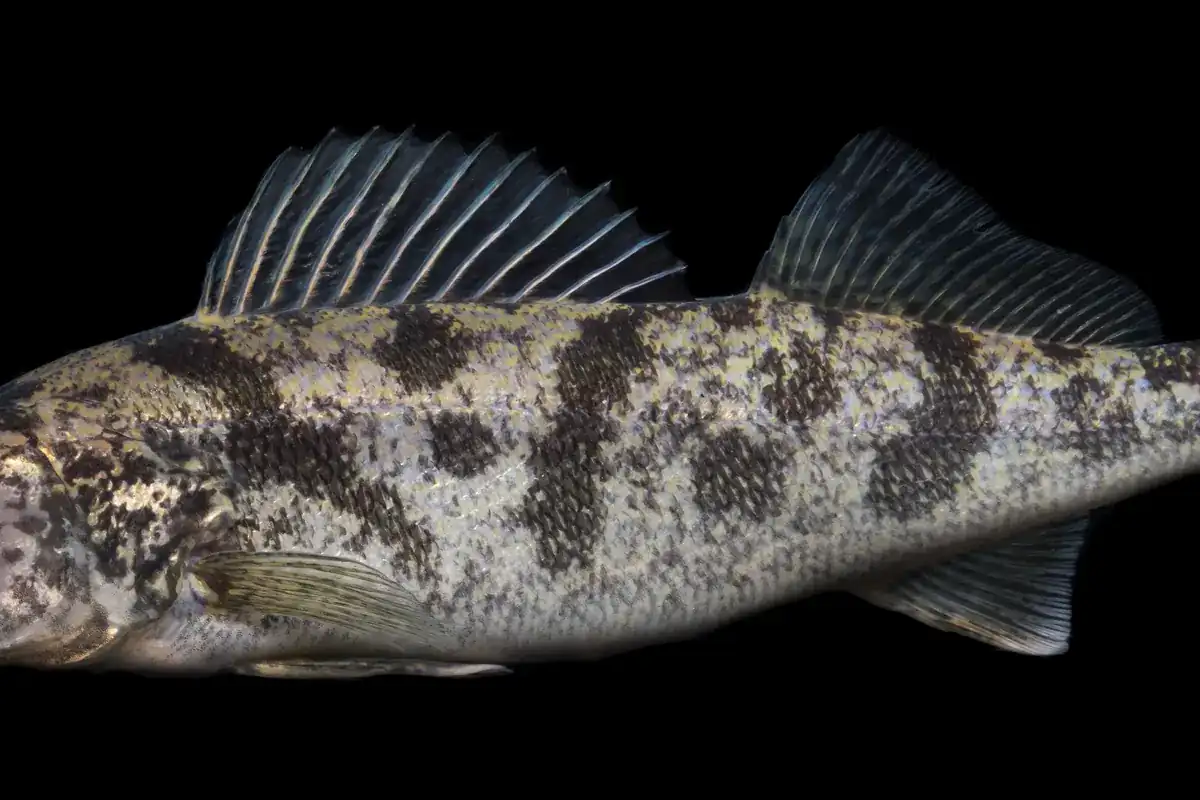
.jpg)
season calendar
Closed months recorded (share of areas closing the species that month) — 3 areas.
Related gear
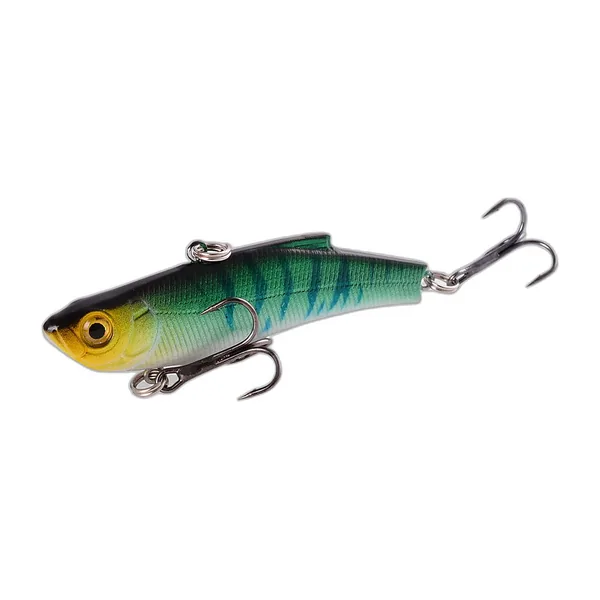 Lipless Vibration Lures (VIB), ABS, Pack of 6
For : zander, walleye, european perch · crankbait and hard-lure fishing
€30.90£15.90Not shipped to the United States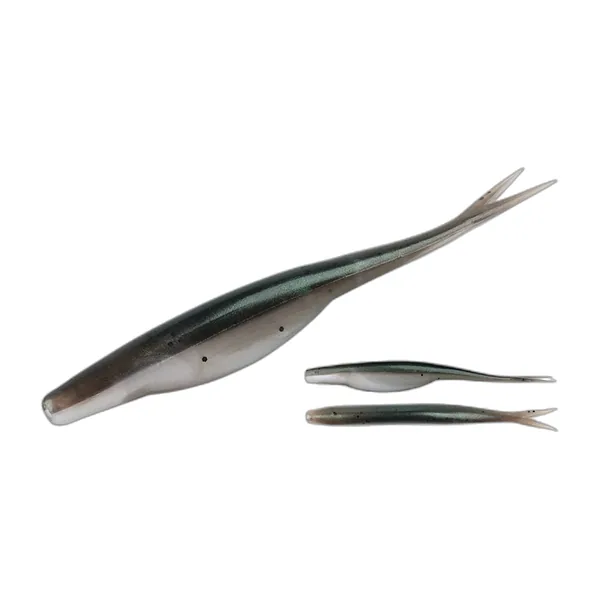 Finesse Soft Lures 12 cm, Pack of 15
For : zander, walleye, european perch · soft plastic lure fishing
€30.90£16.90Not shipped to the United States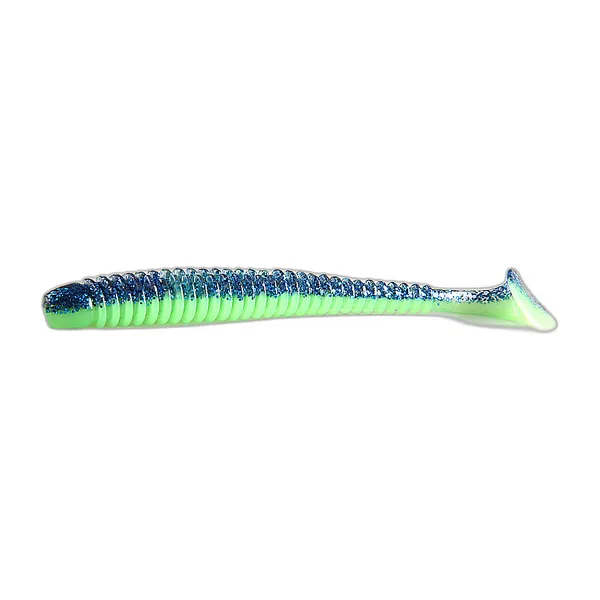 Soft Paddle-Tail Shads 8 cm, Pack of 30
For : european perch, zander, walleye · soft plastic lure fishing
€25.90£12.90Not shipped to the United States
North America's favourite percid
Walleye are close relatives of the European zander in the genus Sander, and one of the most sought-after fish in Canada and the northern United States, as well as one of the best to eat. FishBase describes them in lakes, pools, backwaters and runs of medium to large rivers, often near brush, with a preference for large, shallow, turbid lakes. Their reflective eyes are adapted to low light.
A night feeder
Walleye feed at night, mainly on insects and fish, preferring yellow perch but taking any fish available, plus crayfish, snails and frogs (FishBase). Bolding and colleagues (1998) examined the relative importance of pumpkinseed sunfish and yellow perch in walleye diet. For anglers, dusk, night and dawn are prime time, along with dark or windy days when a "walleye chop" breaks up the light.
Sizes
Common length is 54 cm (21.3 in); the maximum published is 107 cm (42 in, fork length) and 11.3 kg (24.9 lb), with a maximum age of 29 years (FishBase).
Spawning and the opener
Walleye spawn in early spring, soon after ice-out, in small groups that move into shallow water at night; eggs are usually deposited in a single night (FishBase). Most states and provinces close the season during this period, which makes the opener a major event. Dates, size limits, protected slots and daily limits vary a lot between states, provinces and individual lakes, so check the regulation page for your water.
Methods
From a boat, jigs and soft plastics fished vertically over structure found on sonar are the foundation. Trolling crankbaits or spinner rigs with nightcrawlers covers big water. In winter, jigging spoons and jigs through the ice, tipped with a minnow where legal, are a tradition across the walleye belt.
Release considerations
Reeves and Bruesewitz (2007) identified factors influencing hooking mortality on Mille Lacs; Talmage and Staples (2011) measured mortality of walleyes angled from deep water on Rainy Lake; Twardek and colleagues (2017) tracked survival after ice angling. The practical lessons: strike early with live bait, avoid releasing fish brought up from great depths, and keep exposure to freezing air short.
Lures and baits
- Jigs and soft plastics
- Spinner rigs with nightcrawlers
- Trolled crankbaits and stickbaits
- Live minnows where legal
- Jigging spoons through the ice
Catch and release
- Think twice about releasing walleyes caught from deep water; Talmage and Staples (2011) studied their mortality.
- Strike early with live bait to reduce deep hooking.
- In winter, keep exposure to freezing air short (Logan et al. 2019).
- Use barbless hooks when you plan to release.
Frequently asked questions
How do you catch walleye from shore, and what bait works best?
From shore, fish for walleye at dusk, night and dawn where deep water comes close to land: rocky points, piers, dam tailwaters, river current breaks and windward shorelines. Cast jigs with minnows or soft plastics, slim crankbaits, or fish a slip bobber with a leech, nightcrawler or minnow where live bait is legal.
Walleye feed mainly at night, according to FishBase, and move into shallower water to hunt in low light, which makes shore fishing realistic at dusk, at night and at dawn. Choose spots where deeper water or current is within casting range: rocky points and reefs near shore, piers and breakwalls, dam tailwaters and river eddies, bridges, and shorelines where the wind pushes waves and baitfish. For bait, a slip bobber with a leech, nightcrawler or minnow set just above the bottom is simple and effective, as is a jig head tipped with a minnow or soft plastic bounced along the bottom; at night, slim floating crankbaits retrieved slowly over shallow rocks catch actively feeding fish. Live bait rules vary by state, and many states restrict moving baitfish between waters to prevent the spread of invasive species and disease, so buy or catch bait according to local rules. Strike promptly to avoid deep hooking, which Reeves and Bruesewitz (2007) linked to walleye hooking mortality. Check size and bag limits: Michigan and Wisconsin require 15 inches on most waters, and Minnesota allows only one fish over 20 inches.
Official sources : FishBase – Sander vitreus (walleye) ; Reeves & Bruesewitz 2007 – Factors influencing hooking mortality of walleyes on Mille Lacs, Minnesota (NAJFM) ; Michigan DNR – 2026 Michigan Fishing Regulations ; Wisconsin DNR regulations (eRegulations) – seasons and limits ; Minnesota DNR – Fishing regulations 2026-27
What do walleye eat?
Walleye feed mainly at night on fish and insects, according to FishBase, with a preference for yellow perch and freshwater drum, but they take any available fish. When fish and insects are scarce they also eat crayfish, snails, frogs, mudpuppies and small mammals.
FishBase describes the walleye (Sander vitreus) as a night feeder that eats mainly insects and fishes, with a preference for yellow perch and freshwater drum, although it will take any fish available; when fish and insects are scarce it also feeds on crayfish, snails, frogs, mudpuppies and small mammals. Young walleye start on zooplankton and aquatic insects before becoming fish-eaters. Walleye live in lakes, pools, backwaters and runs of medium to large rivers and, according to FishBase, prefer large, shallow lakes with high turbidity; their light-sensitive eyes let them hunt effectively at dusk, at night and in murky water. For anglers this explains the classic baits and lures: live minnows and nightcrawlers where legal, leeches, jigs with soft plastics, and crankbaits that imitate perch and other baitfish, fished most successfully in low light. Where yellow perch are abundant, perch-coloured lures are a common choice. Walleye are important game fish across Canada and the northern and central United States, and many state agencies stock them; FishBase notes that large numbers are hatched and raised for stocking lakes for sport fishing.
Official sources : FishBase – Sander vitreus (walleye)
What is the best bait for walleye?
Proven live baits for walleye are minnows, nightcrawlers and leeches, fished on a jig, a live-bait rig or a spinner rig near the bottom, where legal. Walleye feed mainly on fish and insects at night, according to FishBase, so baits that imitate small fish work best in low light.
FishBase describes walleye as night feeders that eat mainly fish, especially yellow perch and freshwater drum, and insects, plus crayfish and other prey when fish are scarce. Live bait therefore works well: minnows such as fatheads or shiners hooked on a jig head or a live-bait rig, nightcrawlers on a spinner harness trolled slowly, and leeches in summer. Present them close to the bottom along drop-offs, weed edges, rock reefs and points, and fish at dusk, at night or on windy, overcast days. Strike promptly: Reeves and Bruesewitz (2007) studied factors affecting hooking mortality of walleyes caught by anglers on Mille Lacs, Minnesota, and deep hooking with live bait is a known risk. Rules on bait vary by state and province. Many states restrict transporting live bait or using baitfish from other waters to prevent the spread of invasive species and disease, and some waters prohibit live bait altogether. Size and bag limits also differ: Minnesota has no statewide minimum but allows only one walleye over 20 inches, Michigan and Wisconsin apply a 15-inch minimum on most waters, and Texas a 16-inch minimum with exceptions. Check your state regulations before you go.
Official sources : FishBase – Sander vitreus (walleye) ; Reeves & Bruesewitz 2007 – Factors influencing hooking mortality of walleyes on Mille Lacs, Minnesota (NAJFM) ; Minnesota DNR – Fishing regulations 2026-27 ; Michigan DNR – 2026 Michigan Fishing Regulations ; Wisconsin DNR regulations (eRegulations) – seasons and limits ; Texas Parks and Wildlife – Freshwater bag and length limits 2026-27
What is the best lure for walleye?
The most widely used walleye lures are jigs with soft plastics or live bait, slim crankbaits and stickbaits trolled or cast at dusk and night, spinner rigs, blade baits and jigging spoons for vertical fishing and ice fishing. They work because walleye hunt fish near the bottom in low light. We found no study ranking walleye lures.
Walleye, according to FishBase, feed mainly at night on fish, with yellow perch a preferred prey, and on insects; they favour large, shallow, turbid lakes and river runs. Lures that imitate small fish close to the bottom in low light therefore dominate. Jigs are the most versatile: a jig head with a soft-plastic grub, minnow or paddle tail, or tipped with a minnow, worked slowly along the bottom. Slim crankbaits and stickbaits are trolled or cast over reefs, weed edges and shallow flats at dusk and night, when walleye move up to feed. Spinner rigs with a nightcrawler, blade baits and jigging spoons are staples in rivers, deep structure and through the ice. Perch-coloured and natural patterns are common choices, brighter colours in stained water. Our species data list jigs with soft plastics, spinner rigs with nightcrawlers, trolled crankbaits and stickbaits, live minnows where legal and jigging spoons through the ice. We found no controlled study ranking these lures, so this answer reflects the species' diet and widespread practice. When releasing fish caught from deep water, be aware that Talmage and Staples (2011) found notable mortality in walleyes angled from deep water in Rainy Lake, Minnesota.
Official sources : FishBase – Sander vitreus (walleye) ; Talmage & Staples 2011 – Mortality of walleyes angled from deep water (NAJFM)
How big do walleye get?
Walleye commonly reach about 54 cm (21 in); FishBase gives a published maximum of 107 cm fork length (42 in) and 11.3 kg (about 25 lb), with a maximum reported age of 29 years. Most walleye caught are far smaller, and states set minimum sizes such as 15 inches in Michigan and Wisconsin.
FishBase gives the walleye (Sander vitreus) a common length of 54 cm total length, a published maximum of 107 cm fork length, a maximum published weight of 11.3 kg and a maximum reported age of 29 years; it matures at around 42 cm. Growth depends strongly on water temperature, food and fishing pressure, so walleye in large, productive lakes and rivers reach bigger sizes than those in cold, infertile waters. Most fish caught are well below the maximum. Harvest rules reflect size: Michigan and Wisconsin apply a 15-inch statewide minimum on most waters, Ohio a 15-inch minimum on Lake Erie, Oklahoma 14 inches, Texas 16 inches with some smaller fish allowed in the bag, Connecticut 18 inches, while Minnesota has no statewide minimum but allows only one walleye over 20 inches in possession (state regulations 2026-27). Many lakes have protected slot limits, so big fish must often be released. When releasing large walleye caught from deep water, consider barotrauma: Talmage and Staples (2011) studied mortality of walleyes angled from deep water. Check the special regulations for the water you fish, since they often override statewide rules.
Official sources : FishBase – Sander vitreus (walleye) ; Michigan DNR – 2026 Michigan Fishing Regulations ; Wisconsin DNR regulations (eRegulations) – seasons and limits ; Ohio DNR Division of Wildlife – Ohio fishing regulations 2026-27 ; Oklahoma Department of Wildlife Conservation – Statewide daily and size limits ; Texas Parks and Wildlife – Freshwater bag and length limits 2026-27 ; Connecticut DEEP – 2026 Angler's Guide ; Minnesota DNR – Fishing regulations 2026-27 ; Talmage & Staples 2011 – Mortality of walleyes angled from deep water (NAJFM)
At what water temperature do walleye spawn?
Walleye spawn in early spring, soon after ice-out, when small groups move into shallow water at night and usually deposit their eggs in a single night, according to FishBase. We could not verify a specific spawning temperature in an official source, so we do not give a number here.
FishBase describes walleye spawning as taking place in early spring, soon after the ice goes out, with small groups of fish moving into shallow water at night; eggs are usually deposited in a single night over suitable substrate. Many angling articles quote a specific water temperature range for spawning, but we could not verify such a figure in FishBase or an agency source available to us, so we leave it out rather than risk an inaccurate number. What matters for anglers is the timing relative to the season: spawning fish concentrate on shallow rocky shorelines, reefs and river riffles, and many states and provinces close walleye fishing in spring until an opener to protect them. Minnesota's inland walleye season, for example, opens on 9 May 2026 and runs until 28 February 2027, and Wisconsin's walleye and northern pike season ran from 3 May 2025 to 1 March 2026, according to the state regulations. Missouri keeps walleye and sauger open year-round. Some waters have spawning sanctuaries or special spring rules. If you fish in spring, check your state's regulations and avoid disturbing fish on spawning grounds.
Official sources : FishBase – Sander vitreus (walleye) ; Minnesota DNR – Fishing regulations 2026-27 ; Wisconsin DNR regulations (eRegulations) – seasons and limits ; Missouri Department of Conservation – Walleye and sauger season and limits
Where should you fish for walleye?
Fish for walleye in large lakes, reservoirs and medium to large rivers, especially on rocky reefs, points, drop-offs, weed edges and current breaks. FishBase notes they prefer large, shallow, turbid lakes and feed at night, so they move shallower at dusk and in murky water. Check state regulations for the water you fish.
FishBase describes walleye habitat as lakes, pools, backwaters and runs of medium to large rivers, often in clear water near brush, and notes a preference for large, shallow lakes with high turbidity. Native to Canada and the northern and central United States, walleye have been widely stocked elsewhere. Within a water, look for structure: rocky reefs and points, gravel bars, drop-offs and channel edges, weed lines, and in rivers, current breaks below dams, wing dams and eddies. By day walleye often hold deeper or in cover, then move shallower at dusk and at night to feed, especially on windy days when waves stir the water. In winter they are a major ice-fishing target. Where to go depends on your state: large natural lakes and reservoirs in Minnesota, Wisconsin and Michigan, Lake Erie in Ohio and Michigan, and many river systems hold important fisheries, each with its own rules. Minnesota's inland season runs from 9 May 2026 to 28 February 2027, Wisconsin applies a 15-inch minimum on most inland waters, and Ohio sets a 15-inch minimum and six-fish limit on Lake Erie, according to the state regulations. State agencies publish lake finders and stocking information that help identify good waters.
Official sources : FishBase – Sander vitreus (walleye) ; Minnesota DNR – Fishing regulations 2026-27 ; Wisconsin DNR regulations (eRegulations) – seasons and limits ; Ohio DNR Division of Wildlife – Ohio fishing regulations 2026-27
What size walleye can you keep?
It depends on the state and the water. Examples for 2026: Michigan and Wisconsin require 15 inches on most waters, Ohio 15 inches on Lake Erie, Oklahoma 14 inches, Texas 16 inches (with exceptions), Connecticut 18 inches; Minnesota has no statewide minimum but only one walleye over 20 inches. Many lakes have special slot limits.
Walleye size limits are set by each state and province, and individual lakes often have special rules that override statewide limits. Examples from the 2026 regulations: Michigan applies a 15-inch minimum with a five-fish daily limit statewide, and six fish on Lake Erie, the Detroit River and Lake St. Clair; Wisconsin applies a 15-inch minimum on most inland waters, with different rules in the Ceded Territory, and a five-fish limit; Ohio sets a 15-inch minimum on Lake Erie with no statewide inland minimum, and a combined daily limit of six walleye, sauger and saugeye; Missouri requires 15 inches with a daily limit of four; Oklahoma requires 14 inches with six per day; Texas requires 16 inches with a daily bag of five, of which only two may be under 16 inches; Connecticut requires 18 inches with two per day; Minnesota has no statewide minimum length, but only one walleye over 20 inches may be possessed, within a combined walleye and sauger limit of six. Always check the special regulations for the lake or river you fish, measure fish correctly and release undersized or slot-protected walleye promptly, keeping them in the water where possible.
Official sources : Michigan DNR – 2026 Michigan Fishing Regulations ; Wisconsin DNR regulations (eRegulations) – seasons and limits ; Ohio DNR Division of Wildlife – Ohio fishing regulations 2026-27 ; Missouri Department of Conservation – Walleye and sauger season and limits ; Oklahoma Department of Wildlife Conservation – Statewide daily and size limits ; Texas Parks and Wildlife – Freshwater bag and length limits 2026-27 ; Connecticut DEEP – 2026 Angler's Guide ; Minnesota DNR – Fishing regulations 2026-27
How do you catch walleye?
Catch walleye near the bottom in low light: jig a minnow or soft plastic along drop-offs and reefs, troll crankbaits or spinner rigs with nightcrawlers over flats, or fish a slip bobber with a leech or minnow. Dusk, night, dawn and windy, overcast days are best, and spring openers, autumn and ice season are prime times.
FishBase describes walleye as night feeders on fish and insects that prefer large, turbid lakes and river runs; their eyes are adapted to low light. The main techniques follow. Jigging: a jig head with a minnow or soft plastic worked along the bottom on drop-offs, reefs and river current breaks. Trolling: crankbaits, stickbaits or spinner harnesses with nightcrawlers pulled over flats, weed edges and along breaklines, often at dusk and night. Live-bait rigs and slip bobbers: a leech, nightcrawler or minnow presented just above the bottom or at the depth where fish show on sonar. In winter, jigging spoons and minnows through the ice are highly effective. Wind-blown shorelines, the so-called walleye chop, and stained water often improve daytime fishing. Strike promptly with live bait to limit deep hooking, which Reeves and Bruesewitz (2007) identified as a factor in walleye hooking mortality on Mille Lacs. Rules: check your state's season, size and bag limits; Minnesota's inland season opens on 9 May 2026, Michigan and Wisconsin use 15-inch minimums on most waters, and many lakes have slot limits.
Official sources : FishBase – Sander vitreus (walleye) ; Reeves & Bruesewitz 2007 – Factors influencing hooking mortality of walleyes on Mille Lacs, Minnesota (NAJFM) ; Minnesota DNR – Fishing regulations 2026-27 ; Michigan DNR – 2026 Michigan Fishing Regulations ; Wisconsin DNR regulations (eRegulations) – seasons and limits
How long do walleye live?
Walleye can live a long time: FishBase gives a maximum reported age of 29 years. Most walleye in fished populations are much younger, and growth and longevity depend on water temperature, food and fishing pressure. They mature at a length of roughly 42 cm on average, according to FishBase.
FishBase lists a maximum reported age of 29 years for the walleye (Sander vitreus), with a common length of 54 cm and a published maximum of 107 cm fork length and 11.3 kg. The average length at first maturity given by FishBase is about 42.5 cm, within a range of 36 to 44.8 cm. Longevity varies with the environment: in colder, northern waters walleye usually grow more slowly and can live longer, while in warmer, productive waters they grow faster. Fishing pressure also shapes age structure, because harvest removes older, larger fish; this is one reason why many lakes use protected slot limits, for example Minnesota's rule that only one walleye over 20 inches may be possessed (Minnesota DNR regulations 2026-27). Old, large walleye are valuable spawners, so many anglers release them. If you do, handle them carefully: keep them in the water while unhooking, support the body, and be aware that fish brought up quickly from deep water may suffer barotrauma; Talmage and Staples (2011) studied the mortality of walleyes angled from the deep waters of Rainy Lake, Minnesota. In winter, limit their exposure to freezing air, as Logan and colleagues (2019) showed.
Official sources : FishBase – Sander vitreus (walleye) ; Minnesota DNR – Fishing regulations 2026-27 ; Talmage & Staples 2011 – Mortality of walleyes angled from deep water (NAJFM) ; Logan et al. 2019 – Winter air exposure on walleye physiology (Fish. Res.)
When is the best time of year to fish for walleye?
The best walleye seasons are the spring opener, autumn and the ice season. Within the day, dusk, night and dawn are most productive, along with windy or overcast days. Season dates are set by each state: Minnesota's inland season, for example, runs from 9 May 2026 to 28 February 2027, while Missouri is open year-round.
Walleye are active in low light and cool to moderate water. According to FishBase they feed mainly at night on fish and insects and spawn in early spring soon after ice-out. Anglers therefore find three main peaks. After the spring opener, walleye that have finished spawning feed actively in shallow water and near spawning areas. In autumn, as water cools, they feed heavily before winter and move to predictable structure. In winter, ice fishing on frozen lakes is a major walleye fishery. Summer can also be good, especially at night and on windy days, but fish often move deeper in warm, clear lakes. Within the day, dusk, dawn and night are the best times, and wind-driven waves, the 'walleye chop', can make daytime fishing productive. Seasons are set by each state: Minnesota's inland walleye season runs from 9 May 2026 to 28 February 2027; Wisconsin's walleye and northern pike season ran from 3 May 2025 to 1 March 2026 on most waters; Missouri's walleye and sauger season is open all year, all according to the state regulations. Special rules apply on many waters, so check before you go. In winter, keep released fish out of freezing air (Logan et al. 2019).
Official sources : FishBase – Sander vitreus (walleye) ; Minnesota DNR – Fishing regulations 2026-27 ; Wisconsin DNR regulations (eRegulations) – seasons and limits ; Missouri Department of Conservation – Walleye and sauger season and limits ; Logan et al. 2019 – Winter air exposure on walleye physiology (Fish. Res.)
What time of day do walleye bite?
Walleye bite best at dusk, during the night and at dawn, because they feed mainly at night and their eyes are adapted to low light, according to FishBase. On overcast or windy days, and in stained or murky water, they also feed during daylight. Bright, calm, clear conditions are usually the slowest.
FishBase states that walleye feed at night, mainly on insects and fishes, and that they prefer large, shallow, turbid lakes. Their large eyes have a reflective layer that works well in low light, giving them an advantage over prey at dusk and at night. This is why the evening transition into darkness and the hours around dawn are usually the most productive, and why night trolling or casting shallow reefs and flats with crankbaits catches many fish. Light conditions matter more than the clock: on overcast days, in wind-blown water with waves, or in naturally stained rivers and lakes, walleye often feed through the day; in bright sun and flat calm they tend to sit deeper or in cover. Under the ice, early morning and late afternoon are often the best periods. Seasonally, walleye feed actively after spawning in spring and heavily in autumn. Rules on night fishing and lights differ between states and waters, so check your regulations. When fishing at night, carry a headlamp and a life jacket in a boat, and release fish quickly, keeping them in the water while unhooking.
Official sources : FishBase – Sander vitreus (walleye)
Why are walleye called pickerel?
In parts of Canada, especially Ontario and Manitoba, 'pickerel' or 'yellow pickerel' is a traditional local name for the walleye, even though true pickerels are a different group of pike-family fish (Esox). The walleye is actually in the perch family. We could not verify the historical origin of the name in an official source.
The walleye (Sander vitreus) belongs to the perch family, Percidae, as FishBase classifies it, together with the European zander, its close relative. True pickerels, such as the chain pickerel, are members of the pike family, Esocidae. Despite this, 'pickerel', 'yellow pickerel' and 'walleyed pike' have long been used as vernacular names for the walleye, and 'pickerel' is especially common in parts of Canada; our species data list 'Pickerel (Canada)' and 'Walleyed pike' among its alternative names. The likely reason is historical: early settlers and fishermen applied familiar European or eastern names like pike and pickerel to a toothy predator of similar shape and habits. We could not confirm the exact origin of this usage in an official or scholarly source available to us, so this part remains unverified. For anglers the practical point is that regulations use the official name: provincial and state rules refer to walleye, and in some Canadian provinces also to pickerel, so read your local regulations carefully, as size and bag limits are specific to the species and waters concerned.
Official sources : FishBase – Sander vitreus (walleye)
How big do walleye get in Lake Erie?
We did not find an official average size for Lake Erie walleye in our sources. What is documented is the species maximum from FishBase, 107 cm fork length and 11.3 kg, and the Lake Erie rules: Ohio sets a 15-inch minimum and a six-fish daily limit, and Michigan six fish with a 15-inch minimum on Lake Erie.
Lake Erie supports one of the best-known walleye fisheries in North America, but we could not access an agency report giving average or trophy sizes for Lake Erie walleye, so we do not quote a figure. For the species as a whole, FishBase gives a common length of 54 cm, a published maximum of 107 cm fork length, a maximum weight of 11.3 kg and a maximum age of 29 years; large, productive, turbid lakes like Lake Erie provide good conditions for growth, since FishBase notes the species prefers large, shallow lakes with high turbidity. The regulations, which we did verify, focus on harvest: Ohio's rules set a 15-inch minimum length for walleye, sauger and saugeye on Lake Erie and a combined daily limit of six from 1 March to 30 April 2026, with the limit for the rest of the season announced in late April; Michigan applies six walleye per day with a 15-inch minimum on Lake Erie, the Detroit River and the St. Clair system, updated each 1 May. Ontario manages the Canadian side separately. For current size structure and catch rates, the Ohio DNR and Michigan DNR publish annual Lake Erie fishery reports.
Official sources : FishBase – Sander vitreus (walleye) ; Ohio DNR Division of Wildlife – Ohio fishing regulations 2026-27 ; Michigan DNR – 2026 Michigan Fishing Regulations
Minimum size for Walleye by area
United States : 30.5–45.7 cm (25)
| Connecticut | 45.7 cm |
| Illinois | 35.6 cm |
| Indiana | 35.6 cm |
| Iowa | 38.1 cm |
| Kansas | 38.1 cm |
| Kentucky | 35.6 cm |
| Maryland | 38.1 cm |
| Massachusetts | 35.6 cm |
| Michigan | 38.1 cm |
| Missouri | 38.1 cm |
| Nebraska | 38.1 cm |
| New Hampshire | 45.7 cm |
| New Jersey | 45.7 cm |
| New York | 38.1 cm |
| North Dakota | 35.6 cm |
| Ohio | 38.1 cm |
| Oklahoma | 35.6 cm |
| Pennsylvania | 38.1 cm |
| Rhode Island | 35.6 cm |
| Tennessee | 40.6 cm |
| Texas | 40.6 cm |
| Vermont | 45.7 cm |
| Virginia | 45.7 cm |
| Washington | 30.5 cm |
| Wisconsin | 38.1 cm |
Canada : 50 cm (1)
| Alberta | 50 cm |
Studies cited
- Reeves & Bruesewitz (2007) Factors Influencing the Hooking Mortality of Walleyes Caught by Recreational Anglers on Mille Lacs, Minnesota North American Journal of Fisheries Management doi:10.1577/m05-209.1
Identifies the factors influencing hooking mortality of walleyes caught by anglers on Mille Lacs, Minnesota. - Talmage & Staples (2011) Mortality of Walleyes Angled from the Deep Waters of Rainy Lake, Minnesota North American Journal of Fisheries Management doi:10.1080/02755947.2011.623759
Measures mortality of walleyes angled from the deep waters of Rainy Lake: a caution about releasing fish brought up from depth. - Twardek et al. (2017) The Postrelease Survival of Walleyes Following Ice-Angling on Lake Nipissing, Ontario North American Journal of Fisheries Management doi:10.1002/nafm.10009
Tracks post-release survival of walleyes after ice angling on Lake Nipissing, Ontario.
Official sources
- FishBase – Sander vitreus (fiche espèce ; statut IUCN Red List 2025-2 repris par FishBase) (accessed on 23 September 2026)
- Vlaamse overheid – Visverlof (verplicht voor recreatief vissen op de openbare binnenwateren van het Vlaamse Gewest) (accessed on 23 September 2026)