Fishing regulations in Canada
13 pages (Province, Territory). Each one covers the licence and its price, the season calendar, minimum sizes, bag limits and official sources.
| Area | Licence | Next opening | Last checked |
|---|---|---|---|
| Alberta | CA$87 | — | 23 September 2026 |
| British Columbia | CA$91.44 | — | 23 September 2026 |
| Manitoba | CA$72.45 | — | 23 September 2026 |
| New Brunswick / Nouveau-Brunswick | CA$173 | — | 23 September 2026 |
| Newfoundland and Labrador / Terre-Neuve-et-Labrador | CA$80 | — | 23 September 2026 |
| Northwest Territories / Territoires du Nord-Ouest | CA$51.73 | — | 23 September 2026 |
| Nova Scotia / Nouvelle-Écosse | CA$156.08 | — | 23 September 2026 |
| Nunavut / ᓄᓇᕗᑦ | CA$43.04 | — | 23 September 2026 |
| Ontario | CA$249.57 | — | 23 September 2026 |
| Prince Edward Island / Île-du-Prince-Édouard | CA$20 | — | 23 September 2026 |
| Québec | CA$191.72 | Maskinongé, 30 Nov 2026 | 23 September 2026 |
| Saskatchewan | CA$115 | — | 23 September 2026 |
| Yukon | CA$61.59 | — | 23 September 2026 |
Frequently asked questions
How do I get a fishing licence in Canada?
Buy it from the province or territory where you will fish, usually online. Freshwater recreational licences are provincial: Ontario sells licences through its Outdoors Card system, Quebec through Mon dossier chasse et pêche, British Columbia online. There is no single national freshwater licence.
In Canada each province and territory issues its own recreational freshwater fishing licence, with its own zones, seasons and limits. In Ontario most anglers need an Outdoors Card ($8.57, valid three calendar years) plus a sport or conservation licence; a one-year sport licence costs $26.57 for Ontario residents in 2026, and a one-day licence can be bought without an Outdoors Card. In Quebec licences are sold online (Mon dossier chasse et pêche) or through vendors; the resident annual licence is $26.73 and annual licences run from 1 April to 31 March, with a separate licence for Atlantic salmon. British Columbia sells its basic licence online ($41.15 for residents, licence year 1 April to 31 March) and adds stamps for steelhead and salmon. Manitoba ($29.40 resident annual, 2026-27) and Alberta ($30 resident annual) have their own online systems. Fishing in tidal waters needs a separate federal licence in some provinces. Always carry the licence and read the zone rules for the water you choose.
Official sources : Ontario Fishing Regulations Summary 2026 – recreational fishing licences and fees ; Gouvernement du Québec – sport fishing licences (prices) ; British Columbia – recreational freshwater fishing licence ; Manitoba – licence fees 2026-27 ; Alberta Guide to Sportfishing Regulations – licences and costs
Can Americans fish in Canada?
Yes. Americans can fish in Canada by buying the non-resident licence of the province they visit, for example an Outdoors Card and non-Canadian licence in Ontario, or a non-resident licence in Quebec. Some areas add conditions, such as guides or outfitters for non-residents in parts of northern Quebec.
Nationality does not bar anyone from fishing, but non-residents buy different, more expensive licences. In Ontario, non-Canadian residents need an Outdoors Card ($8.57) and a fishing licence, or just a one-day licence ($24.86 in 2026); an eight-day sport licence costs $54.38 and a one-year licence $83.19. Non-Canadian residents aged 65 and over still need a licence, and those under 18 may fish without one when accompanied by a licensed angler, sharing that person's catch limit. Non-Canadians camping on Crown land in parts of north-western Ontario must follow conservation-licence limits. In Quebec, non-residents choose between annual ($95.68), 7-day, 3-day or 1-day licences, and in some zones north of the 52nd parallel they must use an outfitter. Other provinces publish their own non-resident rules. You also need valid travel documents to cross the border.
Official sources : Ontario Fishing Regulations Summary 2026 – recreational fishing licences and fees ; Ontario – Fishing licence (non-residents of Canada) ; Gouvernement du Québec – sport fishing licences (prices) ; Gouvernement du Québec – fishing regulations by zone ; Canada Border Services Agency – travel documents
How much is a fishing licence in Canada?
Prices are set by each province. For residents in 2026: Ontario $26.57 a year plus an $8.57 Outdoors Card, Quebec $26.73, British Columbia $41.15, Manitoba $29.40, Alberta $30. Visitors from outside Canada pay more, for example $83.19 a year or $24.86 a day in Ontario.
Canada has no national freshwater licence, so costs vary. Ontario (2026, plus 13% HST): Outdoors Card $8.57; one-year sport licence $26.57 for Ontario residents, $55.81 for other Canadians and $83.19 for non-Canadians; one-day licences $12.21, $15.21 and $24.86; an eight-day licence for non-Canadians $54.38; cheaper conservation licences with lower catch limits also exist. Quebec: resident annual $26.73 (under 65) or $21.21 (65 and over), non-resident $95.68 a year, $57.67 for 7 days, $38.36 for 3 days and $22.36 for one day; Atlantic salmon needs a separate licence ($59.76 resident, $191.72 non-resident per year). British Columbia: resident basic annual $41.15, plus stamps for steelhead and salmon. Manitoba: resident annual $29.40 for 2026-27. Alberta: resident annual sportfishing licence $30 plus a one-time WiN number. Fees at Quebec zecs, wildlife reserves or outfitters, and national park permits, are extra.
Official sources : Ontario Fishing Regulations Summary 2026 – recreational fishing licences and fees ; Gouvernement du Québec – sport fishing licences (prices) ; British Columbia – recreational freshwater fishing licence ; Manitoba – licence fees 2026-27 ; Alberta Guide to Sportfishing Regulations – licences and costs
Do seniors need a fishing licence in Canada?
It depends on the province and on residency. In Ontario, Ontario and Canadian residents aged 65 or over do not need a licence, but non-Canadians of any age do. Quebec residents 65 and over still buy a licence, at a reduced $21.21 annual rate.
Ontario's 2026 regulations say that Ontario and Canadian residents who are 65 or older may fish without purchasing a licence, carrying proof of age and residency, while most non-Canadian residents need an Outdoors Card and licence, including those 65 or older. Quebec has no general senior exemption: residents aged 65 and over buy an annual sport licence at $21.21 instead of $26.73, and non-residents must pay the standard $95.68 annual price regardless of age. Other provinces have their own senior rules; for example Saskatchewan and Alberta price their resident licences by age bands such as 16-64, so check each provincial licence page. Seniors fishing without a licence still follow the seasons, sizes and catch limits of the zone, and must carry the documents the province asks for when a conservation officer checks them.
Official sources : Ontario Fishing Regulations Summary 2026 – recreational fishing licences and fees ; Gouvernement du Québec – sport fishing licences (prices) ; Alberta Guide to Sportfishing Regulations – licences and costs ; Saskatchewan Anglers' Guide 2026-27
Where can you fish in Canada?
Almost anywhere with public access, under provincial rules by zone. Quebec has 29 fishing zones plus zecs, wildlife reserves and outfitters with access fees; Ontario has 20 fisheries management zones; British Columbia nine regions. There is no official national ranking of the best spots.
Canada has no national list of fishing sites; provinces organise access and rules. Quebec is divided into 29 fishing zones with exceptions for particular waters and for structured wildlife territories (zecs, wildlife reserves and outfitters), where daily access fees are added to the licence; in some zones north of the 52nd parallel, non-residents must fish through an outfitter. Ontario has 20 fisheries management zones, each with its own seasons and limits, and non-Canadians camping on Crown land in parts of north-western Ontario must follow conservation limits. British Columbia is split into nine regions, each with water-specific rules. Alberta groups waters into Eastern Slopes, Northern Boreal and Parkland-Prairie units, and Manitoba into four fishing divisions. National parks require a Parks Canada fishing permit instead of the provincial licence. Choose the region for your target species, then read the zone page for dates, open species and limits.
Official sources : Gouvernement du Québec – fishing regulations by zone ; Gouvernement du Québec – sport fishing licences (prices) ; Ontario Fishing Regulations Summary 2026 – recreational fishing licences and fees ; British Columbia Freshwater Fishing Regulations Synopsis 2025-2027 ; Alberta sportfishing regulations – Eastern Slopes default rules ; Manitoba Anglers' Guide ; Nunavut – sport fishing guide
What fish can you catch in Canada?
Provincial rules cover walleye, sauger, northern pike, muskellunge, largemouth and smallmouth bass, lake trout, brook trout, rainbow and brown trout, plus salmon and steelhead under special licences or stamps. Which species a lake holds depends on the zone, so check the provincial zone tables.
The regulations of the main provinces give the list of sport species. Quebec sets zone seasons for walleye and sauger, pike, bass, muskellunge, lake trout (touladi), chars and trouts; in zones 10 and 14 in 2026, walleye and pike open on 15 May and lake trout, chars and trout are fished from 23 April to 15 September. Atlantic salmon needs a separate licence, with at most four salmon kept per year. Ontario's zone rules cover walleye, sauger, northern pike, largemouth and smallmouth bass, lake trout and brook, rainbow and brown trout; in zone 17 walleye opens on the second Saturday of May (9 May 2026). British Columbia requires stamps for steelhead and salmon. Manitoba, Alberta, Saskatchewan and the territories publish their own species tables and limits. Species vary by lake, so read the zone table before fishing.
Official sources : Gouvernement du Québec – fishing regulations by zone ; Gouvernement du Québec – sport fishing licences (prices) ; Ontario – Fisheries Management Zone 17 ; Ontario Fishing Regulations Summary 2026 – recreational fishing licences and fees ; British Columbia – recreational freshwater fishing licence ; Nunavut – sport fishing guide
How much is a fishing licence in Canada for non-residents?
It depends on the province. In Ontario (2026) a non-Canadian pays $24.86 for one day, $54.38 for eight days or $83.19 for a year, plus an $8.57 Outdoors Card for multi-day licences. In Quebec a non-resident pays $22.36 a day, $57.67 for 7 days or $95.68 a year.
Ontario (2026 fees, plus 13% HST) for non-Canadian residents: one-day sport licence $24.86 (no Outdoors Card needed), eight-day sport licence $54.38, one-year sport licence $83.19, three-year $249.57; conservation versions with lower limits cost $31.52 (eight days), $52.71 (one year) and $158.13 (three years). The Outdoors Card costs $8.57 and lasts three calendar years. Canadians from other provinces pay intermediate prices ($55.81 for a year in Ontario). Quebec non-resident licences: 1 day $22.36, 3 days $38.36, 7 days $57.67, annual $95.68, and $37.52 for a mandatory-release licence valid only at outfitters; for Atlantic salmon the non-resident annual licence is $191.72. Quebec does not offer non-residents the reduced 65+ annual rate. British Columbia, Alberta, Manitoba and the other provinces publish their own non-resident fees on their licensing sites. Access fees for Quebec zecs, wildlife reserves or outfitters are extra.
Official sources : Ontario Fishing Regulations Summary 2026 – recreational fishing licences and fees ; Ontario – Fishing licence (non-residents of Canada) ; Gouvernement du Québec – sport fishing licences (prices)
Do kids need a fishing licence in Canada?
Usually not when they fish with a licensed adult, but the age limit depends on the province. In Ontario, Canadian residents under 18 do not need a licence, and non-Canadian children under 18 can fish without one when accompanied by a licensed angler. In Quebec, under-18s may fish under a licence holder's supervision.
Rules differ by province. Ontario: Ontario and Canadian residents under 18 can fish without buying a licence (the rules treat them as holding a deemed licence); non-Canadian residents under 18 may fish without an Outdoors Card or licence if accompanied by someone holding a valid Ontario licence, but any fish kept count toward that person's limit, so a child who wants their own limit needs a licence. Youth at organised camps can use camp ID and photo ID as a deemed licence under conservation limits. Quebec: anyone under 18 may fish under the licence of a resident or non-resident licence holder when fishing under that person's or their spouse's supervision; a resident under 18 with the 'Pêche en herbe' or 'Relève à la pêche' certificate can fish alone, releasing any Atlantic salmon. Other provinces set their own ages, so check the provincial summary before the trip.
Official sources : Ontario Fishing Regulations Summary 2026 – recreational fishing licences and fees ; Ontario – Fishing licence (non-residents of Canada) ; Gouvernement du Québec – sport fishing licences (prices)
Can you fish in Canada without a licence?
Only in specific cases. Ontario and Canadian residents can fish licence-free during four family-fishing periods in 2026 and if under 18 or 65 and over; Quebec has a licence-free Fête de la pêche. Otherwise almost everyone needs a provincial licence.
Provinces allow a few exemptions. Ontario: Ontario and Canadian residents under 18 or aged 65 and over may fish without buying a licence, and residents get four licence-free family-fishing periods in 2026 (Family Fishing Weekend 14-16 February, Mother's Day weekend 9-10 May, Father's Day weekend 20-21 June and Ontario Family Fishing Week 27 June-5 July), carrying government ID and following conservation limits. Non-Canadian children under 18 may fish with a licensed adult. Quebec: no licence is needed during the Fête de la pêche (any salmon caught must be released), for under-18s holding the Pêche en herbe or Relève à la pêche certificate, and in some specified waters for species other than salmon; access fees can still apply in zecs, parks or outfitters. National parks require a Parks Canada permit instead of the provincial licence, as Nunavut notes. Fishing without a required licence is an offence, so check the provincial rules first.
Official sources : Ontario Fishing Regulations Summary 2026 – recreational fishing licences and fees ; Gouvernement du Québec – sport fishing licences (prices) ; Nunavut – sport fishing guide
Can you fish in Canada without a passport?
The fishing licence does not require a passport, but you need accepted travel documents to enter Canada. The CBSA recommends a valid passport; US citizens can also present documents such as a NEXUS card or a US enhanced driver's licence.
A provincial fishing licence is bought with personal details and, in Ontario, an Outdoors Card, not a passport. Crossing the border is a separate matter handled by the Canada Border Services Agency. The CBSA recommends travelling with a valid passport to prove identity and citizenship, regardless of age, and lists alternatives it accepts for some travellers, such as a NEXUS card or a US enhanced driver's licence, along with a birth certificate in some cases. Entry requirements also depend on your nationality and on how you arrive (air travel generally requires a passport), so check the CBSA and your own government's travel pages before the trip. Once in Canada, anglers must carry their fishing licence and, in Ontario, the Outdoors Card or licence summary, and present them to a conservation officer if asked.
Official sources : Canada Border Services Agency – travel documents ; Ontario Fishing Regulations Summary 2026 – recreational fishing licences and fees
How do I get a fishing licence in British Columbia, Canada?
Buy it online through the province's WILD licensing system, which uses an FWID profile. A resident basic freshwater licence costs $41.15 for the April-March licence year, and extra stamps are needed to fish for steelhead or keep non-tidal salmon. Tidal waters need a separate federal licence.
British Columbia issues its recreational freshwater fishing licence online through the WILD system, where you first create a Fish and Wildlife ID (FWID) profile. The resident basic annual licence costs $41.15 for the 2026-27 licence year, which runs from 1 April to 31 March. A steelhead stamp is required to fish for steelhead anywhere in the province, and a non-tidal salmon conservation stamp is needed to keep salmon in fresh water. Fishing in tidal (ocean) waters is not covered: it requires a separate tidal licence from Fisheries and Oceans Canada. The province's rules are published in the Freshwater Fishing Regulations Synopsis for 2025-2027, divided into nine regions (Vancouver Island, Lower Mainland, Thompson-Nicola, Kootenay, Cariboo, Skeena, Omineca, Peace and Okanagan), each with water-specific exceptions. Check the region and the water before fishing.
Official sources : British Columbia – recreational freshwater fishing licence ; British Columbia Freshwater Fishing Regulations Synopsis 2025-2027
What fish are native to Canada?
According to FishBase, native Canadian sport fish include walleye, northern pike, muskellunge, lake trout, brook trout, Arctic char, burbot, Atlantic salmon in the east and Pacific salmon and rainbow trout in the west. Brown trout and common carp are introduced.
FishBase's distribution data identify many Canadian angling species as native. Walleye ranges across Canada and the northern and central United States; northern pike and burbot are circumpolar and include Canada; muskellunge is native to the Great Lakes, St. Lawrence basin and southern Canada; lake trout to northern North America including Canada; brook trout to eastern North America; Arctic char to the Arctic, including Canada; and Atlantic salmon to North Atlantic rivers including eastern Canada. Rainbow trout is native to the Pacific slope of North America, which includes British Columbia, and smallmouth bass to the Great Lakes and St. Lawrence basins. By contrast, brown trout comes from Europe and was introduced to North America, and common carp is Eurasian and considered invasive in parts of North America. Provinces also manage non-native stocked fish, so a species being caught does not mean it is native to that water.
Official sources : FishBase – Sander vitreus (walleye) ; FishBase – Esox lucius (northern pike) ; FishBase – Esox masquinongy (muskellunge) ; FishBase – Salvelinus namaycush (lake trout) ; FishBase – Salvelinus fontinalis (brook trout) ; FishBase – Salmo salar (Atlantic salmon) ; FishBase – Micropterus dolomieu (smallmouth bass) ; FishBase – Salmo trutta (brown trout) ; FishBase – Cyprinus carpio (common carp)
Species on this page
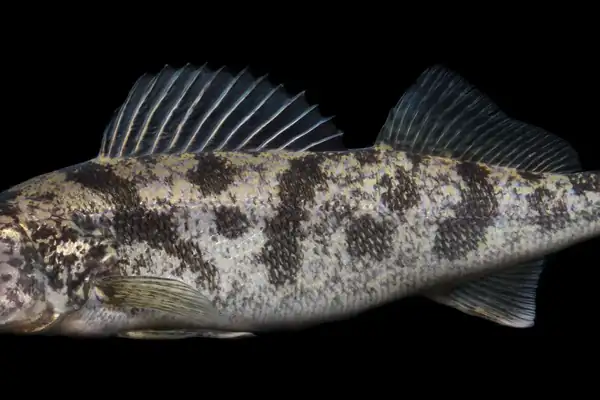 WalleyeSander vitreus
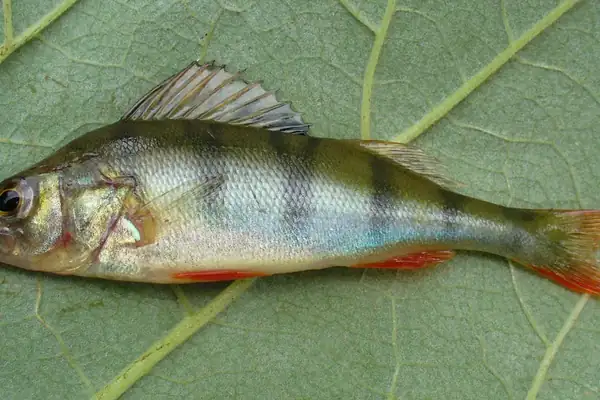 European perchPerca fluviatilis
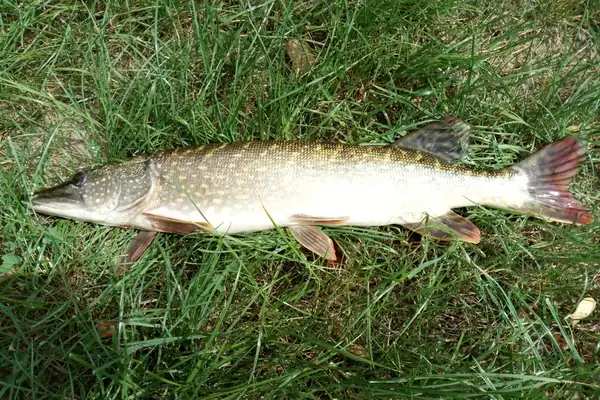 Northern pikeEsox lucius
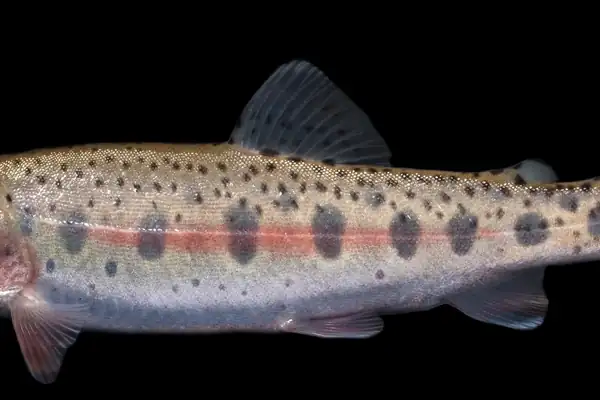 Rainbow troutOncorhynchus mykiss
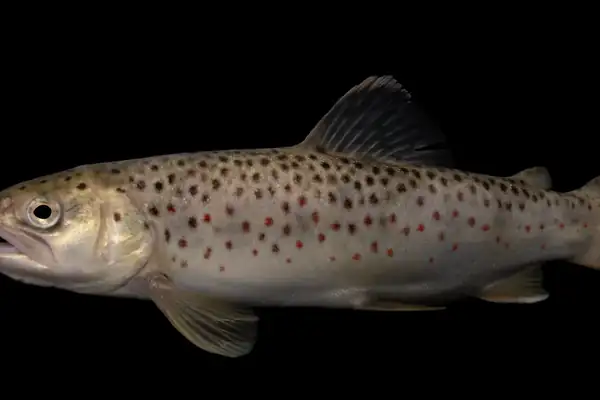 Brown troutSalmo trutta
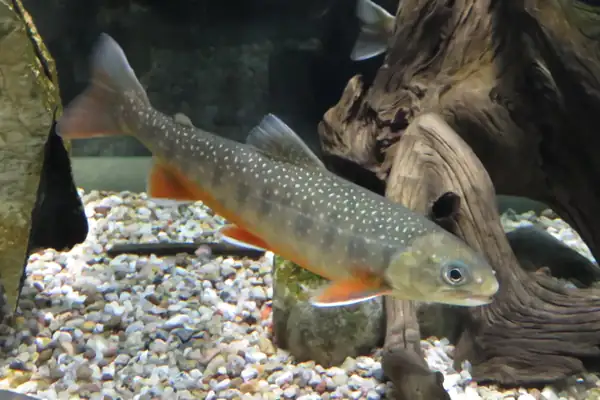 Arctic charSalvelinus alpinus
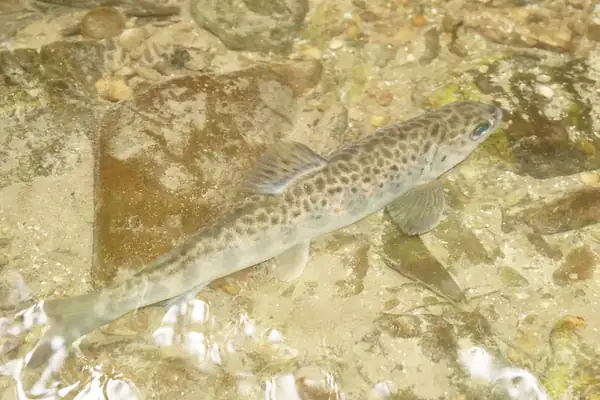 Atlantic salmonSalmo salar
- BurbotLota lota
Useful gear for this area
Chosen from the species and size limits regulated in this area.
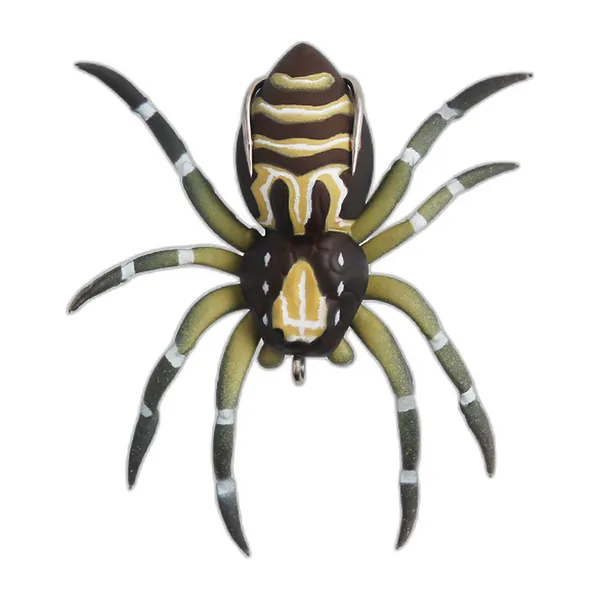 Floating Spider Soft Lures, Pack of 6
Suited to: Largemouth bass, Smallmouth bass, European perch, Brown trout, Rainbow trout.
€33.90£19.90Not shipped to the United States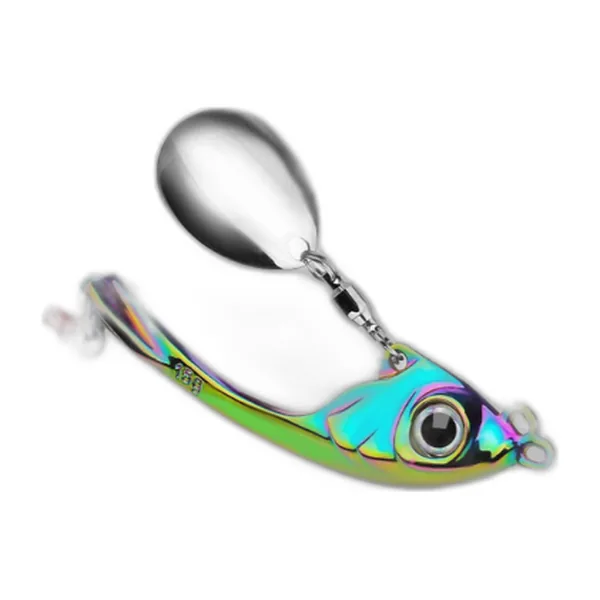 Zinc Fish-Body Spinners, Pack of 5
Suited to: Northern pike, European perch, Largemouth bass, Smallmouth bass.
€27.90£13.90Not shipped to the United States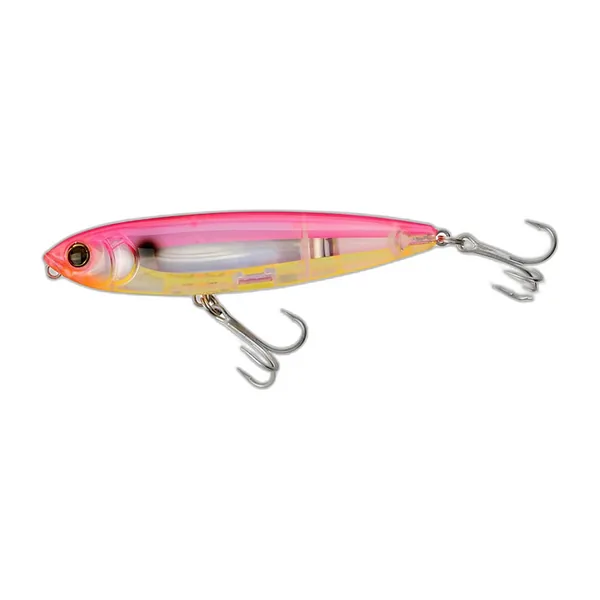 Walk-the-Dog Surface Stickbaits 10 cm 18 g, Pack of 3
Suited to: Largemouth bass, Smallmouth bass, Northern pike, European perch.
€60.90£43.90Not shipped to the United States