Burbot
Lota lota
Declining in several western European countries; protected or strictly regulated locally.
season calendar
Closed months recorded (share of areas closing the species that month) — 14 areas.
Related gear
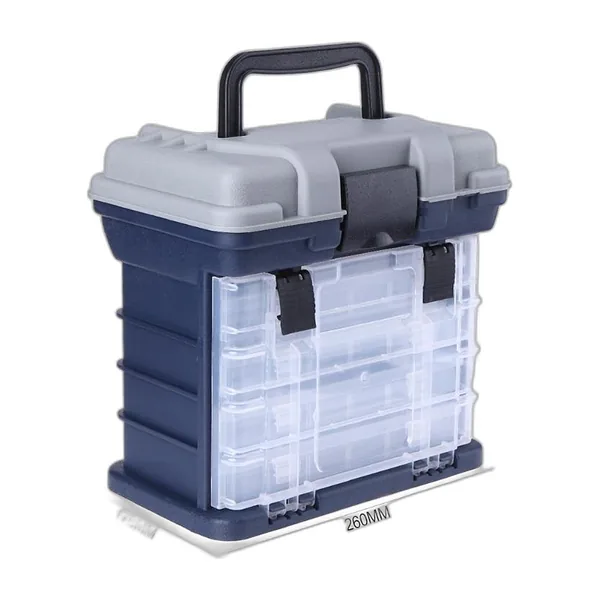 Fishing Seat Box with 4 Tackle Trays
For : northern pike, zander, walleye · float fishing (waggler and stick float)
€70.90£37.90Not shipped to the United States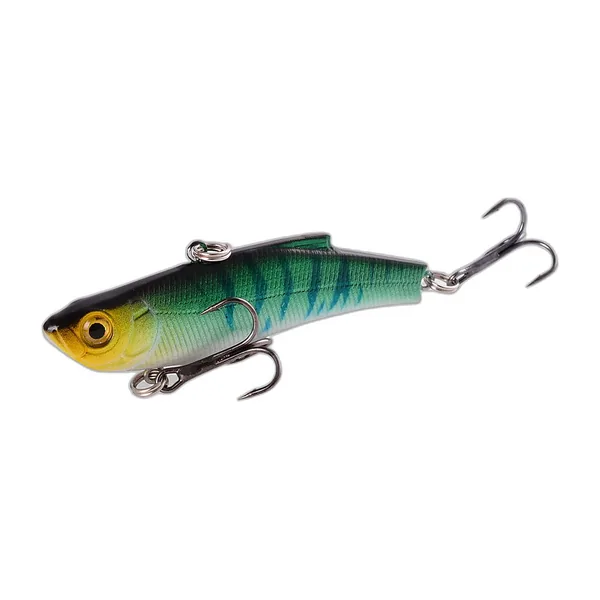 Lipless Vibration Lures (VIB), ABS, Pack of 6
For : zander, walleye, european perch · crankbait and hard-lure fishing
€30.90£15.90Not shipped to the United States Rechargeable Cap-Clip Light with Motion Sensor
For : common carp, wels catfish, zander · night fishing
€26.90£13.90Not shipped to the United States
A cod of rivers and lakes
The burbot is a curiosity: it is the only member of its cod-like family that lives in fresh water (FishBase). Long and mottled, with a single barbel under the chin, it is found all around the North Pole: northern and central Europe, northern Asia, Canada, Alaska and the northern United States. It became extinct in England and is declining in parts of western Europe, so several countries protect it or regulate it strictly.
Where to find it
FishBase describes burbot in well-oxygenated flowing waters, large deep lakes and big slow rivers, from lowland estuaries to small mountain streams. They shelter under rocks, in bank crevices and among roots. In rivers they gather in deep holes for most of the year, and they seek deep water in summer.
A fish of night and cold
Burbot are crepuscular and nocturnal. Young fish eat insect larvae, crayfish and molluscs; bigger ones turn to fish. They are one of the few species that spawn in mid-winter: from November to March, in water below 6 °C (43 °F) and often under ice, groups of up to 20 fish form a ball that rolls along the bottom while releasing eggs and milt; the eggs hatch after 40-70 days (FishBase). Cott and colleagues (2013) described their sexual dimorphism, and Grabowski and colleagues (2019) even used passive acoustics to detect spawning under the ice. Stukel's (2020) profile in Fisheries summarises biology and management.
Sizes
Common length is 40 cm (15.7 in); the maximum published is 152 cm (60 in) and 34 kg (75 lb), with a maximum age of 20 years (FishBase).
Fishing for burbot where allowed
Where burbot are abundant, such as Scandinavia, Canada and the northern US, they are fished mainly in late autumn and winter, at night, on the bottom with dead bait, fish strips or worms, and through the ice with glow jigs. In several states and provinces, burbot nights and derbies are winter traditions. Where the species is rare or protected, leave it alone. Always check the regulation page: size limits, winter closures and bans vary widely.
Good practice
Burbot often swallow baits deeply: strike quickly and cut the line on a swallowed hook. In severe cold, do not leave fish lying on the ice. Respect winter spawning areas.
Lures and baits
- Dead fish or fish strips where legal
- Bunches of worms
- Glow jigs and jigging spoons through the ice
Catch and release
- Burbot swallow baits deeply: strike quickly and cut the line on a swallowed hook.
- In severe cold, unhook without leaving the fish on the ice.
- Respect spawning areas and winter closures.
Minimum size for Burbot by area
Germany : 30–35 cm (9)
| Berlin | 30 cm |
| Brandenburg | 30 cm |
| Freie Hansestadt Bremen | 35 cm |
| Freie und Hansestadt Hamburg | 30 cm |
| Mecklenburg-Vorpommern | 30 cm |
| Niedersachsen | 35 cm |
| Sachsen-Anhalt | 30 cm |
| Schleswig-Holstein | 35 cm |
| Thüringen | 30 cm |
Austria : 35–40 cm (9)
| Burgenland | 35 cm |
| Kärnten | 35 cm |
| Niederösterreich | 35 cm |
| Oberösterreich | 40 cm |
| Salzburg | 35 cm |
| Steiermark | 35 cm |
| Tirol | 35 cm |
| Vorarlberg | 35 cm |
| Wien | 35 cm |
Slovenia : 30 cm (1)
Studies cited
- Stukel (2020) Burbot Lota lota Fisheries doi:10.1002/fsh.10404
Species profile of burbot (biology, distribution, management) in the journal Fisheries. - Cott et al. (2013) Sexual dimorphism in an under-ice spawning fish: the burbot (Lota lota) Canadian Journal of Zoology doi:10.1139/cjz-2013-0083
Describes sexual dimorphism in burbot, an under-ice spawner. - Grabowski et al. (2019) Looking for love under the ice: Using passive acoustics to detect burbot (Lota lota: Gadidae) spawning activity Freshwater Biology doi:10.1111/fwb.13314
Uses passive acoustics to detect burbot spawning activity under the ice.
Official sources
- FishBase – Lota lota (fiche espèce ; statut IUCN Red List 2025-2 repris par FishBase) (accessed on 23 September 2026)
- Sportvisunie – VISpas (Gezamenlijke Lijst van Nederlandse Viswateren, VISplanner, NachtVIStoestemming) (accessed on 23 September 2026)