Ice fishing
Related gear
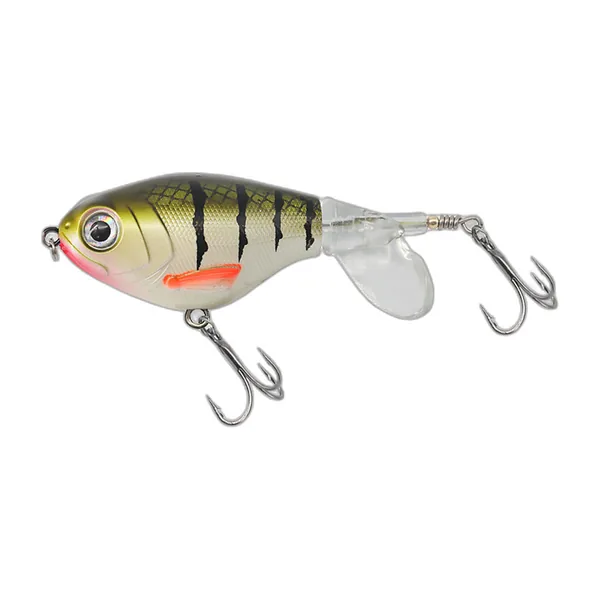 Propeller Surface Lures 9 cm, Pack of 5
Suited to: Northern pike, European perch.
€34.90£19.90Not shipped to the United States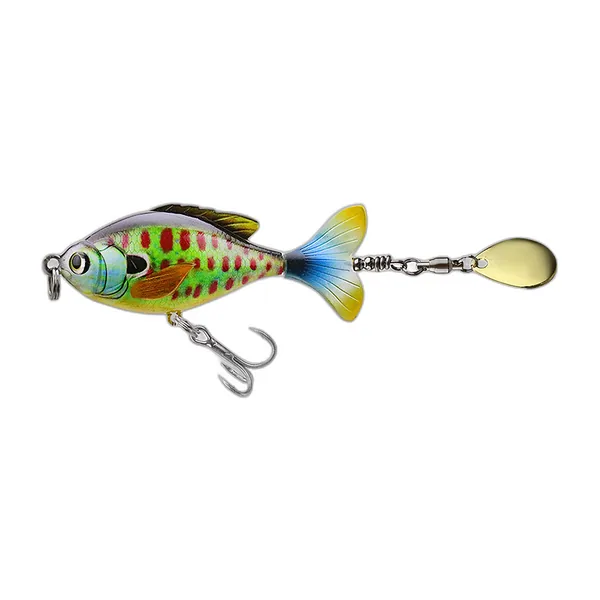 Small Floating Tail-Spinner Lures 6 cm, Pack of 5
Suited to: European perch, Northern pike.
€36.90£22.90Not shipped to the United States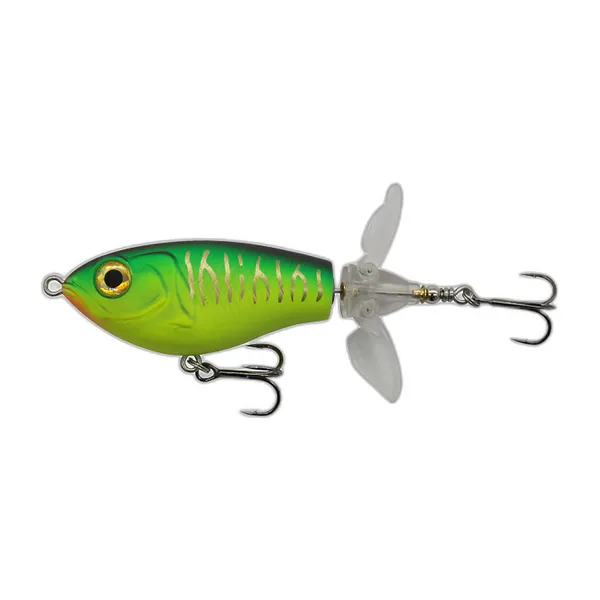 Floating Spinning-Tail Lures, Pack of 4
Suited to: European perch, Northern pike, Rainbow trout.
€42.90£27.90Not shipped to the United States
A northern tradition
Ice fishing is practised wherever lakes freeze long enough: Canada, the northern United States, Scandinavia, Finland, the Baltic states and some Alpine lakes. You drill a hole in the ice and fish vertically, often from a shelter. Perch, walleye, pike, lake trout, char, crappie, bluegill and trout are classic targets.
Safety first
Ice is never guaranteed safe. Thickness and strength vary from place to place with currents, inlets, reeds, snow cover and thaws. We deliberately give no reference thickness: follow the official guidance for your state, province or country, ask local authorities and anglers, and test the ice as you go. Never go alone, wear a flotation suit or life jacket, keep ice picks around your neck and a throw rope within reach. Avoid dark, cracked or slushy ice.
Gear
An auger, hand or powered; a shelter against the wind; short ice rods and, where legal, tip-ups; small jigs, jigging spoons and balance lures; fine line that stays supple in the cold; and an ice sonar or flasher to see the bottom and fish below the hole. Warm layers and a dry change of clothes complete the kit.
Fishing
Drill several holes over drop-offs or humps, find fish on sonar and present a small lure near the bottom with short lifts and pauses. In deep cold, fish are often sluggish: slow movements and small lures work best.
Released fish and the cold
Extreme cold adds risk for fish you release. Twardek and colleagues (2017) tracked survival of walleyes released after ice angling, Logan and colleagues (2019) studied how winter air exposure affects walleye physiology and reflexes, and Dextrase and Ball (1991) measured hooking mortality of lake trout angled through the ice. In practice: bring the fish up gently, unhook it over the hole without laying it on the ice, and release it within seconds.
Regulations
Check whether ice fishing and ice access are allowed, the number of lines and holes, tip-up rules, live-bait rules and, in some jurisdictions, hole size limits and shelter registration or removal dates. See the regulation page for your area.
The gear, item by item
- Hand or powered ice auger
- Ice shelter against wind and cold
- Short ice rods and tip-ups where legal
- Small jigs, jigging spoons, balance lures Flat Metal Jigs with Assist Hooks, Pack of 3 €24.90£12.90Not shipped to the United States
- Fine line that stays supple in cold
- Ice sonar/flasher
- Flotation suit or life jacket, ice picks around the neck and a throw rope
- Pliers and disgorger
- Spare dry clothing
Step by step
- Check official local ice safety guidance and ask local anglers and authorities.
- Never go alone; tell someone your route.
- Test the ice as you go; avoid currents, inlets, reeds and dark or cracked ice.
- Drill holes and locate depth and fish with sonar.
- Jig a small lure near the bottom or set bait where legal.
- Bring fish up gently and unhook quickly, never leaving them to freeze on the ice.
- Mark or cover holes as locally required and head back before dark.
Common mistakes
- Trusting how the ice looks or other people's tracks.
- Going alone or without ice picks.
- Approaching inlets and current.
- Leaving released fish exposed to freezing air.
- Underestimating cold and damp.
Rules to check before you go
- Whether ice fishing and access to the ice are allowed.
- Number of lines and holes, use of tip-ups.
- Hole size limits and marking rules in some jurisdictions.
- Ice shelter registration and removal deadlines.
- Live bait rules and restrictions on transporting baitfish.
Fishing regulations by country
Frequently asked questions
What is ice fishing and how does it work?
Ice fishing means fishing through a hole drilled in the ice of a frozen lake with short rods or tip-ups. Anglers jig small lures or baits, or set tip-ups whose flag signals a bite, often locating fish with a flasher. Perch, bluegill, crappie, walleye, pike and trout are common targets.
Take Me Fishing explains that ice fishing uses specialised gear: short rods, usually 24 to 36 inches, light lines, small jigs and live baits such as wax worms, maggots, spikes or minnows, or tip-ups with a reel and a flag that pops up when a fish takes the bait. Holes are cut with a hand or power auger. A common approach is jigging from the bottom up until you find the depth where fish bite; flashers (sonar) show fish, and your bait, under the hole. Its ice-fishing FAQ, written with the USA Ice Fishing Team, notes that shallow weed beds in the Midwest often hold bluegill and crappie, perch are often in colder, deeper lakes, and tip-up anglers with minnows target pike or muskellunge. Rules vary: some European regions ban fishing under the ice (Wallonia and Flanders), while others allow it on specific lakes, such as Canton Glarus on Garichti and Oberblegisee. Studies show that exposing walleye to winter air after capture impairs them, so release fish quickly.
Official sources : Take Me Fishing (RBFF) – Ice fishing rods and reels ; Take Me Fishing (RBFF) – Ice fishing bait and lures ; Take Me Fishing (RBFF) – Ice fishing FAQ ; Take Me Fishing (RBFF) – Ice fishing electronics ; Wallonia – AGW of 08.12.2016 on fishing conditions ; Flanders – decree of 01.02.2013 on public fishing ; Canton of Glarus – fishing rules (ice fishing) ; Logan et al. 2019 – winter air exposure and walleye physiology, Fisheries Research ; Twardek et al. 2017 – post-release survival of walleyes following ice-angling, NAJFM
When is ice safe for ice fishing?
Take Me Fishing gives 4 inches of clear, solid new ice as the minimum to support a person on foot, to be doubled for white snow ice, and it varies greatly across a lake. Check conditions with a local bait shop or state agency, test thickness every few steps, never go alone and carry ice picks and a life jacket.
Take Me Fishing's ice-safety guidance states that a minimum of 4 inches of clear, solid ice is required to support an average person, that white or 'snow' ice is only about half as strong as new clear ice, so guidelines should be doubled on it, and that a foot of old, partly thawed ice may not be safe. Ice rarely freezes uniformly: it can be a foot thick in one place and an inch or two a few feet away, and it is weaker over current, near streams, bridges and culverts, near shore and under snow. Its FAQ adds that 4 inches usually form after about a week of nights below freezing, but advises checking with the local bait shop or state agency first. Test with a spud bar, auger or drill every few steps, avoid slush and cracks, never fish alone, tell someone your plan, wear a life vest under winter clothing (but not in an enclosed vehicle) and carry ice picks. Avoid alcohol, which impairs judgement and cools you.
Official sources : Take Me Fishing (RBFF) – Ice thickness guidelines ; Take Me Fishing (RBFF) – Ice fishing safety ; Take Me Fishing (RBFF) – Ice fishing FAQ ; Take Me Fishing (RBFF) – Ice fishing clothing
What are the best ice fishing rods?
Ice rods are short, usually 24 to 36 inches, according to Take Me Fishing. Pick sensitivity by species: an ultralight rod for panfish, a heavier rod for walleye or pike. Pair it with a small spinning or spring-tension reel, or use tip-ups for larger fish. We do not rank brands.
Take Me Fishing's ice rod guide says ice fishing rods are typically 24 to 36 inches long, compact and durable in the cold, and that the target species determines sensitivity and weight: an ultralight rod works best for panfish, while game fish such as northern pike need a heavier rod. Reels include spinning reels, spring-tension spools and even fly reels, which reduce line twist; match the reel to the rod's weight and sensitivity and to the line. Many anglers fish a jigging rod in one hole and a tip-up nearby for larger fish such as walleye, since the tip-up flag signals a bite. For walleye specifically, its night-fishing article uses a medium-action spinning setup with 10-pound monofilament in open water, and its ice line guide suggests 8 to 10 pound line for walleye under the ice. Official sources do not rank models.
Official sources : Take Me Fishing (RBFF) – Ice fishing rods and reels ; Take Me Fishing (RBFF) – Ice fishing lines ; Take Me Fishing (RBFF) – How to catch walleye at night
When is ice fishing season?
Ice fishing starts once lakes freeze to a safe thickness, at least 4 inches of clear ice according to Take Me Fishing, and ends when the ice weakens in late winter or spring. Dates vary by region and year, and species seasons still apply on the ice. Early ice is often productive on weed beds.
There is no fixed calendar: ice fishing depends on ice. Take Me Fishing's FAQ says a good rule of thumb is to wait until the ice is 4 inches thick, which usually happens after about a week of nights below freezing, and to check with the local bait shop or state agency before going out. It recommends starting early-season ice fishing on a new lake at the largest weed bed, and notes that hand augers suit early season while power augers help once the ice is thicker mid-season. Old, thawing ice at the end of winter is weaker than new ice of the same thickness. Regulations still apply: species seasons and limits run on the ice as in open water, and some jurisdictions ban or restrict fishing under ice, such as Wallonia and Flanders in Belgium, while Canton Glarus allows it on designated lakes such as Garichti and Oberblegisee. Check your state or regional rules.
Official sources : Take Me Fishing (RBFF) – Ice fishing FAQ ; Take Me Fishing (RBFF) – Ice fishing safety ; Wallonia – AGW of 08.12.2016 on fishing conditions ; Flanders – decree of 01.02.2013 on public fishing ; Canton of Glarus – fishing rules (ice fishing)
What is the best line for ice fishing?
Lighter line than in open water. Take Me Fishing suggests 2- to 4-pound monofilament, the most common choice, or 4- to 6-pound braid for panfish deeper than 20 feet, and 8- to 10-pound line for bass or walleye, often with a fluorocarbon leader. Heavy braid is used on tip-ups.
Take Me Fishing explains that ice lines are generally much lighter than open-water lines so they transmit subtle bites, and come in monofilament, braid and fluorocarbon. For panfish at depths over 20 feet, light braided line of 4 to 6 pound test helps detect bites and set the hook because it does not stretch, while light monofilament of 2 to 4 pound test is the most commonly used ice line because of its durability. For larger species such as largemouth bass or walleye, it recommends 8 to 10 pound test, possibly with a fluorocarbon leader that is less visible and more abrasion-resistant when bringing fish up through the hole. For tip-ups, heavy braided line on the spool is standard, with a barrel swivel to prevent twist and 2 to 3 feet of fluorocarbon leader for walleye, bass, trout, perch and crappie. Choose line by species, technique and depth.
Official sources : Take Me Fishing (RBFF) – Ice fishing lines ; Take Me Fishing (RBFF) – Ice fishing rods and reels
What are the best ice fishing boots?
Warm, waterproof, well-insulated boots worn over moisture-wicking liner socks and warm socks, plus ice cleats for traction. Take Me Fishing lists these as part of basic ice-fishing clothing, alongside layered clothing, a hat, waterproof gloves and ice picks. It does not rank boot models.
Take Me Fishing's ice clothing guide recommends layering: a moisture-wicking base layer, an insulated wind-breaking middle layer and a breathable outer shell, noting that many dedicated ice suits are insulated, windproof, waterproof and sometimes buoyant. For the feet, it recommends moisture-wicking liner socks under warm socks and good boots, and ice cleats to keep traction on slick ice. It also advises a warm hat, good gloves (fully waterproof neoprene or more flexible water-resistant fabrics, each with trade-offs) and safety picks worn around the neck to pull yourself out if you fall through. We found no official test comparing boot models, so we give criteria rather than brands: waterproof lower, insulation rated for the temperatures you fish in, room for warm socks without squeezing, and grip or cleat compatibility. Wet feet chill quickly on the ice, so carry spare socks.
Official sources : Take Me Fishing (RBFF) – Ice fishing clothing ; Take Me Fishing (RBFF) – Ice fishing safety
What is the best fish finder for ice fishing?
Ice anglers mainly use flashers, sonar units with a circular display that show fish, the bottom and your lure in the hole, or LCD fish finders with heated screens, plus underwater cameras. Take Me Fishing describes these types but does not rank models; choose by ease of reading and cold-weather performance.
Take Me Fishing explains that electronics are now standard in ice fishing. Flashers are sonar devices that display the water column on a circular screen, showing whether fish are under your hole, at what depth, and your line and bait at the same time, so you can see fish reacting to your jig. Ice-specific fish finders fixed an old problem of LCD screens freezing, some with heated screens and others using LED displays, and are easier for anglers who find flashers hard to read. Underwater cameras give a live image of fish behaviour, and GPS units mark spots and help navigation. Its FAQ recommends jigging from the bottom up until you find the depth where fish bite, which is exactly what a flasher helps with. We found no official comparison of models, so we do not name brands. Consider battery life in the cold, transducer set-up for holes and screen readability.
Official sources : Take Me Fishing (RBFF) – Ice fishing electronics ; Take Me Fishing (RBFF) – Ice fishing FAQ
Studies cited
- Twardek et al. (2017) The Postrelease Survival of Walleyes Following Ice-Angling on Lake Nipissing, Ontario North American Journal of Fisheries Management doi:10.1002/nafm.10009
Tracks post-release survival of walleyes after ice angling on Lake Nipissing, Ontario. - Logan et al. (2019) Consequences of winter air exposure on walleye (Sander vitreus) physiology and impairment following a simulated ice-angling event Fisheries Research doi:10.1016/j.fishres.2019.03.014
Examines the effect of winter air exposure on walleye physiology and reflex impairment after simulated ice angling. - Dextrase & Ball (1991) Hooking Mortality of Lake Trout Angled through the Ice North American Journal of Fisheries Management doi:10.1577/1548-8675(1991)011<0477:hmolta>2.3.co;2
Measures hooking mortality of lake trout angled through the ice.