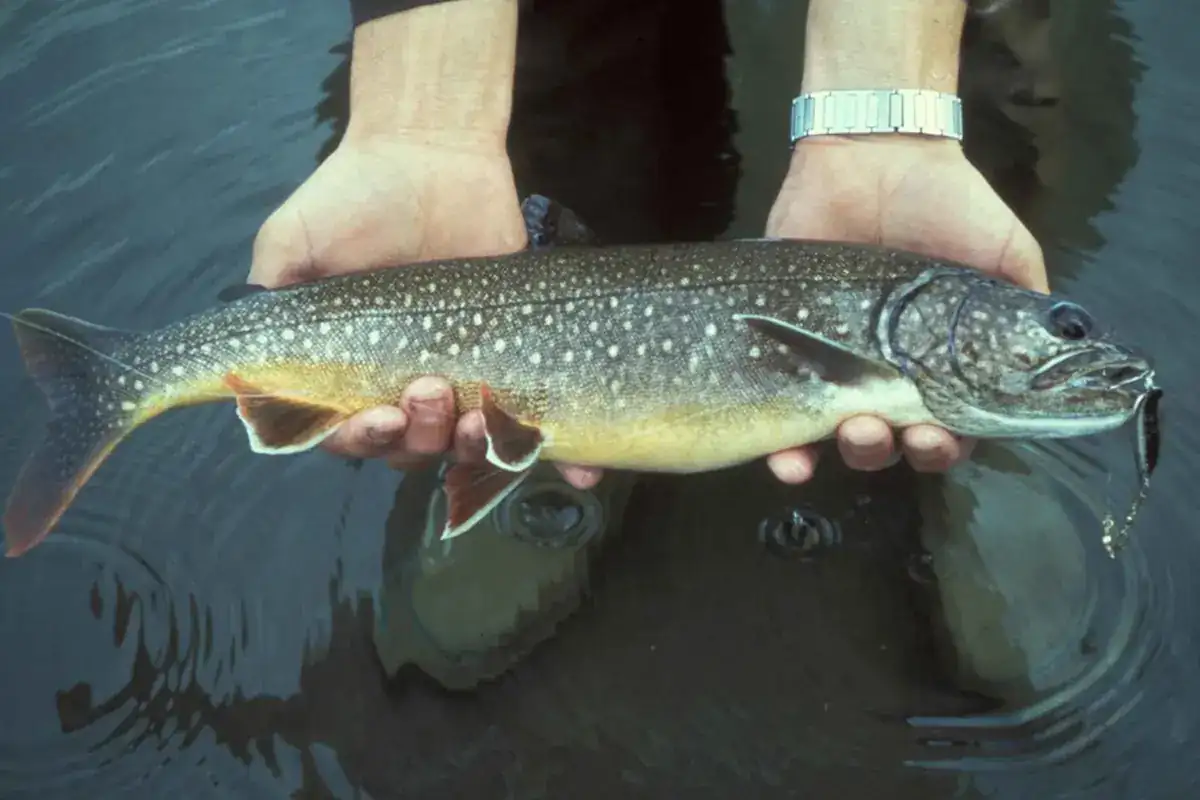
Lake trout
Salvelinus namaycush

Related gear
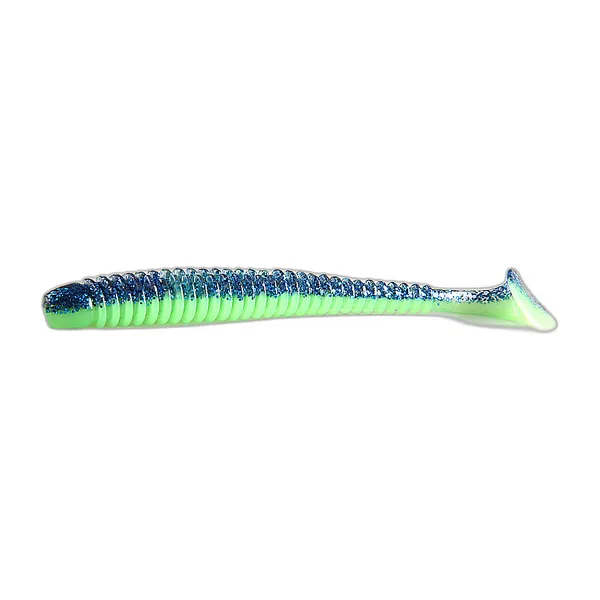 Soft Paddle-Tail Shads 8 cm, Pack of 30
For : european perch, zander, walleye · soft plastic lure fishing
€25.90£12.90Not shipped to the United States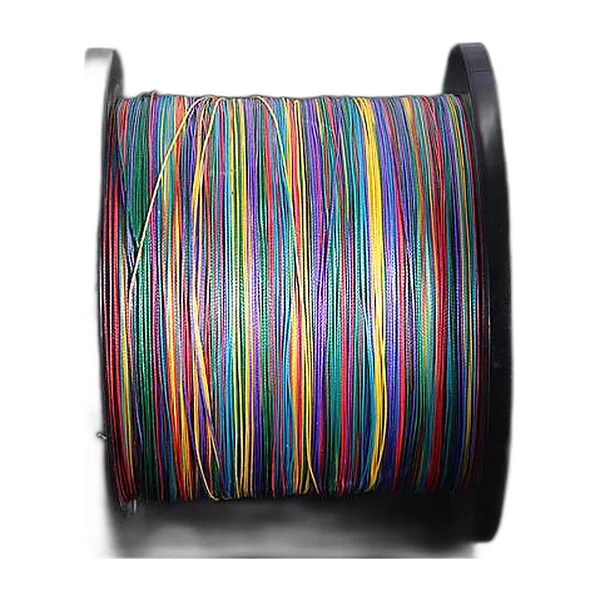 8-Strand Multicolour PE Braid, 500 m
For : northern pike, zander, walleye · vertical jigging
€72.90£49.90Not shipped to the United States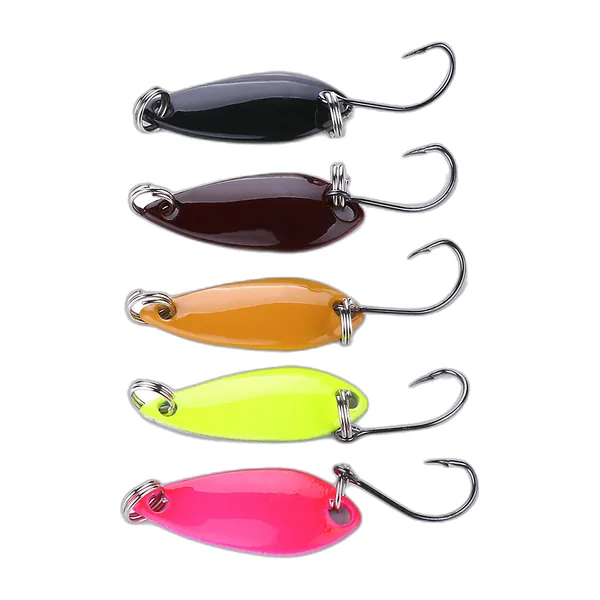 Responsible gearSingle-Hook Casting Spoons 26 g, Pack of 5
For : brown trout, rainbow trout, european perch · spoon and spinner fishing
€23.90£12.90Not shipped to the United States
A char of cold northern lakes
Despite its name, the lake trout is a char (genus Salvelinus). Native to northern North America, from Canada and Alaska to the Great Lakes and New England, it has also been introduced to some Alpine lakes in Europe. FishBase describes it in shallow and deep waters of northern lakes and streams, restricted to relatively deep lakes in the southern part of its range. It is a solitary wanderer whose movements depend on lake size.
Diet and growth
Lake trout eat freshwater sponges, crustaceans, insects, fish (preferably ciscoes) and even small mammals. Some populations feed on plankton all their lives: they grow more slowly, mature earlier and smaller, and die sooner than fish-eating populations (FishBase). The species is also highly sensitive to pollution, especially insecticides.
Size and longevity
Common length is 50 cm (19.7 in); the maximum published is 150 cm (59 in) and 32.7 kg (72 lb), and the maximum reported age is 50 years (FishBase). That longevity and slow growth make populations vulnerable to overfishing.
Spawning and regulations
Lake trout spawn in autumn over rocky shoals. Autumn closures, minimum sizes or protected slots, and low bag limits are common. Rules differ between provinces, states and even individual lakes, so check the regulation page for your water.
Methods
Right after ice-out, lake trout cruise near the surface and can be caught on spoons and trolled lures from shore or boat. In summer they go deep, below the thermocline: vertical jigging with heavy jigs or soft plastics over fish marked on sonar is the most effective approach, along with downrigger trolling. In winter, ice fishing with white tubes or jigs is a northern tradition.
Release
Dextrase and Ball (1991) measured hooking mortality of lake trout angled through the ice. Fish brought up from great depth suffer barotrauma: if you plan to release, fish shallower, bring fish up slowly and limit exposure to cold air.
Tackle checklist
For summer jigging, a medium-heavy rod, braided line for depth control, 1-3 oz jigs and a quality sonar are standard. Through the ice, bring an auger, a shelter in cold wind and a short, stiff jigging rod. Always carry a life jacket or ice picks according to the conditions and local safety advice.
Lures and baits
- Heavy jigs and soft plastics fished vertically
- Trolled spoons
- White tubes through the ice
- Dead bait where legal
Catch and release
- Fish brought up from great depth suffer barotrauma: if you intend to release, fish shallower or keep within limits.
- Through the ice, keep exposure to cold air short.
- Strike early with bait to avoid deep hooking (Dextrase and Ball 1991).
Minimum size for Lake trout by area
France : 35–40 cm (97)
Switzerland : 24–30 cm (3)
United States : 45.7 cm (1)
| Maine | 45.7 cm |
Canada : 45 cm (1)
| Québec | 45 cm |
Studies cited
- Dextrase & Ball (1991) Hooking Mortality of Lake Trout Angled through the Ice North American Journal of Fisheries Management doi:10.1577/1548-8675(1991)011<0477:hmolta>2.3.co;2
Measures hooking mortality of lake trout angled through the ice.
Official sources
- FishBase – Salvelinus namaycush (fiche espèce ; statut IUCN Red List 2025-2 repris par FishBase) (accessed on 23 September 2026)
- Vlaamse overheid – Visverlof (verplicht voor recreatief vissen op de openbare binnenwateren van het Vlaamse Gewest) (accessed on 23 September 2026)