Bank fishing vs boat fishing
Related gear
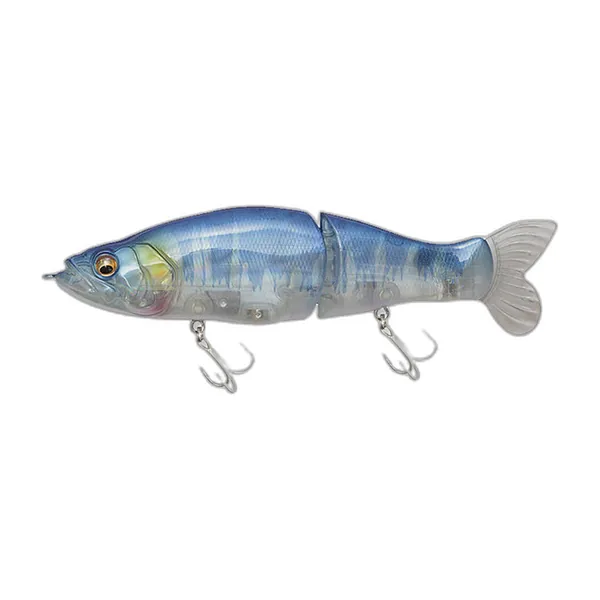 Jointed Stickbaits 13.5 cm 28 g, Pack of 3
Suited to: Northern pike, Largemouth bass, Wels catfish.
€32.90£18.90Not shipped to the United States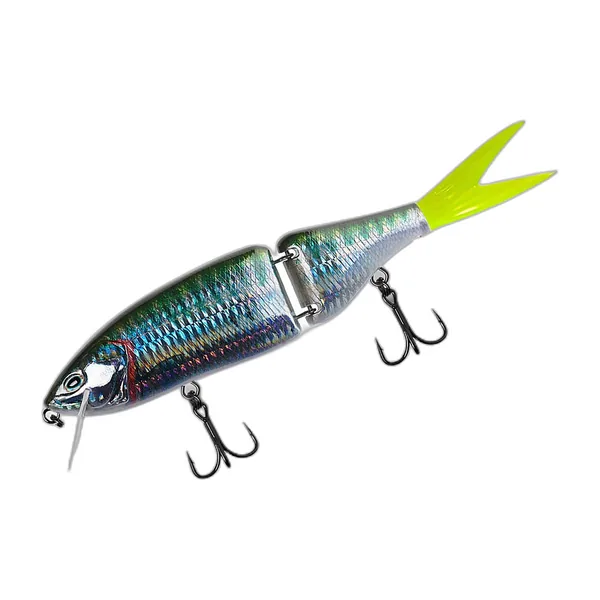 Jointed Big Bait 22 cm, 115 g
Suited to: Northern pike, Wels catfish.
€57.90£39.90Not shipped to the United States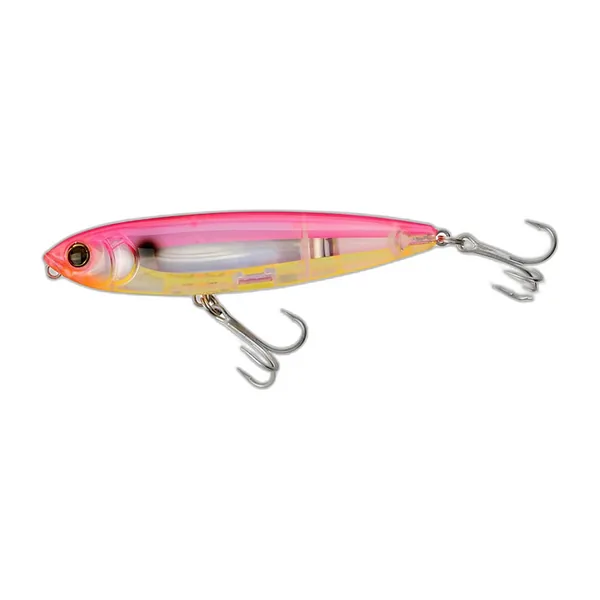 Walk-the-Dog Surface Stickbaits 10 cm 18 g, Pack of 3
Suited to: Largemouth bass, Northern pike, European perch.
€60.90£43.90Not shipped to the United States
Every beginner's question
Do you need a boat to catch fish? No. Many species hold near the bank for much of the year: weed edges, sunken trees, riprap and river confluences. A boat opens up other options, but it comes with cost, hassle and rules. The right choice depends on the species, the water and the season.
The case for the bank
From the bank you fish light and move easily: you can walk and cast, vary angles, and watch the water and fish with polarised glasses. It suits rivers, ponds, canals and fishing for carp, tench, trout, perch and bass. The limits are access (private land, vegetation, protected areas) and range, since some spots are simply out of reach.
The case for the boat
A boat gives access to offshore humps, drop-offs and baitfish schools found on sonar. Vertical jigging for zander and walleye, deep fishing for lake trout, musky fishing and trolling on big lakes depend on it. A boat also lets you follow moving fish. The downsides: cost, transport, launching, weather and essential safety equipment, starting with a life jacket.
Sharing the water
Boats should not fish margins already occupied by bank anglers or run over their lines. Slow down near the banks and keep your distance. From the bank, respect private property, crops and nesting areas.
Fish first
Whatever the method, release follows the same principles. Gale and colleagues (2011) reviewed the role of water temperature: in warm water, keep fights and handling short. Boat anglers often fish deeper, and Talmage and Staples (2011) measured mortality of walleyes caught in deep water, which is worth remembering if you plan to release. Match the net to the situation: long-handled from the bank, wide and short-handled in a boat.
Rules
Check whether boating is allowed, motor restrictions, whether your craft needs a licence or registration, any periods or areas closed to boat fishing and required safety equipment. In the US and Canada, boating rules are set by states and provinces alongside fishing rules. See the regulation page for your area.
Quick checklist
Whichever you choose, check access and boating rules first, carry a life jacket near deep water and match your net to the situation.
The gear, item by item
- Bank: longer rod for distance; boat: shorter, handier rod
- Bank: long-handled net; boat: wide, short-handled net
- Life jacket essential in a boat, advisable on dangerous banks
- Sonar in the boat to read the bottom
- Polarised glasses, useful either way
- Compact box for the bank, fuller kit in a boat
- Waders to gain a few metres from the bank where safe and allowed
- Long-nose pliers
Step by step
- Decide your target species and likely spots (margins, drop-offs, weed, open water).
- Check the rules: boating, motors, bank access, closed areas.
- From the bank: keep moving, vary casting angles and stay quiet.
- From a boat: read the sonar, control drift and do not crowd margins already fished by bank anglers.
- Match tackle and net to the situation.
- Release fish close to where they were caught.
Common mistakes
- Assuming a boat means more fish: many hold near the bank.
- Never moving from one bank swim.
- Boating without a life jacket or in strong wind.
- Motoring too close to bank anglers.
- The wrong net, leading to lost or injured fish.
Rules to check before you go
- Whether boating is allowed; petrol or electric motors.
- Boat licensing or registration depending on craft and country.
- Boat fishing banned or limited in some periods or areas.
- Bank access: private land, rights of way, protected areas.
- Required safety equipment on board.
Fishing regulations by country
Studies cited
- Gale et al. (2011) The role of temperature in the capture and release of fish Fish and Fisheries doi:10.1111/j.1467-2979.2011.00441.x
Review of the role of temperature in capture and release: from bank or boat, fights and handling in warm water affect survival. - Talmage & Staples (2011) Mortality of Walleyes Angled from the Deep Waters of Rainy Lake, Minnesota North American Journal of Fisheries Management doi:10.1080/02755947.2011.623759
Measures mortality of walleyes caught in deep water: an issue specific to offshore boat fishing.