Northern pike
Esox lucius

Related gear
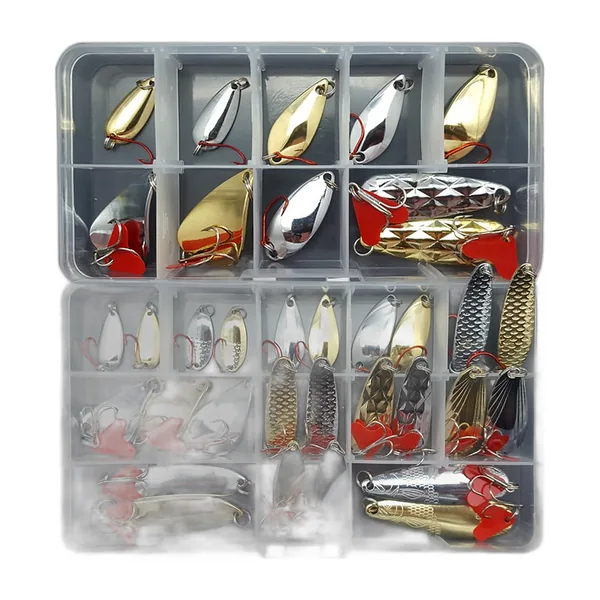 Assorted Wobbling Spoons in a Box
Suited to: Northern pike.
€32.90£17.90Not shipped to the United States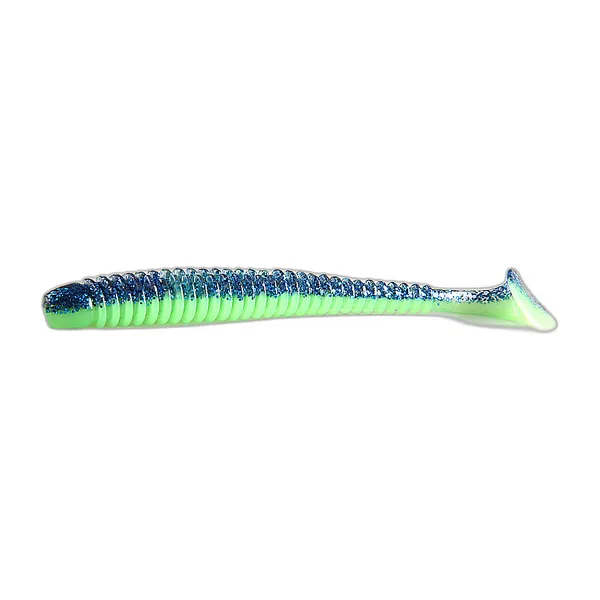 Soft Paddle-Tail Shads 8 cm, Pack of 30
Suited to: Northern pike.
€25.90£12.90Not shipped to the United States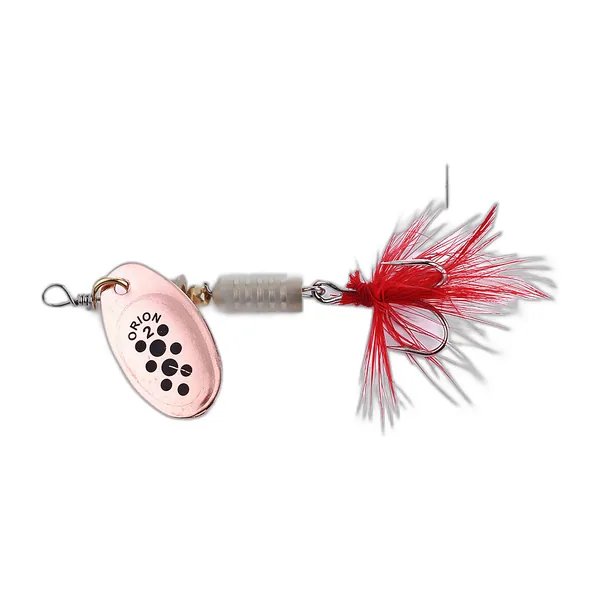 Inline Spinners, Pack of 6
Suited to: Northern pike.
€27.90£14.90Not shipped to the United States
What gear do you need for northern pike?
An ambush predator
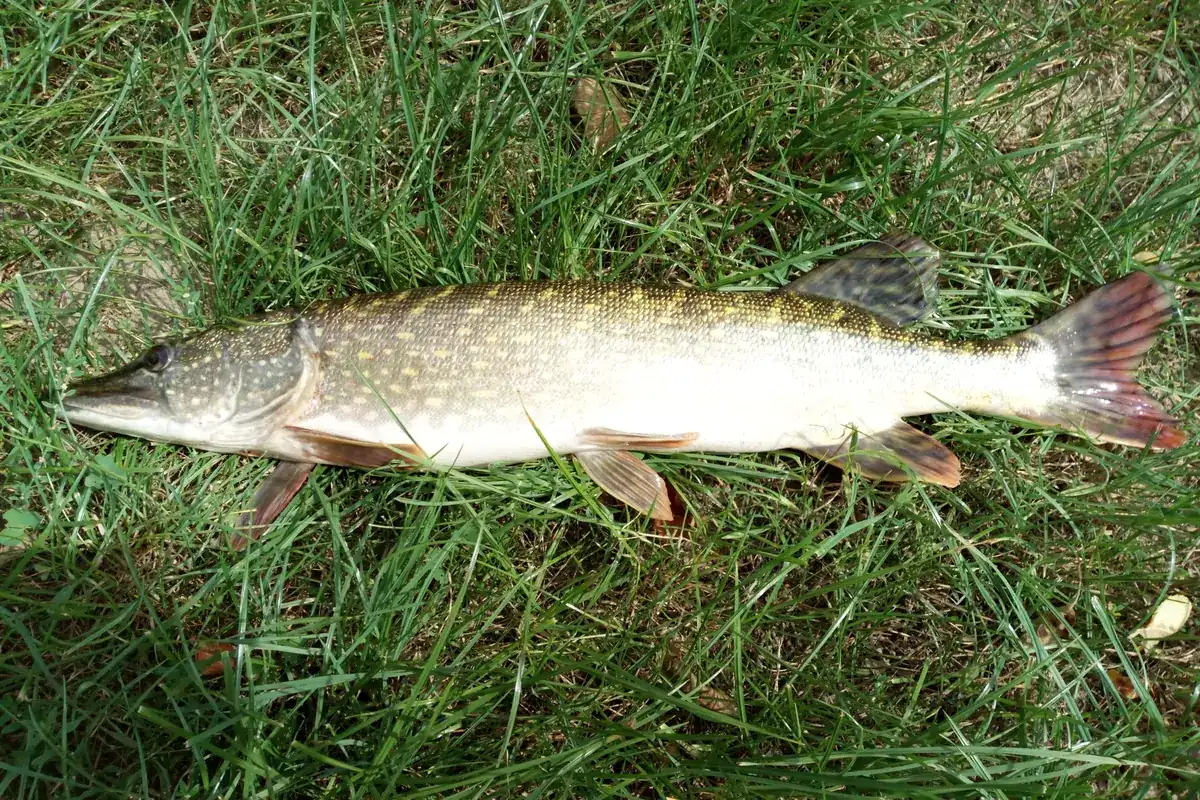
Pike hunt from cover. They sit on a weed edge, under a sunken tree or along a drop-off and strike with a short, explosive burst. For anglers this means you fish spots, not moving schools: a weedline, a point or the mouth of a backwater is worth more than a lot of open water. According to FishBase, adults live in clear, weedy lakes, backwaters and quiet river stretches. They eat mainly fish, sometimes plenty of frogs and crayfish, and cannibalism is common.
Realistic sizes
Common length is about 40 cm (15.7 in) for males and 55 cm (21.7 in) for females. The maximum published size is 150 cm (59 in) and 28.4 kg (62.6 lb), with a maximum reported age of 30 years (FishBase). Very large pike are almost always females, which is the main reason so many anglers release big fish.
When to fish
Pike spawn in late winter or early spring, soon after ice-out, over shallow vegetation and flooded meadows. Spawners are concentrated and easy to catch at that time, so many countries, states and provinces protect them with a closed season. Dates, size limits and bag limits differ by country, region and sometimes by water, so check the regulation page for your area first. After the opener and especially in autumn, pike feed hard. In summer, fish early and deeper; in winter, target the mildest part of the day. Through the ice, tip-ups and jigging are classic methods where legal.
Methods that work
Soft plastic shads of 10-20 cm (4-8 in), retrieved steadily or on a jighead near the bottom, are the most reliable option. Spoons and spinnerbaits cover water over weed beds, and jerkbaits trigger followers. A boat or float tube opens up offshore weed edges. Fly fishing with big streamers is deadly in shallow water.
Release them properly
A bite-proof leader is essential: a pike that cuts the line keeps the lure in its jaws. Carry long-nose pliers, hook cutters and a rubber-mesh net. Arlinghaus and colleagues (2009) studied the physiological and behavioural consequences of catch-and-release in pike, and a 2008 study compared injuries and initial hooking mortality by bait type and size. The practical takeaway is simple: unhook fast, in the water when you can, and keep air exposure short.
Lures and baits
- Soft shads 10-20 cm (4-8 in)
- Spoons and inline spinners
- Crankbaits and jerkbaits
- Spinnerbaits
- Pike streamers
- Live or dead bait where legal
Catch and release
- Use a wire, titanium or heavy fluorocarbon leader: a bitten-off pike keeps the lure in its mouth.
- Keep long-nose pliers and hook cutters at hand; consider swapping trebles for singles.
- Rubber-mesh landing net; unhook in the water or on a wet mat.
- Hold the fish horizontally and support the belly, never by the eye sockets.
- Keep air exposure to a few seconds for photos.
Frequently asked questions
What do pike eat?
Pike are mainly fish-eaters: FishBase says adults feed mostly on fish but sometimes heavily on frogs and crayfish, and cannibalism is common. The Canal & River Trust lists roach, bream, bleak, rudd, perch, smaller pike, water birds, amphibians and voles, and says a pike can eat prey up to half its weight.
FishBase describes adult northern pike (Esox lucius) as feeding mainly on fishes, but at times heavily on frogs and crayfish; cannibalism is common, including among juveniles. In arctic lakes where pike are the only species, juveniles eat invertebrates and terrestrial vertebrates while large individuals are mainly cannibals. The Canal & River Trust lists the diet of pike in British canals as roach, bream, bleak, rudd, perch, smaller pike, water birds, amphibians and voles. It notes that a pike can eat prey up to half its body weight, including small ducks or moorhens. Young pike ('jack') feed on small planktonic animals until they reach 4-5 cm, then prey on small fish. Pike hunt by sight and ambush from cover, relying on camouflage, which is why they thrive in clear, weedy, lightly boated waters. For anglers, this explains the use of lures imitating fish and of dead or live fish baits, where allowed.
Official sources : FishBase — Esox lucius (species summary) ; Canal & River Trust — Pike (freshwater fish species)
Can you eat pike?
Yes, pike are eaten in many countries, but FishBase warns they can carry the broad tapeworm, which can infect humans if not killed by thorough cooking. Rules limit what you keep: England allows 1 pike up to 65 cm a day from rivers, France 2 pike of at least 50 cm, and US states set their own limits.
Pike are a food fish: FishBase lists the species as highly commercial in fisheries and farmed commercially. It also warns that pike can be heavily infested with parasites, including the broad tapeworm, which can infect humans if not killed by thorough cooking. We give no recipe. Size and number rules decide what you may keep, and they vary. England: from rivers, 1 pike a day, up to 65 cm (GOV.UK); Wales the same (NRW). Northern Ireland (DAERA waters): 1 pike under 4 kg; pike of 4 kg or more must be released. Ireland: no pike over 50 cm may be killed. France: minimum 50 cm and 2 pike a day within 3 predators. Netherlands: 45 cm minimum and closed season from 1 March to 31 May. United States, 2026: New York 18 in and 5 a day, Pennsylvania 24 in and 2 a day. Some states, such as California, require invasive pike to be killed. Check local fish consumption advisories too.
Official sources : FishBase — Esox lucius (species summary) ; GOV.UK — Freshwater rod fishing rules: fish size and catch limits ; Natural Resources Wales — Minimum fish size and catch limits ; nidirect — Fish size and catch limits (Northern Ireland) ; Inland Fisheries Ireland — Angling regulations reminder ; France — Code de l'environnement, art. R436-18 (minimum sizes) ; France — Code de l'environnement, art. R436-21 (daily limits) ; Netherlands — Uitvoeringsregeling visserij (art. 5b, 5c) ; New York State DEC — Statewide seasons, sizes and catch limits ; Pennsylvania Fish and Boat Commission — 2026 fishing summary ; California Department of Fish and Wildlife — 2026 freshwater sport fishing regulations
How do you catch pike?
The Canal & River Trust recommends starting with a spinner, plug or lure, using strong tackle, a wire trace against the pike's teeth and large forceps to unhook; with experience, dead or live bait, which catch most large pike. Take Me Fishing adds trolling with large spoons, plugs or natural baits.
The Canal & River Trust gives practical guidance. Pike hunt by sight, so clear, weedy and lightly boated waters suit them. Using a spinner, plug or lure is a popular method: simple, with minimal tackle, and it lets you roam. Tackle must be strong because pike grow large. A wire trace between lure and main line is required because of their sharp teeth, and you need large forceps to remove the hook. With more experience you can fish live or dead bait, and large pike are nearly always caught on dead bait. Despite its looks, the pike is a fragile fish: handle it with the utmost care. Take Me Fishing says pike are usually taken by trolling large spoons, plugs or natural baits, while casting and still fishing also work. Research found that bait type and size affect hooking injury in pike (Arlinghaus et al. 2008). Seasons apply: England's rivers are closed to coarse fishing from 15 March to 15 June. Rules vary by country, state and water.
Official sources : Canal & River Trust — Pike (freshwater fish species) ; Take Me Fishing (RBFF) — Northern Pike ; Arlinghaus et al. 2008, Size Selectivity, Injury, Handling Time, and Determinants of Initial Hooking Mortality in Recreational Angling for Northern Pike: The Influence of Type and Size of Bait, North American Journal of Fisheries Management ; Arlinghaus et al. 2009, Physiological and behavioural consequences of catch-and-release angling on northern pike (Esox lucius L.), Fisheries Research ; GOV.UK — Freshwater rod fishing rules: when and where you can fish
What is the best bait for pike?
The Canal & River Trust says large pike are nearly always caught on dead bait, and live bait also works once you have experience. Research shows bait type and size change how deeply pike are hooked. Live fish bait is banned or restricted in many places, so check local rules.
The Canal & River Trust says that, with experience, anglers can fish live or dead bait for pike, and that large pike are nearly always caught using dead bait. Take Me Fishing lists natural baits and minnows among pike baits and trolling with natural baits as a common method. A study on hooking mortality in pike angling found that the type and size of bait affect hooking location and injury (Arlinghaus et al. 2008). Strike promptly to avoid deep hooking and always use a wire trace. Bait rules are strict in many places. In England, crayfish are banned as bait. Flanders bans fish baits for predators from 1 March to 31 May. In France, live or dead fish baits and lures are banned in second-category waters during the pike closed season. Many US states regulate bait fish to prevent invasive species. We found no source ranking baits, so we name none as best. Check your local rules.
Official sources : Canal & River Trust — Pike (freshwater fish species) ; Take Me Fishing (RBFF) — Northern Pike ; Arlinghaus et al. 2008, Size Selectivity, Injury, Handling Time, and Determinants of Initial Hooking Mortality in Recreational Angling for Northern Pike: The Influence of Type and Size of Bait, North American Journal of Fisheries Management ; GOV.UK — Freshwater rod fishing rules: fish size and catch limits ; Flanders — BVR of 1 February 2013 (river fishing) ; Génération Pêche (FNPF, France) — Règles à connaître 2026
What is the best lure for pike?
No official source names one best lure. The Canal & River Trust recommends spinners, plugs and lures for pike, always with a wire trace, and Take Me Fishing lists spoons, plugs, spinner baits and flies, with trolling large spoons or plugs as a usual method.
The Canal & River Trust says using a spinner, plug or lure is a popular method for pike. It is simple, needs minimal tackle and lets you cover water. Because of the pike's sharp teeth, a wire trace between the lure and the main line is required, and large forceps are needed to remove the hook. Take Me Fishing lists flies, plugs, spoons, minnows and spinner baits for northern pike. It says pike are usually taken by trolling large spoons or plugs, with casting and still fishing also successful. FishBase explains why fish-like lures work: adult pike feed mainly on fish. We found no official source ranking lures, so we do not name a best lure, colour or brand. Lure rules exist: in France, lures are banned on second-category waters during the pike closed season. Wallonia bans bait fish and lures while pike fishing is closed, with limited exceptions. A study on pike catch-and-release covers handling and survival (Arlinghaus et al. 2009).
Official sources : Canal & River Trust — Pike (freshwater fish species) ; Take Me Fishing (RBFF) — Northern Pike ; FishBase — Esox lucius (species summary) ; Génération Pêche (FNPF, France) — Règles à connaître 2026 ; Wallonia — AGW of 8 December 2016 on fishing rules ; Arlinghaus et al. 2009, Physiological and behavioural consequences of catch-and-release angling on northern pike (Esox lucius L.), Fisheries Research
How big do pike get?
FishBase lists northern pike at a common length of 40 cm (males) and 55 cm (females), with a maximum of 150 cm and 28.4 kg. The Canal & River Trust gives a typical size of 90 cm and a British record of 46 lb 13 oz. Pike can live up to 30 years (FishBase).
FishBase gives these figures for northern pike (Esox lucius): common length 40 cm for males and 55 cm for females. Maximum length is 137 cm fork length for males or unsexed fish and 150 cm total length for females, and maximum published weight 28.4 kg. The maximum reported age is 30 years, and first maturity is at about 40 cm on average. In Britain, the Canal & River Trust gives a typical size of 90 cm and a weight of up to 40 lb, with a record catch of 46 lb 13 oz. It cites a 37 lb pike from the Gloucester & Sharpness Canal (2004) and a 42 lb pike from Boddington Reservoir (2010). Size rules: England allows 1 pike up to 65 cm from rivers. France requires 50 cm, the Netherlands 45 cm, Wallonia 60 cm where harvest is allowed. US minimums include New York 18 in, Michigan and Pennsylvania 24 in, Kansas 30 in. Handle big pike on an unhooking mat.
Official sources : FishBase — Esox lucius (species summary) ; Canal & River Trust — Pike (freshwater fish species) ; GOV.UK — Freshwater rod fishing rules: fish size and catch limits ; France — Code de l'environnement, art. R436-18 (minimum sizes) ; Netherlands — Uitvoeringsregeling visserij (art. 5b, 5c) ; Wallonia — AGW of 8 December 2016 on fishing rules ; New York State DEC — Statewide seasons, sizes and catch limits ; Michigan DNR — 2026 fishing regulations ; Pennsylvania Fish and Boat Commission — 2026 fishing summary ; Kansas Department of Wildlife and Parks — Fishing regulations
When is the best time to fish for pike?
Seasons decide first: England's rivers are closed from 15 March to 15 June; France closes pike from 26 January to 24 April 2026; New York opens 1 May, Minnesota inland on 9 May 2026. No official source names the best month, but pike spawn from late March into May (Canal & River Trust).
Legal seasons come first, and they vary. England and Wales: rivers closed to coarse fishing from 15 March to 15 June; most stillwaters and canals open all year. Northern Ireland: generally no close season for coarse fish. France: pike open from 1 to 25 January and from 25 April to 31 December 2026. Netherlands: closed from 1 March to 31 May. Wallonia: pike from the first Saturday of June. United States, 2026: New York from 1 May to 15 March. Minnesota inland from 9 May 2026 to 28 February 2027. Michigan Lower Peninsula inland from 25 April. Wisconsin set its 2025-26 season from 3 May 2025 to 1 March 2026. Biology: the Canal & River Trust says pike spawn in shallow water at 2-12 °C from the end of March into May. FishBase gives a temperature range of 10-28 °C. We found no official source naming a best month or time of day, so we do not state one.
Official sources : GOV.UK — Freshwater rod fishing rules: when and where you can fish ; Natural Resources Wales — Non-migratory trout, charr, coarse fish and eels open seasons ; nidirect — Fish size and catch limits (Northern Ireland) ; France — Code de l'environnement, art. R436-7 (fishing periods) ; Netherlands — Uitvoeringsregeling visserij (art. 5b, 5c) ; Wallonia — AGW of 8 December 2016 on fishing rules ; New York State DEC — Statewide seasons, sizes and catch limits ; Minnesota DNR — 2026 fishing regulations ; Michigan DNR — 2026 fishing regulations ; Wisconsin DNR — Fishing seasons and limits (eRegulations) ; Canal & River Trust — Pike (freshwater fish species) ; FishBase — Esox lucius (species summary)
What size pike can you keep?
It depends where you fish. England and Wales allow 1 pike a day from rivers, up to 65 cm; Ireland forbids killing pike over 50 cm; France requires at least 50 cm (2 a day). In the US, New York requires 18 in, Pennsylvania and Michigan 24 in, and Minnesota uses zones.
Pike rules differ strongly between countries, and some use maximum rather than minimum sizes. England: up to 1 pike a day from rivers, only up to 65 cm (GOV.UK); Wales applies the same limit. Northern Ireland (DAERA): 1 pike under 4 kg; Ireland: no pike over 50 cm may be killed. France: minimum 50 cm (prefects may raise it to 60 cm), 2 pike a day within 3 predators. Netherlands: 45 cm minimum. Wallonia: 60 cm and 1 a day where harvest is allowed; no harvest in calm-water zones until 31 December 2027. United States, 2026: New York 18 in and 5 a day. Pennsylvania 24 in and 2 a day. Michigan 24 in and 2 a day. Minnesota Southern Zone 24 in and 2 a day. North-central Zone 10 a day, with fish 22-26 in released. Colorado sets no limit. Check your state and water.
Official sources : GOV.UK — Freshwater rod fishing rules: fish size and catch limits ; Natural Resources Wales — Minimum fish size and catch limits ; nidirect — Fish size and catch limits (Northern Ireland) ; Inland Fisheries Ireland — Angling regulations reminder ; France — Code de l'environnement, art. R436-18 (minimum sizes) ; France — Code de l'environnement, art. R436-21 (daily limits) ; Netherlands — Uitvoeringsregeling visserij (art. 5b, 5c) ; Wallonia — AGW of 8 December 2016 on fishing rules ; New York State DEC — Statewide seasons, sizes and catch limits ; Pennsylvania Fish and Boat Commission — 2026 fishing summary ; Michigan DNR — 2026 fishing regulations ; Minnesota DNR — 2026 fishing regulations ; Colorado Parks and Wildlife — 2026-27 fishing brochure
What temperature do pike spawn at?
The Canal & River Trust says pike spawn in shallow water at temperatures of 2-12 °C, from the end of March into May. Eggs stick to plants and hatch within 10 to 15 days. FishBase adds that spawning happens by day in flooded areas and submerged vegetation.
According to the Canal & River Trust, pike spawn in shallow water at temperatures of 2-12 °C from the end of March into May. They lay eggs that stick to plants and hatch within 10 to 15 days. The young pike ('jack') feed on small planktonic animals until they reach 4-5 cm, then prey on small fish; males mature at two years. FishBase adds detail. Spawners move inshore or upstream to marsh areas and generally spawn during the day. A larger female is usually attended by one or two smaller males. They release eggs over vegetation in water usually less than 17.8 cm deep, over a period of 2 to 5 days. Many regulations protect this period. France closes pike fishing in 2026 from 26 January to 24 April, and the Netherlands from 1 March to 31 May. Flanders bans fish baits for predators from 1 March to 31 May. England's river close season runs from 15 March to 15 June.
Official sources : Canal & River Trust — Pike (freshwater fish species) ; FishBase — Esox lucius (species summary) ; France — Code de l'environnement, art. R436-7 (fishing periods) ; Netherlands — Uitvoeringsregeling visserij (art. 5b, 5c) ; Flanders — BVR of 1 February 2013 (river fishing) ; GOV.UK — Freshwater rod fishing rules: when and where you can fish
How long do pike live?
FishBase gives a maximum reported age of 30 years for northern pike; the Canal & River Trust says up to 25 years, with 10-15 years more typical. Males mature at two years, and FishBase gives an average length at first maturity of about 40 cm.
Northern pike (Esox lucius) are long-lived predators. FishBase lists a maximum reported age of 30 years and an average length at first maturity of 39.9 cm (range 25-63 cm). The Canal & River Trust gives a lifespan of up to 25 years, with 10-15 years more typical in British canals. It says males mature at two years. The young ('jack') grow quickly, feeding first on plankton and then on fish once they reach 4-5 cm. Because big pike are old and few, many anglers release them, and some regulations protect large fish. England allows only pike up to 65 cm to be taken from rivers. Northern Ireland requires pike of 4 kg or more to be released on DAERA waters. Minnesota's Northeast Zone requires pike of 30-40 in to be released. The Canal & River Trust stresses that pike are fragile and must be handled with the utmost care. A study on pike catch-and-release covers the factors affecting their survival (Arlinghaus et al. 2009).
Official sources : FishBase — Esox lucius (species summary) ; Canal & River Trust — Pike (freshwater fish species) ; GOV.UK — Freshwater rod fishing rules: fish size and catch limits ; nidirect — Fish size and catch limits (Northern Ireland) ; Minnesota DNR — 2026 fishing regulations ; Arlinghaus et al. 2009, Physiological and behavioural consequences of catch-and-release angling on northern pike (Esox lucius L.), Fisheries Research
Where can you fish for pike?
Pike live in clear, vegetated lakes, quiet pools and backwaters of creeks and rivers (FishBase). In Britain, the Canal & River Trust says they are common in rivers, canals, reservoirs and larger lakes. In North America, Take Me Fishing lists waters from Labrador to Alaska and south to Pennsylvania, Missouri and Nebraska.
FishBase says adult northern pike occur in clear vegetated lakes, quiet pools and backwaters of creeks and small to large rivers, and even enter brackish water in the Baltic. The species occurs across the northern hemisphere. Great Britain: the Canal & River Trust says pike are common and often found in rivers, canals, reservoirs and larger lakes. They thrive in clear, weedy and less heavily boated canals, and the Trust has a fishery search tool by town or postcode. Notable fish came from the Gloucester & Sharpness Canal and Boddington Reservoir. You need an Environment Agency rod licence in England and Wales. North America: Take Me Fishing lists the Atlantic, Arctic, Pacific, Great Lakes and Mississippi River basins, from Labrador to Alaska and south to Pennsylvania, Missouri and Nebraska. Good spots include steep shore banks, shoreline shallows, bridges, sunken objects and weed beds. In some states, such as California, pike are invasive and must be killed if caught.
Official sources : FishBase — Esox lucius (species summary) ; Canal & River Trust — Pike (freshwater fish species) ; Canal & River Trust — Where to fish ; GOV.UK — Buy a fishing licence ; Take Me Fishing (RBFF) — Northern Pike ; California Department of Fish and Wildlife — 2026 freshwater sport fishing regulations
What water temperature do pike like?
FishBase lists a temperature range of 10-28 °C for northern pike, and the Canal & River Trust says they spawn at 2-12 °C. No official source gives an ideal temperature or the temperature at which pike are most active, so we do not state one. In warm water, release pike quickly to limit stress.
FishBase's environment data give a temperature range of 10-28 °C for the northern pike (Esox lucius), a freshwater and brackish species usually found 1-5 m deep. That is a range describing where the species occurs, not an ideal value. The Canal & River Trust states that pike spawn in shallow water at 2-12 °C from the end of March into May. We found no official or scientific source in our reference set stating the temperature at which pike feed most actively, so we do not give one. What matters for anglers who release pike: temperature affects stress and survival after capture. A review of the role of temperature in catch-and-release shows higher risk in warm water (Gale et al. 2011). A study on pike catch-and-release covers handling factors (Arlinghaus et al. 2009). In warm weather, keep fights short, unhook in the water or on a wet mat, and release quickly.
Official sources : FishBase — Esox lucius (species summary) ; Canal & River Trust — Pike (freshwater fish species) ; Gale et al. 2011, The role of temperature in the capture and release of fish, Fish and Fisheries ; Arlinghaus et al. 2009, Physiological and behavioural consequences of catch-and-release angling on northern pike (Esox lucius L.), Fisheries Research
Minimum size for Northern pike by area
France : 50–60 cm (97)
Belgium : 60 cm (1)
Luxembourg : 50 cm (2)
Germany : 40–60 cm (16)
| Baden-Württemberg | 50 cm |
| Bayern | 50 cm |
| Berlin | 45 cm |
| Brandenburg | 45 cm |
| Freie Hansestadt Bremen | 60 cm |
| Freie und Hansestadt Hamburg | 45 cm |
| Hessen | 50 cm |
| Mecklenburg-Vorpommern | 45 cm |
| Niedersachsen | 40 cm |
| Nordrhein-Westfalen | 45 cm |
| Rheinland-Pfalz | 50 cm |
| Saarland | 50 cm |
| Sachsen | 50 cm |
| Sachsen-Anhalt | 50 cm |
| Schleswig-Holstein | 45 cm |
| Thüringen | 50 cm |
Austria : 40–60 cm (9)
| Burgenland | 50 cm |
| Kärnten | 55 cm |
| Niederösterreich | 50 cm |
| Oberösterreich | 60 cm |
| Salzburg | 50 cm |
| Steiermark | 40 cm |
| Tirol | 50 cm |
| Vorarlberg | 40 cm |
| Wien | 55 cm |
Netherlands : 45 cm (1)
| Nederland | 45 cm |
Italy : 30–100 cm (13)
Slovenia : 50 cm (1)
Switzerland : 45–60 cm (20)
| Canton de Fribourg / Kanton Freiburg | 60 cm |
| Canton de Vaud | 45 cm |
| Canton du Valais / Kanton Wallis | 60 cm |
| Glarus | 45 cm |
| Kanton Aargau | 50 cm |
| Kanton Basel-Landschaft | 50 cm |
| Kanton Basel-Stadt | 50 cm |
| Kanton Bern / Canton de Berne | 45 cm |
| Kanton Solothurn | 45 cm |
| Nidwalden | 50 cm |
| Repubblica e Cantone Ticino | 45 cm |
| République et canton de Genève | 45 cm |
| République et Canton de Neuchâtel | 60 cm |
| Schaffhausen | 45 cm |
| Schwyz | 50 cm |
| St. Gallen | 50 cm |
| Thurgau | 50 cm |
| Uri | 50 cm |
| Zug | 50 cm |
| Zürich | 45 cm |
United States : 45.7–76.2 cm (16)
| Connecticut | 66 cm |
| Illinois | 61 cm |
| Indiana | 61 cm |
| Kansas | 76.2 cm |
| Maryland | 76.2 cm |
| Massachusetts | 71.1 cm |
| Michigan | 61 cm |
| Minnesota | 61 cm |
| New Hampshire | 71.1 cm |
| New Jersey | 61 cm |
| New York | 45.7 cm |
| Pennsylvania | 61 cm |
| Rhode Island | 61 cm |
| Vermont | 50.8 cm |
| West Virginia | 76.2 cm |
| Wisconsin | 66 cm |
Canada : 63 cm (1)
| Alberta | 63 cm |
Studies cited
- Arlinghaus et al. (2009) Physiological and behavioural consequences of catch-and-release angling on northern pike (Esox lucius L.) Fisheries Research doi:10.1016/j.fishres.2009.02.005
Examines the physiological and behavioural consequences of catch-and-release for pike; the basis for advice on short handling and quick release. - Arlinghaus et al. (2008) Size Selectivity, Injury, Handling Time, and Determinants of Initial Hooking Mortality in Recreational Angling for Northern Pike: The Influence of Type and Size of Bait North American Journal of Fisheries Management doi:10.1577/m06-263.1
Compares size selectivity, injury, handling time and initial hooking mortality by bait type and size: useful when choosing between live bait, dead bait and lures for release fishing.
Official sources
- FishBase – Esox lucius (fiche espèce ; statut IUCN Red List 2025-2 repris par FishBase) (accessed on 23 September 2026)
- BOE – Real Decreto 630/2013, Catálogo español de especies exóticas invasoras (texto consolidado) (accessed on 23 September 2026)
- Sportvisunie – VISpas (Gezamenlijke Lijst van Nederlandse Viswateren, VISplanner, NachtVIStoestemming) (accessed on 23 September 2026)
- Vlaamse overheid – Visverlof (verplicht voor recreatief vissen op de openbare binnenwateren van het Vlaamse Gewest) (accessed on 23 September 2026)
- ICNF – Licenças de pesca lúdica e desportiva em águas interiores (licença geral obrigatória, exceto parques de pesca) (accessed on 23 September 2026)