Crankbait and hard-lure fishing
Related gear
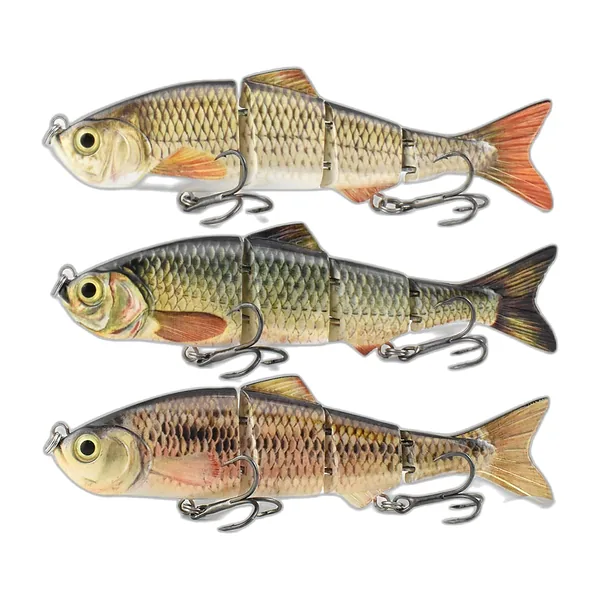 Jointed 4-Section Lure 12.5 cm, Sinking
Suited to: Northern pike, Zander, Walleye, European perch.
€28.90£15.90Not shipped to the United States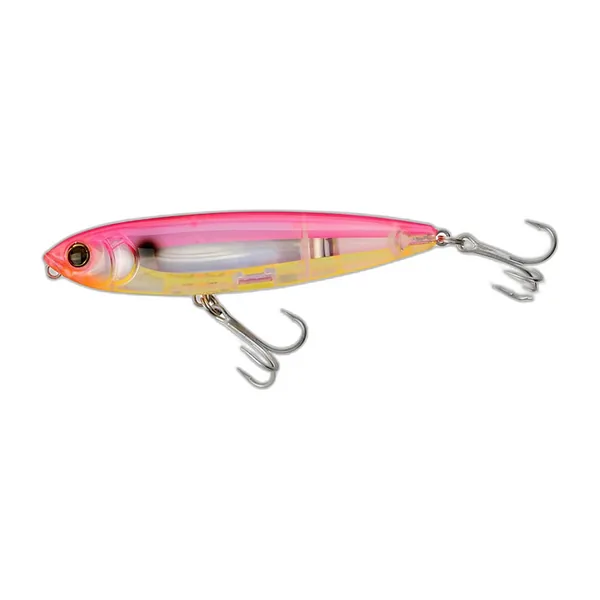 Walk-the-Dog Surface Stickbaits 10 cm 18 g, Pack of 3
Suited to: Largemouth bass, Smallmouth bass, Northern pike, European perch, Chub.
€60.90£43.90Not shipped to the United States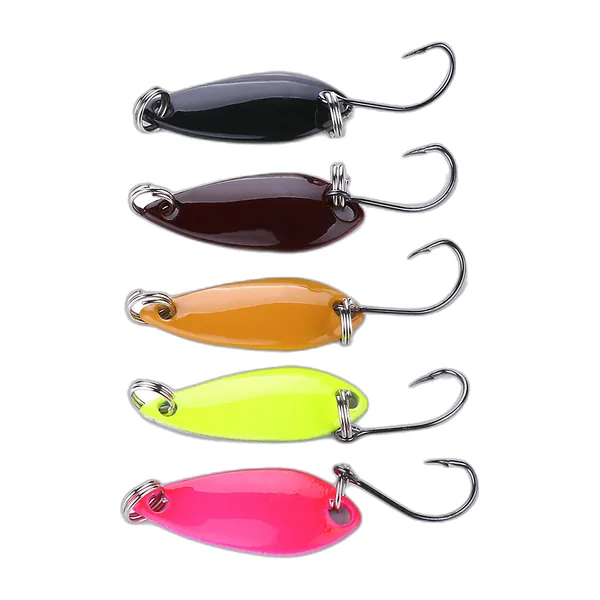 Single-Hook Casting Spoons 26 g, Pack of 5
Suited to: Brown trout, European perch, Northern pike, Chub.
€23.90£12.90Not shipped to the United States
A lure that swims by itself
A hard lure, in wood or plastic, imitates a small baitfish. The lip at the front makes it dive and gives it its wobble: the bigger and flatter the lip, the deeper it runs. Floating models rise when you stop, suspending models hang motionless, and sinking models drop. Jerkbaits are fished with sharp twitches; big-lipped crankbaits are cranked steadily and bang into the bottom or cover.
Target species
Pike, perch, zander at night, largemouth and smallmouth bass, walleye, muskellunge, asp, chub and trout: almost every predator will hit a hard lure. It is the ideal way to search a lot of water quickly, from a boat or the bank.
Choosing the right model
The first criterion is the running depth printed on the packaging. Over a weed bed that tops out 3 ft (1 m) below the surface, choose a shallow runner; for a drop-off at 13 ft (4 m), a deep-diving crankbait. Size should match the local forage: small models in late summer when fry are abundant, bigger ones in autumn for pike and muskies. In cold water, a suspending jerkbait with long pauses often makes the difference.
Working the lure
Cast past the target so the lure reaches its depth as it passes. Start with a steady retrieve, then vary it: pauses, bursts, short rod twitches. When a crankbait deflects off a stump or rock, it changes direction suddenly, and that is when many strikes come. Attach the lure with a snap (without a swivel) or a loop knot so its action is not restricted.
Trebles and release
Most hard lures carry two or three treble hooks. They hook well but make unhooking harder. DuBois and Dubielzig (2004) compared mortality, trauma and capture efficiency by hook type in trout caught on lures: a useful reference if you release fish. Many anglers crush the barbs or swap trebles for single hooks. Carry long-nose pliers and use a rubber-mesh net, which snags trebles less. Siepker and colleagues (2007) reviewed catch-and-release effects on black bass.
Rules
Some countries ban lures during the pike close season, some waters require single or barbless hooks, and trolling is not allowed everywhere. In North America, check state and provincial rules on bass seasons and muskie size limits. See the regulation page for your area.
The gear, item by item
- Moderate-action spinning or casting rod that cushions head shakes
- Reel with a smooth drag
- Braid or fluorocarbon depending on target depth
- Fluorocarbon leader; wire or titanium for pike
- Floating, suspending and sinking minnows, jerkbaits, lipped crankbaits
- Snap (no swivel) so the lure swims freely
- Long-nose pliers and split-ring pliers to swap hooks
- Rubber-mesh net, which snags trebles less
- Box with deep compartments
Step by step
- Pick a diving depth (lip size) that matches the spot.
- Tie on with a snap or a loop knot so the action is not restricted.
- Cast beyond the target so the lure reaches depth as it passes.
- Retrieve steadily, then vary it with pauses, bursts and twitches.
- Bump cover with a crankbait: the deflection often triggers the strike.
- Sweep-set the hook and unhook quickly with pliers.
Common mistakes
- Tying a tight knot straight to the eye, which kills the action.
- Always retrieving at the same speed.
- Keeping blunt or rusty trebles.
- Using barbed trebles on fish you plan to release.
Rules to check before you go
- Lure bans during pike close seasons in some countries.
- Rules on the number and type of hooks (trebles, singles, barbless) on some waters.
- Whether trolling is allowed on the water.
- Predator size and bag limits.
Fishing regulations by country
Studies cited
- DuBois & Dubielzig (2004) Effect of Hook Type on Mortality, Trauma, and Capture Efficiency of Wild Stream Trout Caught by Angling with Spinners North American Journal of Fisheries Management doi:10.1577/m02-171.1
Compares mortality, trauma and capture efficiency by hook type on lures (spinners) in wild trout: a guide when choosing trebles or singles. - SIEPKER et al. (2007) A review of the effects of catch‐and‐release angling on black bass, Micropterus spp.: implications for conservation and management of populations Fisheries Management and Ecology doi:10.1111/j.1365-2400.2007.00529.x
Review of catch-and-release effects on black bass, a key target for crankbaits.