Largemouth bass
Micropterus salmoides
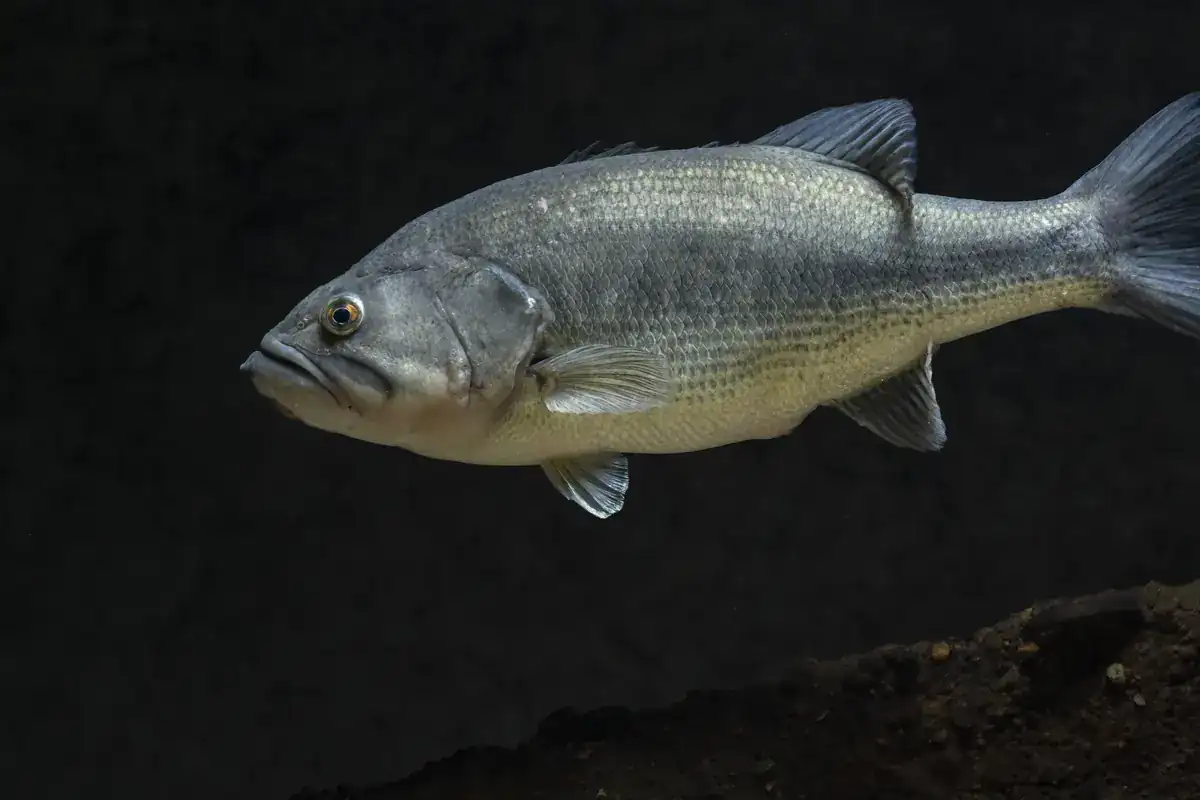
_June_2023.jpg)
Related gear
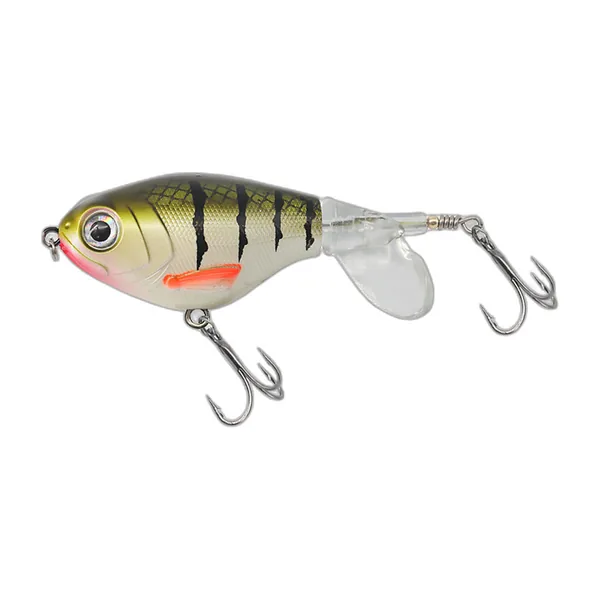 Propeller Surface Lures 9 cm, Pack of 5
Suited to: Largemouth bass.
€34.90£19.90Not shipped to the United States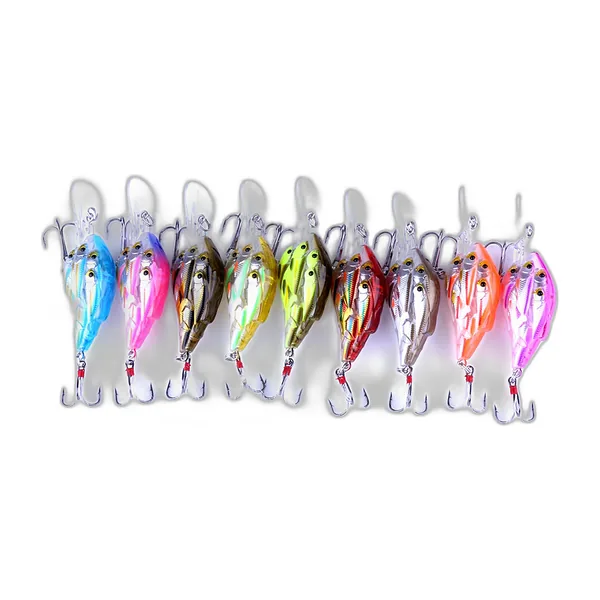 Floating Feathered-Hook Lures 7.5 cm, Pack of 9
Suited to: Largemouth bass.
€35.90£21.90Not shipped to the United States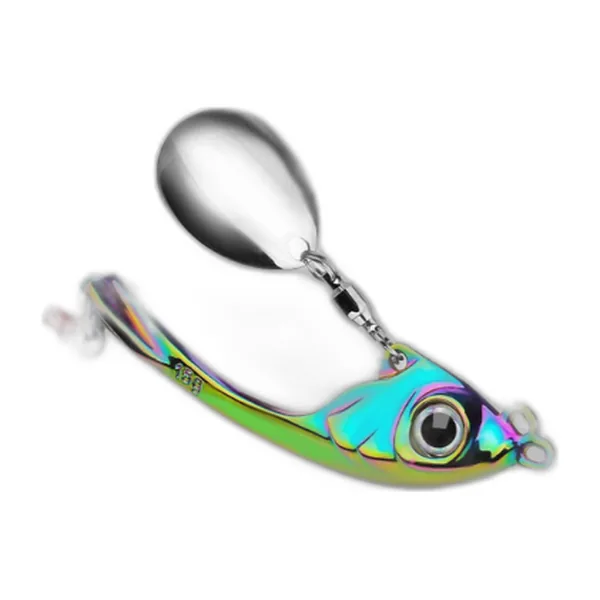 Zinc Fish-Body Spinners, Pack of 5
Suited to: Largemouth bass.
€27.90£13.90Not shipped to the United States
A cover-oriented predator
Native to eastern North America, the largemouth bass is the most popular game fish on the continent and has been introduced to Europe, including France, Spain and Italy. FishBase describes it in lakes, ponds, swamps, backwaters and quiet river pools, over mud or sand, preferring calm, clear water and overgrown banks. It is common in reservoirs and avoids fast water. Like pike, bass relate to cover: timber, weed, docks and riprap.
What bass eat
Adults eat fish, crayfish and frogs; young bass eat crustaceans, insects and small fish. FishBase notes that largemouth bass do not feed while spawning, or when water is below 5 °C (41 °F) or above 37 °C (99 °F). In cold water, slow your presentations right down.
Sizes
Common length is 40 cm (15.7 in); the maximum published is 97 cm (38.2 in) and 10.1 kg (22.3 lb), with a maximum age of 23 years (FishBase).
Spawning and beds
Bass spawn from spring into summer when water reaches about 15 °C (59 °F). The male becomes aggressive and territorial, builds a nest on a soft bottom in shallow water, and a female may spawn on several nests. The male guards and fans the eggs for about 29 days (FishBase), striking anything that comes near, which makes him very easy to catch. Hanson and colleagues (2007) compared how different angling practices affect nest-guarding males, and Twardek and colleagues (2016) looked at nest-site fidelity. Even with release, a male pulled off the nest leaves it unprotected. Some US states and Canadian provinces close bass season or require immediate release during spawning; check the regulation page for your water.
Methods
A Texas-rigged soft plastic worm or crayfish slides through cover without snagging. In summer, topwater lures at dawn and dusk produce explosive strikes. Spinnerbaits, bladed jigs and crankbaits cover water on overcast days; drop-shot and jigs target fish holding on deeper structure. A float tube is ideal on ponds with brushy banks.
Releasing bass
The review by Siepker and colleagues (2007) summarises catch-and-release effects on black bass. Lip the fish by the lower jaw, support the body of big bass, unhook quickly and release near where you caught it. In tournaments, good livewell care matters.
Lures and baits
- Texas-rigged worms and creature baits
- Topwater poppers and walking baits
- Spinnerbaits and bladed jigs
- Crankbaits
- Skirted jigs
Catch and release
- Leave bedding fish alone in spring: a male removed even briefly leaves the nest exposed.
- Lip-grip bass by the lower jaw and support the body of big fish.
- Bass caught deep in summer can suffer barotrauma: bring them up slowly.
Frequently asked questions
Do largemouth bass feed at night?
Our sources do not document night feeding, so we cannot confirm it. FishBase only says largemouth bass stop feeding during spawning and when the water is below 5 °C or above 37 °C. Night fishing is legal in many states, such as Utah, which opens its waters 24 hours a day.
We found no official or scientific source in our reference set describing the daily feeding rhythm of largemouth bass, so we do not claim that they feed more at night. What FishBase does document: adults feed on fishes, crayfish and frogs, young fish on crustaceans, insects and small fishes, and the species is sometimes cannibalistic. They do not feed during spawning, nor when water temperature is below 5 °C or above 37 °C. Take Me Fishing notes their willingness to strike a lure or bait with explosive force. It adds that research indicates they can learn to avoid a particular type of lure after only one encounter. Whether you may fish at night is a legal question set by each state and sometimes by each water. Utah, for example, keeps its general season open year-round, 24 hours a day, with water-specific closures. Other states and many public lakes and parks restrict hours. Rules vary by state and by water, so always check your state regulations and any local rules.
Official sources : FishBase — Micropterus salmoides (species summary) ; Take Me Fishing (RBFF) — Largemouth Bass ; Utah Division of Wildlife Resources — 2026 fishing guidebook
How long do largemouth bass live?
FishBase gives a maximum reported age of 23 years for largemouth bass, with a common length of 40 cm and a maximum of 97 cm and 10.1 kg. It also says adults mate between the ages of 5 and 12 years.
FishBase lists these life-history data for largemouth bass (Micropterus salmoides): a maximum reported age of 23 years, a common length of 40 cm total length, a maximum length of 97 cm and a maximum published weight of 10.1 kg. It states that adults mate between the ages of 5 and 12 years. Spawning takes place from spring to summer, or when the water reaches 15 °C. The male builds a nest on a muddy bottom in shallow water, then guards and fans the eggs for about 29 days. How long a bass actually lives in a given lake depends on growth, predation and harvest. Many states protect bass with minimum sizes or seasonal catch-and-release periods. Pennsylvania, for example, allows no harvest from 11 April to 12 June 2026. Studies show that angling nest-guarding males can affect their behaviour after release (2007 study) and their nest-site fidelity (2016 study). Careful catch-and-release matters for spawning fish. Rules vary by state and by water, so always check your state regulations and any local rules.
Official sources : FishBase — Micropterus salmoides (species summary) ; Pennsylvania Fish and Boat Commission — 2026 fishing summary ; HANSON et al. 2007, Effects of different angling practices on post‐release behaviour of nest‐guarding male black bass, Micropterus spp., Fisheries Management and Ecology ; Twardek et al. 2016, Potential consequences of angling on nest-site fidelity in largemouth bass, Environmental Biology of Fishes
What do largemouth bass eat?
FishBase says adult largemouth bass feed on fishes, crayfish and frogs, while young bass eat crustaceans, insects and small fishes; they are sometimes cannibalistic. The IUCN invasive species database adds amphibians and insects. They stop feeding during spawning and below 5 °C or above 37 °C.
According to FishBase, adult largemouth bass (Micropterus salmoides) feed on fishes, crayfish and frogs. Young bass feed on crustaceans, insects and small fishes, and the species is sometimes cannibalistic. It does not feed during spawning, nor when water temperature is below 5 °C or above 37 °C. The IUCN Global Invasive Species Database summarises the diet as fish, crayfish, amphibians and insects. It notes that well-known North American communities pair largemouth bass with bluegill (more often in northern natural lakes) or with shad. The same database explains that, where introduced, this predation has affected populations of small native fish, sometimes leading to their decline or extinction. For anglers, the diet explains why Take Me Fishing lists minnows, insects, soft plastics, jigs, plugs, spoons and spinner baits. Using live fish as bait is regulated in many states to prevent the spread of invasive species and disease. Rules vary by state and by water, so always check your state regulations and any local rules.
Official sources : FishBase — Micropterus salmoides (species summary) ; IUCN Global Invasive Species Database — Micropterus salmoides ; Take Me Fishing (RBFF) — Largemouth Bass
Can you eat largemouth bass?
Yes. FishBase and the IUCN invasive species database both describe largemouth bass as an excellent food fish. Keeping one depends on state rules: Texas requires 14 inches and 5 black bass a day, New York 12 inches and 5 a day from 15 June to 30 November. Check local consumption advisories.
Largemouth bass are edible: FishBase calls the species an 'excellent food fish', and the IUCN Global Invasive Species Database cites its tasty flesh as one reason it was introduced worldwide. We give no cooking advice. Whether you may keep a bass depends on the state, the date and the water. Texas: 14 in (35.6 cm) minimum, 5 black bass a day combined (2026-27). New York: 12 in minimum, 5 a day, harvest season 15 June to 30 November. The rest of the year is catch-and-release with artificial lures only. Florida: 5 black bass a day, only one 16 in or longer, with no minimum length for largemouth bass (2026-27). Pennsylvania: no harvest from 11 April to 12 June 2026, then 12 in and 6 a day until 30 September. Many states publish fish consumption advisories for specific lakes; check them before eating fish from a given water. Where bass are invasive, as in some European countries, other rules apply. Rules vary by state and by water, so always check your state regulations and any local rules.
Official sources : FishBase — Micropterus salmoides (species summary) ; IUCN Global Invasive Species Database — Micropterus salmoides ; Texas Parks and Wildlife — Freshwater bag and length limits 2026-27 ; New York State DEC — Statewide seasons, sizes and catch limits ; Florida FWC — Freshwater bag and length limits 2026-27 (eRegulations) ; Pennsylvania Fish and Boat Commission — 2026 fishing summary
What is the best bait for largemouth bass?
No official source ranks baits. Take Me Fishing lists minnows and insects as natural baits for largemouth bass, and FishBase says adults eat fishes, crayfish and frogs. Live bait fish rules differ by state, so check before using minnows or moving bait between waters.
Take Me Fishing lists the lures, tackle and bait that catch largemouth bass: insects, minnows, soft plastics, spoons, jigs, plugs and spinner baits. FishBase describes the diet of adults as fishes, crayfish and frogs, and of young bass as crustaceans, insects and small fishes. Natural baits that match this diet, such as minnows, are therefore consistent with the evidence. We found no official source ranking baits, so we do not name a single best bait. Rules matter: many states regulate the use, transport and release of live bait fish to limit the spread of invasive species and disease. Some waters or seasons are artificial-lures-only. New York, for instance, allows only catch-and-release with artificial lures for black bass from 1 December to 14 June. Deeply hooked fish survive less well; a review of catch-and-release angling on black bass examines the factors affecting their survival (Siepker et al. 2007). Rules vary by state and by water, so always check your state regulations and any local rules.
Official sources : Take Me Fishing (RBFF) — Largemouth Bass ; FishBase — Micropterus salmoides (species summary) ; New York State DEC — Statewide seasons, sizes and catch limits ; SIEPKER et al. 2007, A review of the effects of catch‐and‐release angling on black bass, Micropterus spp.: implications for conservation and management of populations, Fisheries Management and Ecology
What is the best lure for largemouth bass?
No official source names one best lure. Take Me Fishing lists soft plastics, spoons, jigs, plugs and spinner baits for largemouth bass, and notes research showing bass can learn to avoid a particular lure after one encounter, so varying lures helps.
Take Me Fishing, run by the Recreational Boating & Fishing Foundation, lists these lures for largemouth bass: soft plastics, spoons, jigs, plugs and spinner baits, plus insects and minnows as natural baits. It explains that much of the species' popularity comes from its willingness to strike a lure or bait with explosive force. It also says research indicates the largemouth bass can distinguish and avoid a particular type of lure after only one encounter with it. That is an argument for varying lure types rather than looking for one best model. We found no official or scientific source ranking lures, so we do not name a best lure, colour or brand. FishBase notes adults eat fishes, crayfish and frogs, which lures imitate. Some seasons are artificial-lure catch-and-release only, such as New York from 1 December to 14 June. For released fish, a review of black bass catch-and-release covers the factors affecting survival (Siepker et al. 2007). Rules vary by state and by water, so always check your state regulations and any local rules.
Official sources : Take Me Fishing (RBFF) — Largemouth Bass ; FishBase — Micropterus salmoides (species summary) ; New York State DEC — Statewide seasons, sizes and catch limits ; SIEPKER et al. 2007, A review of the effects of catch‐and‐release angling on black bass, Micropterus spp.: implications for conservation and management of populations, Fisheries Management and Ecology
How big do largemouth bass get?
FishBase lists a common length of 40 cm (about 16 in) for largemouth bass, a maximum length of 97 cm and a maximum published weight of 10.1 kg. It gives a maximum reported age of 23 years. Keeper sizes are set by each state, for example 14 inches in Texas.
FishBase gives the following sizes for largemouth bass (Micropterus salmoides): a common length of 40 cm total length, a maximum length of 97 cm and a maximum published weight of 10.1 kg, with a maximum reported age of 23 years. Take Me Fishing notes the largemouth can be told apart from similar black basses by its mouth. It extends at least to, and often beyond, the rear edge of the eye. Its two dorsal fins are almost separated by a deep dip. We do not cite a world record, as our official sources do not publish one. Size rules decide which fish you may keep, and they vary widely. Texas, Michigan and Wisconsin use a 14 in (35.6 cm) minimum. New York and California (lakes) use 12 in, and Pennsylvania uses 15 in outside its summer season. Florida has no minimum but allows only one bass of 16 in or more per day. Kansas uses 15 in statewide. Rules vary by state and by water, so always check your state regulations and any local rules.
Official sources : FishBase — Micropterus salmoides (species summary) ; Take Me Fishing (RBFF) — Largemouth Bass ; Texas Parks and Wildlife — Freshwater bag and length limits 2026-27 ; Michigan DNR — 2026 fishing regulations ; Wisconsin DNR — Fishing seasons and limits (eRegulations) ; New York State DEC — Statewide seasons, sizes and catch limits ; California Department of Fish and Wildlife — 2026 freshwater sport fishing regulations ; Pennsylvania Fish and Boat Commission — 2026 fishing summary ; Florida FWC — Freshwater bag and length limits 2026-27 (eRegulations) ; Kansas Department of Wildlife and Parks — Fishing regulations
Why are largemouth bass invasive?
Outside its native range, the largemouth bass is a voracious predator: the IUCN Global Invasive Species Database says introduced bass have reduced small native fish populations, sometimes to extinction. It was spread worldwide as a sport and food fish. Switzerland lists it among undesirable species that may not be introduced.
The IUCN Global Invasive Species Database explains that Micropterus salmoides has been widely introduced throughout the world because of its appeal as a sport fish and its tasty flesh. In some places, introduced largemouth bass have affected populations of small native fish through predation, sometimes resulting in their decline or extinction. Its diet includes fish, crayfish, amphibians and insects, and it adapts to almost every warm-water habitat. FishBase lists the species as a 'potential pest' and notes it has been introduced in Europe. Take Me Fishing describes its native range as the eastern United States and parts of northern Mexico and southern Canada. It is now found in every US state, Hawaii and throughout Mexico and Central America. Regulation reflects this: Switzerland's fishing ordinance lists largemouth and smallmouth black bass in annex 3. Species there are considered likely to cause undesirable changes to the fauna. Never move live fish between waters; that is illegal in many countries and states.
Official sources : IUCN Global Invasive Species Database — Micropterus salmoides ; FishBase — Micropterus salmoides (species summary) ; Take Me Fishing (RBFF) — Largemouth Bass ; Switzerland — Ordinance on fishing (OLFP), annex 3
What size largemouth bass can you keep?
It depends on the state. Texas requires 14 inches (5 a day), New York 12 inches (5 a day, 15 June to 30 November), Michigan 14 inches (5 a day), and Florida has no minimum but only one fish of 16 inches or more among 5. Many lakes have special rules, so check locally.
Minimum sizes for largemouth bass are set by each state and often by each lake. Examples from 2026 regulations: Texas, 14 in (35.6 cm) and 5 black bass a day. New York, 12 in and 5 a day during the harvest season from 15 June to 30 November. Michigan, 14 in and 5 a day, with possession allowed from the Saturday before Memorial Day. Florida, no minimum length for largemouth bass but 5 black bass a day, only one 16 in or longer. Kansas, 15 in statewide. Kentucky, 12 in, with many lakes set at 15 in. Pennsylvania, 15 in and 4 a day from 1 January to 10 April and from 1 October. It allows 12 in and 6 a day from 13 June to 30 September and no harvest in between. Minnesota has no statewide minimum and a limit of 6 black bass. Rules vary by state and by water, so always check your state regulations and any local rules.
Official sources : Texas Parks and Wildlife — Freshwater bag and length limits 2026-27 ; New York State DEC — Statewide seasons, sizes and catch limits ; Michigan DNR — 2026 fishing regulations ; Florida FWC — Freshwater bag and length limits 2026-27 (eRegulations) ; Kansas Department of Wildlife and Parks — Fishing regulations ; Kentucky Department of Fish and Wildlife Resources — 2026-27 fishing guide ; Pennsylvania Fish and Boat Commission — 2026 fishing summary ; Minnesota DNR — 2026 fishing regulations
What temperature do largemouth bass spawn at?
FishBase says largemouth bass spawn from spring to summer, or when the water temperature reaches 15 °C (59 °F). The male builds a nest in shallow water, and guards and fans the eggs for about 29 days. Several states protect spawning bass with seasonal catch-and-release rules.
FishBase states that spawning of largemouth bass takes place from spring to summer or when the temperature reaches 15 °C (59 °F); the IUCN Global Invasive Species Database repeats this figure. The male becomes aggressive and territorial and builds the nest on a muddy bottom in shallow water. FishBase gives nest depths between 25 and 203 mm. A female may spawn with several males on different nests, and the male guards and fans the eggs for about 29 days. Bass do not feed during spawning, according to FishBase. Because nest-guarding males are vulnerable, several states protect them. Pennsylvania bans bass harvest from 11 April to 12 June 2026, and Minnesota's Southern and North-central zones are catch-and-release only from 1 March to 22 May 2026. New York is catch-and-release with artificial lures only from 1 December to 14 June. Studies show angling nest-guarding males affects their behaviour after release (2007) and possibly nest-site fidelity (2016). Rules vary by state and by water, so always check your state regulations and any local rules.
Official sources : FishBase — Micropterus salmoides (species summary) ; IUCN Global Invasive Species Database — Micropterus salmoides ; Pennsylvania Fish and Boat Commission — 2026 fishing summary ; Minnesota DNR — 2026 fishing regulations ; New York State DEC — Statewide seasons, sizes and catch limits ; HANSON et al. 2007, Effects of different angling practices on post‐release behaviour of nest‐guarding male black bass, Micropterus spp., Fisheries Management and Ecology ; Twardek et al. 2016, Potential consequences of angling on nest-site fidelity in largemouth bass, Environmental Biology of Fishes
What time is best to catch largemouth bass?
No official source names a best time of day for largemouth bass. FishBase only states that they stop feeding during spawning and when water is below 5 °C or above 37 °C. Legal fishing hours vary by state and by water.
We found no agency or study in our reference set giving a best hour for largemouth bass, so we do not state one. FishBase documents what stops them feeding: spawning, water below 5 °C, and water above 37 °C. It also gives a temperature range of 10-32 °C for the species. Take Me Fishing lists drift fishing, still fishing and trolling as methods, and places such as gradual shores, docks, weed beds, sunken objects and shoreline shallows. Timing within the year is set by law in many states. In 2026, New York allows bass harvest from 15 June to 30 November. Pennsylvania bans harvest from 11 April to 12 June. Minnesota's Southern and North-central zones open harvest on 23 May. Some states, such as Utah, allow fishing 24 hours a day, while parks and lakes often set their own hours. Rules vary by state and by water, so always check your state regulations and any local rules.
Official sources : FishBase — Micropterus salmoides (species summary) ; Take Me Fishing (RBFF) — Largemouth Bass ; New York State DEC — Statewide seasons, sizes and catch limits ; Pennsylvania Fish and Boat Commission — 2026 fishing summary ; Minnesota DNR — 2026 fishing regulations ; Utah Division of Wildlife Resources — 2026 fishing guidebook
How do you catch largemouth bass?
Take Me Fishing lists drift fishing, still fishing and trolling, with soft plastics, jigs, plugs, spoons, spinner baits, minnows or insects. Fish near docks, weed beds, sunken objects, drop-offs and shoreline shallows. Check your state's size limits and seasons before keeping any bass.
Take Me Fishing gives the basics for largemouth bass. Methods: drift fishing, still fishing and trolling. Lures, tackle and bait: insects, minnows, soft plastics, spoons, jigs, plugs and spinner baits. Places: gradual shores, inlets and outlets, piers, docks and pilings, spring holes, walkways and bridges, holes, open water, shoreline shallows, sunken objects and weed beds. It notes bass may learn to avoid a lure after one encounter, so change lures when bites stop. FishBase says the species prefers quiet, clear water and overgrown banks, lives in lakes, ponds, swamps and slow river pools, and is common in reservoirs. Before fishing, buy the licence of your state and read its bass rules. In 2026, New York allows harvest from 15 June to 30 November (12 in, 5 a day). Texas requires 14 in and 5 a day. For catch-and-release, see the review by Siepker et al. (2007) on factors affecting black bass survival. Rules vary by state and by water, so always check your state regulations and any local rules.
Official sources : Take Me Fishing (RBFF) — Largemouth Bass ; FishBase — Micropterus salmoides (species summary) ; New York State DEC — Statewide seasons, sizes and catch limits ; Texas Parks and Wildlife — Freshwater bag and length limits 2026-27 ; SIEPKER et al. 2007, A review of the effects of catch‐and‐release angling on black bass, Micropterus spp.: implications for conservation and management of populations, Fisheries Management and Ecology
Why are largemouth bass sunfish?
Because they belong to the sunfish family, Centrarchidae, together with bluegill and crappie. FishBase classifies Micropterus salmoides in the Centrarchidae, and Take Me Fishing calls the largemouth a member of the sunfish family. Despite the name, they are not true basses.
Largemouth bass are classified in the family Centrarchidae, the North American sunfishes, according to FishBase. Take Me Fishing also describes the species as a member of the sunfish family. The family includes the bluegill, other Lepomis sunfishes and the crappies, and the black basses (genus Micropterus). Take Me Fishing explains that the largemouth closely resembles the smallmouth bass and other species, such as spotted bass and redeye bass; together they form the black basses. The name 'bass' is common usage, not a family name. Family membership shows in the anatomy FishBase describes: spiny and soft-rayed dorsal fins, three anal spines, and males that build nests and guard the eggs. Rules often group these fish: most states set combined black bass limits and separate panfish or sunfish limits. Rules vary by state and by water, so always check your state regulations and any local rules.
Official sources : FishBase — Micropterus salmoides (species summary) ; Take Me Fishing (RBFF) — Largemouth Bass ; Take Me Fishing (RBFF) — Bluegill ; Texas Parks and Wildlife — Freshwater bag and length limits 2026-27
When should you fish for largemouth bass?
It depends on your state's seasons. In 2026, New York allows harvest from 15 June to 30 November, Pennsylvania bans harvest from 11 April to 12 June, and Minnesota's southern zones open harvest on 23 May. FishBase says bass spawn from spring to summer, when water reaches 15 °C.
Largemouth bass seasons are set by each state; examples for 2026: New York, harvest from 15 June to 30 November, with catch-and-release using artificial lures only from 1 December to 14 June. Pennsylvania, 15 in and 4 a day from 1 January to 10 April, no harvest from 11 April to 12 June. Harvest reopens at 12 in and 6 a day from 13 June to 30 September. Minnesota Southern and North-central zones: catch-and-release only from 1 March to 22 May, harvest from 23 May to 28 February 2027. Michigan: possession from 23 May 2026, catch-and-immediate-release open all year on nearly all waters. California keeps black bass open all year on lakes and rivers, with local exceptions. Biologically, FishBase says spawning happens from spring to summer when water reaches 15 °C. Bass stop feeding when water is below 5 °C or above 37 °C. No official source names the best month for fishing. Rules vary by state and by water, so always check your state regulations and any local rules.
Official sources : New York State DEC — Statewide seasons, sizes and catch limits ; Pennsylvania Fish and Boat Commission — 2026 fishing summary ; Minnesota DNR — 2026 fishing regulations ; Michigan DNR — 2026 fishing regulations ; California Department of Fish and Wildlife — 2026 freshwater sport fishing regulations ; FishBase — Micropterus salmoides (species summary)
Where can you fish for largemouth bass?
Largemouth bass are now found in every US state, plus Hawaii, Mexico and Central America (Take Me Fishing). Look in lakes, ponds, reservoirs and slow river pools with clear water and vegetation (FishBase), especially near docks, weed beds, sunken objects and shoreline shallows.
Take Me Fishing says the largemouth bass was originally confined to the eastern United States and parts of northern Mexico and southern Canada. It can now be found in every US state, Hawaii, and throughout Mexico and Central America. FishBase describes its habitat as lakes, ponds, swamps, and the backwaters and pools of creeks and small to large rivers. It prefers quiet, clear water and overgrown banks, usually over mud or sand, and is common in impoundments. The IUCN database adds that it thrives in virtually every warm-water habitat, from small creeks to huge reservoirs. Specific spots listed by Take Me Fishing: gradual shores, inlets and outlets, piers, docks and pilings, spring holes, bridges, holes, open water, shoreline shallows, sunken objects and weed beds. Outside North America it is introduced and often invasive, and Switzerland lists it as undesirable. Everywhere, you need the licence of the state or country and must follow local rules. Rules vary by state and by water, so always check your state regulations and any local rules.
Official sources : Take Me Fishing (RBFF) — Largemouth Bass ; FishBase — Micropterus salmoides (species summary) ; IUCN Global Invasive Species Database — Micropterus salmoides ; Switzerland — Ordinance on fishing (OLFP), annex 3
What water temperature do largemouth bass like?
FishBase gives a temperature range of 10-32 °C (50-90 °F) for largemouth bass and says they stop feeding below 5 °C and above 37 °C. Spawning starts when water reaches about 15 °C. No official source gives a single ideal temperature.
FishBase lists a temperature range of 10-32 °C for largemouth bass (Micropterus salmoides), a subtropical freshwater species usually found from the surface down to 6 m. It states that bass do not feed when the water is below 5 °C or above 37 °C, nor during spawning. Spawning takes place from spring to summer, or when the temperature reaches 15 °C. The IUCN Global Invasive Species Database adds that the species thrives in virtually every warm-water habitat. It says cold annual water temperatures are about the only thing that limits it. We found no official source giving a single preferred temperature, so we do not invent one. For anglers who release fish, water temperature matters: a review shows that warmer water increases the stress and mortality of released fish (Gale et al. 2011). A review of catch-and-release angling on black bass covers the factors affecting their survival after release (Siepker et al. 2007).
Official sources : FishBase — Micropterus salmoides (species summary) ; IUCN Global Invasive Species Database — Micropterus salmoides ; Gale et al. 2011, The role of temperature in the capture and release of fish, Fish and Fisheries ; SIEPKER et al. 2007, A review of the effects of catch‐and‐release angling on black bass, Micropterus spp.: implications for conservation and management of populations, Fisheries Management and Ecology
Minimum size for Largemouth bass by area
France : 30–40 cm (97)
Austria : 25 cm (1)
| Kärnten | 25 cm |
Italy : 20–30 cm (8)
Portugal : 20 cm (1)
United States : 22.9–55.9 cm (24)
| Alabama | 35.6 cm |
| California | 30.5 cm |
| Connecticut | 30.5 cm |
| Delaware | 30.5 cm |
| Florida | 30.5 cm |
| Hawaiʻi | 22.9 cm |
| Idaho | 30.5 cm |
| Indiana | 35.6 cm |
| Iowa | 38.1 cm |
| Kansas | 38.1 cm |
| Kentucky | 30.5 cm |
| Maryland | 30.5 cm |
| Massachusetts | 30.5 cm |
| Mississippi | 38.1 cm |
| Missouri | 30.5 cm |
| Montana | 55.9 cm |
| Nebraska | 38.1 cm |
| New Mexico | 35.6 cm |
| New York | 30.5 cm |
| North Carolina | 35.6 cm |
| Ohio | 30.5 cm |
| Pennsylvania | 38.1 cm |
| South Carolina | 35.6 cm |
| Texas | 35.6 cm |
Canada : 68 cm (1)
Studies cited
- SIEPKER et al. (2007) A review of the effects of catch‐and‐release angling on black bass, Micropterus spp.: implications for conservation and management of populations Fisheries Management and Ecology doi:10.1111/j.1365-2400.2007.00529.x
Review of catch-and-release effects on black bass and implications for population management. - HANSON et al. (2007) Effects of different angling practices on post‐release behaviour of nest‐guarding male black bass, Micropterus spp. Fisheries Management and Ecology doi:10.1111/j.1365-2400.2007.00534.x
Compares how different angling practices affect the post-release behaviour of nest-guarding male black bass. - Twardek et al. (2016) Potential consequences of angling on nest-site fidelity in largemouth bass Environmental Biology of Fishes doi:10.1007/s10641-016-0558-x
Examines potential consequences of angling on nest-site fidelity in largemouth bass.
Official sources
- FishBase – Micropterus salmoides (fiche espèce ; statut IUCN Red List 2025-2 repris par FishBase) (accessed on 23 September 2026)
- BOE – Real Decreto 630/2013, Catálogo español de especies exóticas invasoras (texto consolidado) (accessed on 23 September 2026)
- ICNF – Licenças de pesca lúdica e desportiva em águas interiores (licença geral obrigatória, exceto parques de pesca) (accessed on 23 September 2026)