Rainbow trout
Oncorhynchus mykiss
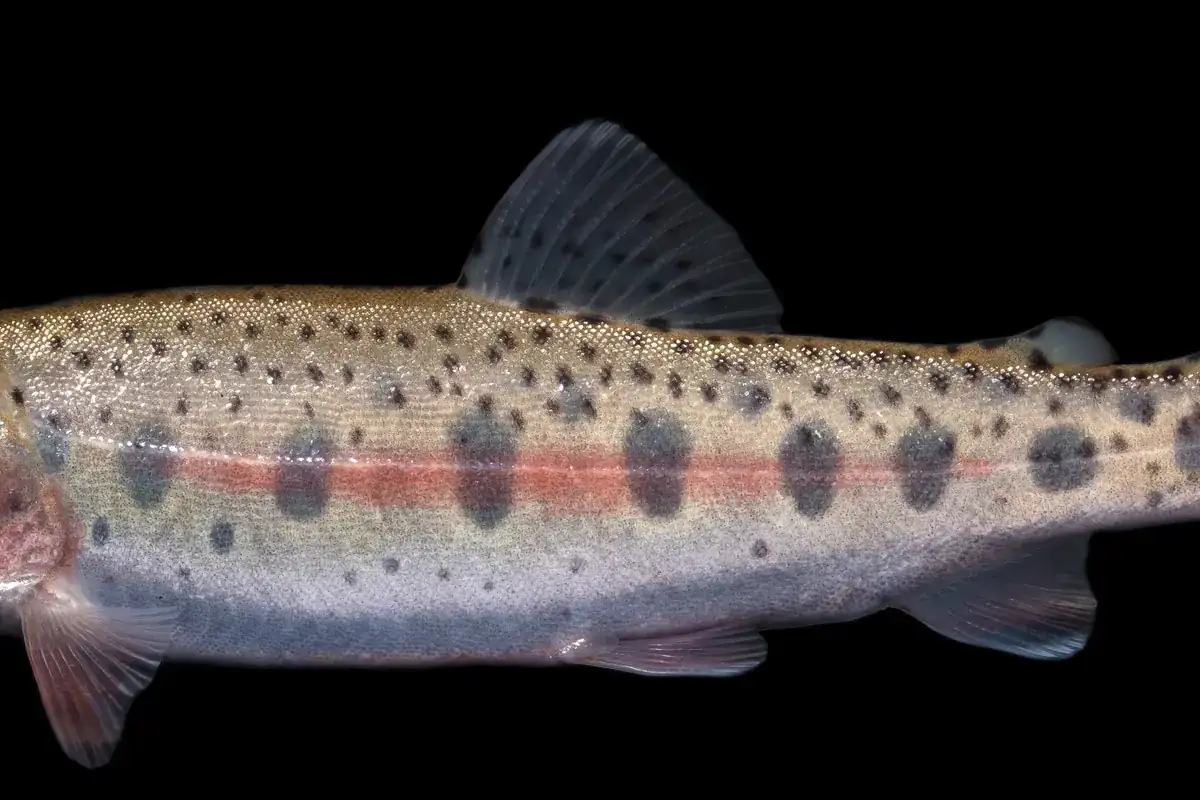
_Gavins_Point.jpg)
Related gear
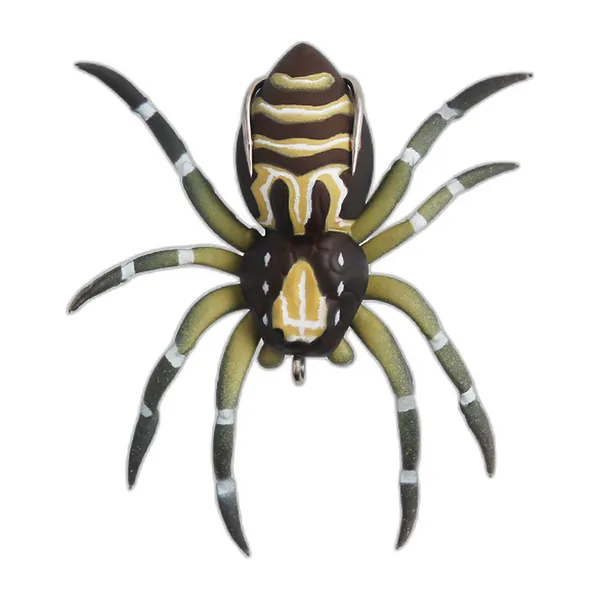 Floating Spider Soft Lures, Pack of 6
Suited to: Rainbow trout.
€33.90£19.90Not shipped to the United States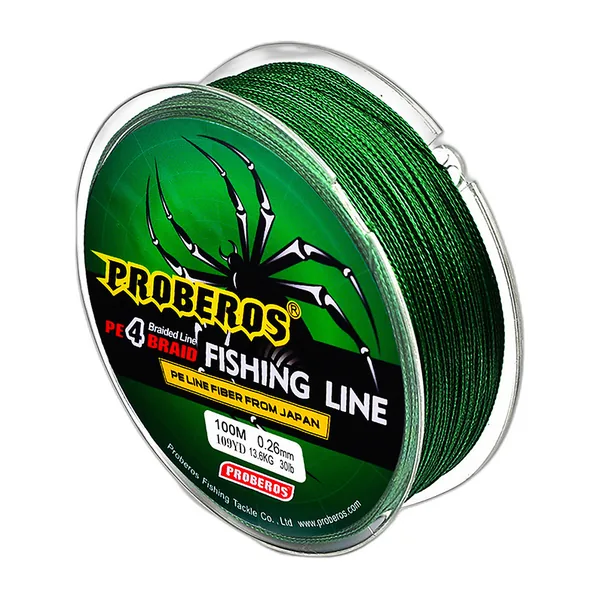 4-Strand Yellow PE Braid, 100 m
Suited to: Rainbow trout.
€20.90£12.90Not shipped to the United States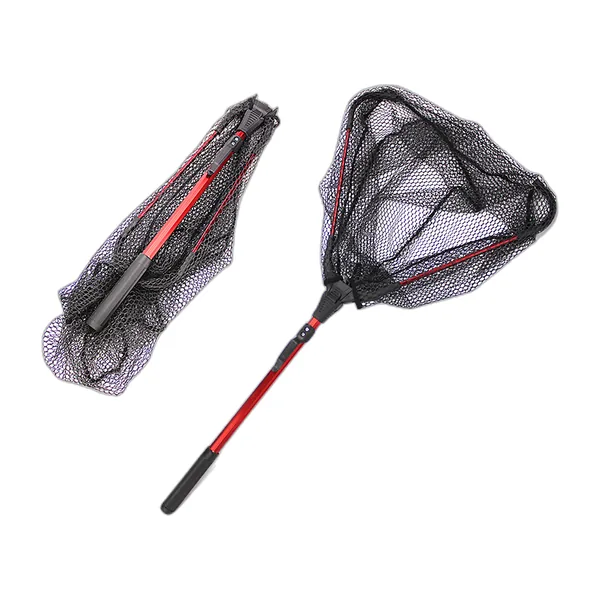 Folding Triangle Landing Net, 47 cm Folded
Suited to: Rainbow trout.
€37.90£18.90Not shipped to the United States
From the Pacific slope to the world
Rainbow trout are native to the Pacific slope of North America and north-east Asia. They are now farmed and stocked worldwide; FishBase notes they are often hatched and released into rivers and lakes specifically to attract anglers. In Europe and across much of North America, many of the rainbows you catch come from hatcheries. The sea-run form, the steelhead, migrates to the ocean and returns to spawn in coastal rivers.
Sizes
Common length is 60 cm (23.6 in); the maximum published is 123 cm (48.4 in) and 25.9 kg (57.1 lb), with a maximum age of 11 years (FishBase). Those figures come from steelhead and big lake fish; a typical stocked trout is much smaller.
Where and when
Rainbows live in clear, cold headwaters, creeks, rivers and lakes, and are usually not stocked in waters that exceed 25 °C (77 °F) in summer or are low in oxygen (FishBase). They feed on aquatic and terrestrial invertebrates and small fish. In their native range, they spawn in late winter and spring after short migrations, and seasons often protect wild spawners. Many stocked lakes and put-and-take fisheries are open year-round under their own rules. Check the regulation page for your state, province or country and the fishery's own rules.
Spring and autumn produce bites all day. In summer, fish early, late and deeper. After a stocking, fish often stay grouped and naive for a few days.
Methods
On stillwaters, flies (nymphs, streamers) from the bank or a float tube are very effective, as are light spinners and small soft plastics. Under a float, dough baits and worms work where permitted. In rivers, use the same approaches as for brown trout. Through the ice, small jigs and bait catch rainbows on many northern lakes.
Releasing rainbows
Three studies help. Schill (1996) measured hooking mortality of bait-caught rainbow trout; Schisler and Bergersen (1996) looked at fish caught on scented artificial baits; Ferguson and Tufts (1992) showed the physiological effect of brief air exposure on exhausted trout. In practice: use flies or lures if you plan to release, strike early with bait, cut the line on a swallowed hook, and keep the fish wet for photos.
Lures and baits
- Nymphs, streamers, dry flies
- Light spinners and spoons
- Floating dough baits and worms where allowed
- Small grub-type soft plastics
Catch and release
- Lures and flies hook more shallowly than swallowed bait; with worms, strike early.
- If the hook is swallowed, cut the line rather than tearing it out.
- Minimise air exposure after a long fight.
Frequently asked questions
When is the best time to fish for rainbow trout?
Rainbow trout can be fished whenever the local season is open, and on many stocked lakes and stillwaters that means all year: Welsh stillwaters have no rainbow close season, and California lakes are open year-round. In rivers, seasons are shorter. Avoid hot spells: FishBase notes rainbows are not usually stocked where summer water exceeds 25 °C.
The legal season comes first. Wales: rainbow trout have no close season on stillwaters, and river seasons run from 3 March to 30 September (NRW). England: most enclosed stillwaters are open all year, but river trout seasons follow regional byelaws (GOV.UK). United States examples: California lakes and reservoirs are open all year for trout, but streams only from the last Saturday in April to November 15. New York lakes and ponds are open all year for brown and rainbow trout, streams from April 1 to October 15. Many US states stock rainbow trout on a published schedule, and the weeks after stocking are popular. Biologically, FishBase describes the rainbow trout as a cold-water fish of clear headwaters, rivers and lakes. It is usually not stocked in waters that reach summer temperatures above 25 °C or have very low oxygen. It spawns between November and May in the Northern Hemisphere. Warm water also raises stress and mortality in fish you release (Gale et al. 2011), so in summer fish early, keep fights short and release quickly. Seasons and limits differ by country, state and water, so always check the current local regulations.
Official sources : Natural Resources Wales — Non-migratory trout, charr, coarse fish and eels open seasons ; GOV.UK — Freshwater rod fishing rules: when and where you can fish ; California Department of Fish and Wildlife — 2026 freshwater sport fishing regulations ; New York State DEC — Statewide seasons, sizes and catch limits ; FishBase — Oncorhynchus mykiss (species summary) ; Gale et al. 2011, The role of temperature in the capture and release of fish, Fish and Fisheries
What do rainbow trout eat?
According to FishBase, rainbow trout feed on a wide variety of aquatic and terrestrial invertebrates and small fish; sea-run steelhead also eat fish and squid. Anglers therefore use flies imitating insects, small lures imitating fish, and natural baits such as insects or, where allowed, fish roe.
FishBase describes the rainbow trout (Oncorhynchus mykiss) as a fish of clear, cold headwaters, creeks, rivers and lakes. It feeds on a variety of aquatic and terrestrial invertebrates and small fishes. The anadromous form (steelhead) preys on fish and cephalopods at sea. The Canal & River Trust calls the rainbow an aggressive predator that will take most live baits. It notes that maggots and worms catch trout easily, although many anglers prefer fly fishing. Take Me Fishing lists cured fish roe, insects, flies and jigs as baits and lures for rainbow trout, and says it takes a fly readily. Stocked rainbows are hatchery-raised and learn to feed on natural food after release; FishBase notes that the species is cultured in many countries and stocked into rivers and lakes for recreational fishing. Before using bait, check the rules. Many waters are fly-only or artificial-lures-only. In England, crayfish are banned as bait. In the US, bait restrictions vary by state and by water; California streams, for instance, require artificial barbless lures outside the general season.
Official sources : FishBase — Oncorhynchus mykiss (species summary) ; Canal & River Trust — Rainbow trout (freshwater fish species) ; Take Me Fishing (RBFF) — Rainbow Trout ; GOV.UK — Freshwater rod fishing rules: fish size and catch limits ; California Department of Fish and Wildlife — 2026 freshwater sport fishing regulations
Can you eat rainbow trout?
Yes. Rainbow trout are a food fish: FishBase notes they are farmed in many countries and eaten fresh, smoked or frozen. Wild or stocked fish may only be kept within local limits; Wales has no size limit for rainbows, while US states set daily bags such as 5 in California or 5 in Texas.
FishBase describes the rainbow trout as cultured in many countries. It is often hatched and stocked into rivers and lakes for recreational fishing, and used fresh, smoked, canned and frozen. Whether you can keep one depends on local rules. In Wales, rainbow trout have no minimum size (NRW), though individual fisheries may set one. In England, fishery rules and regional byelaws set limits; many put-and-take stillwaters let you keep a set number of fish per ticket. In the United States, limits are set by each state; 2026 examples follow. California: 5 trout a day. Texas: 5 rainbow and brown trout combined, no minimum length. Alabama: 5 rainbow trout. Kentucky: 8 rainbow trout (5 in its Fishing in Neighborhoods lakes). Missouri trout areas: 4 a day, with no size limit on rainbow trout. Maine lakes and ponds: 12 inches minimum and 2 a day. Special waters are often catch-and-release. Consumption advisories exist in some places; check your state health or environment agency.
Official sources : FishBase — Oncorhynchus mykiss (species summary) ; Natural Resources Wales — Minimum fish size and catch limits ; GOV.UK — Freshwater rod fishing rules: fish size and catch limits ; California Department of Fish and Wildlife — 2026 freshwater sport fishing regulations ; Texas Parks and Wildlife — Freshwater bag and length limits 2026-27 ; Alabama DCNR — Freshwater fishing creel and size limits ; Kentucky Department of Fish and Wildlife Resources — 2026-27 fishing guide ; Missouri Department of Conservation — Trout areas ; Maine IFW — Statewide fishing laws
How do you catch rainbow trout?
Rainbow trout readily take flies, small lures and natural baits. Take Me Fishing calls the species a fly angler's delight that leaps often and fights hard, and lists fly fishing and bait casting with flies, jigs, insects and cured fish roe. Stocked lakes and reservoirs are the easiest places to start.
Take Me Fishing says the rainbow trout is 'the fly fishermen's delight as it takes a fly readily, leaps often, and fights hard'. It lists fly fishing and bait casting as methods, with cured fish roe, insects, flies and jigs as baits and lures. The Canal & River Trust notes that maggots and worms catch trout easily. It adds that rainbows are caught in some of its reservoirs, such as Tringford, where clubs stock at regular intervals on a put-and-take basis. Good spots listed by Take Me Fishing include outsides of bends, undercuts, overhanging trees, boulder pockets, drop-offs and current edges. Because rainbow trout are widely stocked (FishBase), stocked lakes are the easiest start; many US state agencies publish stocking schedules. Rules vary. Welsh stillwaters have no close season for rainbows, while English rivers follow regional byelaws. US states set bag limits, for example 5 a day in California, Texas and Ohio, and methods can be restricted to artificial lures on some waters. If you release fish, keep them in the water: brief air exposure stresses exhausted rainbow trout (Ferguson and Tufts 1992).
Official sources : Take Me Fishing (RBFF) — Rainbow Trout ; Canal & River Trust — Rainbow trout (freshwater fish species) ; FishBase — Oncorhynchus mykiss (species summary) ; Natural Resources Wales — Non-migratory trout, charr, coarse fish and eels open seasons ; GOV.UK — Freshwater rod fishing rules: when and where you can fish ; California Department of Fish and Wildlife — 2026 freshwater sport fishing regulations ; Texas Parks and Wildlife — Freshwater bag and length limits 2026-27 ; Ohio DNR Division of Wildlife — 2026-27 fishing regulations ; Ferguson & Tufts 1992, Physiological Effects of Brief Air Exposure in Exhaustively Exercised Rainbow Trout (Oncorhynchus mykiss): Implications for "Catch and Release" Fisheries, Canadian Journal of Fisheries and Aquatic Sciences
What is the best bait for rainbow trout?
There is no official 'best' bait. Take Me Fishing lists cured fish roe and insects for rainbow trout, and the Canal & River Trust says maggots and worms catch trout easily. Scented artificial baits are also used. Check that bait is allowed: many trout waters are fly-only or artificial-lures-only.
Rainbow trout eat aquatic and terrestrial invertebrates and small fish (FishBase), so natural baits imitating that diet work. Take Me Fishing lists cured fish roe and insects among rainbow trout baits. The Canal & River Trust says maggots and worms will catch trout easily and that rainbows 'will take most live baits'. Scented artificial baits are a further option; a 1996 study measured post-release mortality of rainbow trout caught on them (Schisler and Bergersen 1996). Another measured hooking mortality of bait-caught rainbow trout in a stream and a hatchery (Schill 1996). Bait-caught fish are more often hooked deeply, so set the hook promptly and cut the line rather than tearing out a swallowed hook if you release the fish. No agency ranks baits, so we do not name a single best one. Check the rules first. Many waters, and many seasons on US streams, allow only artificial lures or flies. California streams require artificial barbless lures outside the general season, for example. In England, crayfish are banned as bait.
Official sources : FishBase — Oncorhynchus mykiss (species summary) ; Take Me Fishing (RBFF) — Rainbow Trout ; Canal & River Trust — Rainbow trout (freshwater fish species) ; Schisler & Bergersen 1996, Postrelease Hooking Mortality of Rainbow Trout Caught on Scented Artificial Baits, North American Journal of Fisheries Management ; Schill 1996, Hooking Mortality of Bait-Caught Rainbow Trout in an Idaho Trout Stream and a Hatchery: Implications for Special-Regulation Management, North American Journal of Fisheries Management ; California Department of Fish and Wildlife — 2026 freshwater sport fishing regulations ; GOV.UK — Freshwater rod fishing rules: fish size and catch limits
What is the best lure for rainbow trout?
No agency ranks lures. Take Me Fishing lists jigs and flies for rainbow trout, and spinners and small spoons are widely used. Choose a size that reaches the fish's depth; use single barbless hooks if releasing, since a study of trout caught on spinners found hook type affects injury and mortality.
Rainbow trout feed on invertebrates and small fish (FishBase) and take flies readily (Take Me Fishing), which lists jigs and flies among lures for the species. In-line spinners and small spoons are standard trout lures: a field study on wild stream trout caught on spinners compared hook types. It found that hook type changes mortality, trauma and capture efficiency (DuBois and Dubielzig 2004). Another study in a catch-and-release rainbow fishery found hook type, angler experience and fish size influenced injury rates and handling time (Meka 2004). No official source names a single best lure; we do not invent one. Practical choices from these sources: match lure size to the prey, fish at the depth where trout are holding, and use single or barbless hooks when releasing. Keep the fish in the water to unhook it: brief air exposure stresses exhausted rainbow trout (Ferguson and Tufts 1992). Check local rules: some waters are fly-only. Some US waters require artificial barbless lures in certain seasons (California streams, November 16 to the general opener).
Official sources : FishBase — Oncorhynchus mykiss (species summary) ; Take Me Fishing (RBFF) — Rainbow Trout ; DuBois & Dubielzig 2004, Effect of Hook Type on Mortality, Trauma, and Capture Efficiency of Wild Stream Trout Caught by Angling with Spinners, North American Journal of Fisheries Management ; Meka 2004, The Influence of Hook Type, Angler Experience, and Fish Size on Injury Rates and the Duration of Capture in an Alaskan Catch-and-Release Rainbow Trout Fishery, North American Journal of Fisheries Management ; Ferguson & Tufts 1992, Physiological Effects of Brief Air Exposure in Exhaustively Exercised Rainbow Trout (Oncorhynchus mykiss): Implications for "Catch and Release" Fisheries, Canadian Journal of Fisheries and Aquatic Sciences ; California Department of Fish and Wildlife — 2026 freshwater sport fishing regulations
What is the best lure for rainbow trout when ice fishing?
No official source names a best ice-fishing lure for rainbow trout. Take Me Fishing lists jigs among rainbow trout lures, and small jigs are the standard ice tool. Check first that ice fishing is legal: it is banned in France and in Belgium, and US states regulate lines, holes and shelters.
Our official sources do not rank ice-fishing lures for rainbow trout, so we do not name one. What is documented: rainbow trout eat invertebrates and small fish (FishBase), and Take Me Fishing lists jigs, flies, insects and cured fish roe as lures and baits for the species. Small jigs, jigging spoons or a jig tipped with bait where legal, worked near the depth where fish are marked, are the usual approach. Legal status comes first. Fishing under the ice is prohibited in France and in Belgium, while in the United States it is common but regulated state by state (number of lines, hole size, shelters, bait). Safety is essential: never go alone, test the ice and avoid inlets and currents; follow the ice guidance of your state agency. Rainbow trout limits still apply in winter, for example 5 a day in California or Texas. If you release fish, do not leave them on the ice: studies on walleye show that winter air exposure impairs fish (Logan et al. 2019), a reasonable precaution for trout too.
Official sources : FishBase — Oncorhynchus mykiss (species summary) ; Take Me Fishing (RBFF) — Rainbow Trout ; California Department of Fish and Wildlife — 2026 freshwater sport fishing regulations ; Texas Parks and Wildlife — Freshwater bag and length limits 2026-27 ; Logan et al. 2019, Consequences of winter air exposure on walleye physiology, Fisheries Research ; Génération Pêche (FNPF, France) — Règles à connaître 2026 ; Wallonia — AGW of 8 December 2016 on fishing rules
How big do rainbow trout get?
FishBase gives rainbow trout a common length of 60 cm and a maximum of 123 cm and 25.9 kg, reached by sea-run steelhead. The British record rainbow listed by the Canal & River Trust is 33 lb 4 oz. Most stocked rainbows are far smaller; size depends on stocking size, food and water temperature.
Reference figures come from FishBase: common length 60 cm, maximum published length 123 cm, weight 25.9 kg, maximum reported age 11 years. The largest fish belong to the anadromous (steelhead) and big-lake forms. In Britain, the Canal & River Trust lists a rod-caught record of 33 lb 4 oz (British Record Committee, 2015) and a typical lifespan of 4 to 6 years. Most rainbow trout anglers catch are hatchery fish: FishBase notes the species is cultured in many countries and stocked into rivers and lakes for recreational fishing. The size you catch therefore depends largely on the size at stocking and how long fish have been in the water; agencies publish their own stocking figures. We have no official average weight to give. Keeping fish is governed by local rules. Wales sets no minimum size for rainbow trout. Maine requires 12 inches on lakes and ponds (6 inches on rivers). Missouri trout areas set no size limit on rainbows, and Texas has no minimum length. Some special waters keep only small fish or require release of large ones.
Official sources : FishBase — Oncorhynchus mykiss (species summary) ; Canal & River Trust — Rainbow trout (freshwater fish species) ; Natural Resources Wales — Minimum fish size and catch limits ; Maine IFW — Statewide fishing laws ; Missouri Department of Conservation — Trout areas ; Texas Parks and Wildlife — Freshwater bag and length limits 2026-27
How long do rainbow trout live?
FishBase gives a maximum reported age of 11 years for rainbow trout. The Canal & River Trust gives a typical lifespan of 4 to 6 years in Britain, where most rainbows are stocked fish that rarely breed. Males usually mature at about 2 years and females at 3, according to FishBase.
FishBase lists a maximum reported age of 11 years for Oncorhynchus mykiss, and notes that males generally mature at 2 years and females at 3. It adds that spawning takes place from November to May in the Northern Hemisphere. The Canal & River Trust gives a typical lifespan of 4 to 6 years for rainbow trout in British waters, where fish are mostly stocked on a put-and-take basis. Lifespan in a given water depends on harvest, predation, temperature and whether the population reproduces. FishBase reports that rainbow trout do not establish breeding populations in some conditions: when fry emergence coincides with the flood season and summers are cold, or where temperature does not fall below 13 °C. Many populations outside the native range are therefore maintained by stocking. In the native range (Pacific slope of North America), wild and sea-run fish can live longer and grow larger than stocked fish; the 11-year figure is a published maximum, not a typical age. Where fish are released, careful handling improves survival (Ferguson and Tufts 1992).
Official sources : FishBase — Oncorhynchus mykiss (species summary) ; Canal & River Trust — Rainbow trout (freshwater fish species) ; Ferguson & Tufts 1992, Physiological Effects of Brief Air Exposure in Exhaustively Exercised Rainbow Trout (Oncorhynchus mykiss): Implications for "Catch and Release" Fisheries, Canadian Journal of Fisheries and Aquatic Sciences
What size rainbow trout can you keep?
Rules vary. Wales has no minimum size for rainbow trout. US 2026 examples: Maine requires 12 inches on lakes and ponds, Washington 8 inches in rivers, Pennsylvania 7 inches, while Texas, Missouri trout areas and Tennessee set no statewide minimum for rainbows. Individual fisheries may add their own limits.
Great Britain: Natural Resources Wales sets no minimum size for rainbow trout. In England, sizes are set by regional byelaws and by each fishery; put-and-take stillwaters usually set a number of fish per ticket instead. United States (2026): Maine requires 12 inches on lakes and ponds and 6 inches on rivers, with 2 rainbow trout a day. Washington requires 8 inches in rivers and streams and sets no minimum in lakes. Pennsylvania requires 7 inches on inland waters, and Connecticut 9 inches for trout statewide. Missouri sets no size limit on rainbow trout in its trout areas, and Texas has no minimum length. Tennessee has no statewide trout minimum. Nebraska allows only one trout of 16 inches or longer. Bag limits apply as well, for example 5 in California and Texas, 8 in Georgia and Kentucky (5 in Kentucky's neighborhood lakes). Special regulation waters can require release of all trout or of fish in a slot. Always read the rules for the specific water.
Official sources : Natural Resources Wales — Minimum fish size and catch limits ; GOV.UK — Freshwater rod fishing rules: fish size and catch limits ; Maine IFW — Statewide fishing laws ; Washington Department of Fish & Wildlife — Statewide freshwater species rules (eRegulations) ; Pennsylvania Fish and Boat Commission — 2026 fishing summary ; Connecticut DEEP — 2026 angler's guide ; Missouri Department of Conservation — Trout areas ; Texas Parks and Wildlife — Freshwater bag and length limits 2026-27 ; Tennessee Wildlife Resources Agency — Statewide limits (eRegulations) ; Nebraska Game and Parks — 2026 fishing guide ; California Department of Fish and Wildlife — 2026 freshwater sport fishing regulations ; Georgia DNR Wildlife Resources Division — Game species daily limits (eRegulations) ; Kentucky Department of Fish and Wildlife Resources — 2026-27 fishing guide
Where can I fish for rainbow trout?
Rainbow trout are native to the Pacific coast of North America but widely stocked. In Britain they are mainly found in stocked stillwaters and reservoirs, such as the Canal & River Trust's Tringford. In the US, state agencies publish stocked trout waters. You need a licence and permission from the fishery owner.
Take Me Fishing states that rainbow trout are native to the west coast of North America from southern Alaska to Mexico. It adds that they have been introduced across the lower Canadian provinces, the Great Lakes, the Appalachians and parts of the southern and central US. FishBase notes they are stocked into rivers and lakes in many countries to attract anglers. Great Britain: the Canal & River Trust says rainbows can be caught in some of its reservoirs, such as Tringford, where clubs stock on a put-and-take basis. It provides a fishery search by town or postcode. In England and Wales you need an Environment Agency rod licence plus permission from the fishery; many enclosed stillwaters are open all year. United States: state agencies publish stocking information and maps. California lakes and reservoirs are open all year for trout, and New York lakes and ponds are open all year for brown and rainbow trout. Hawaii has a single trout water, Kōkeʻe on Kauaʻi, open from June 20 to September 30 in 2026. Good lies listed by Take Me Fishing include outsides of bends, undercuts, drop-offs and current edges.
Official sources : Take Me Fishing (RBFF) — Rainbow Trout ; FishBase — Oncorhynchus mykiss (species summary) ; Canal & River Trust — Rainbow trout (freshwater fish species) ; Canal & River Trust — Where to fish ; GOV.UK — Buy a fishing licence ; GOV.UK — Freshwater rod fishing rules: when and where you can fish ; California Department of Fish and Wildlife — 2026 freshwater sport fishing regulations ; New York State DEC — Statewide seasons, sizes and catch limits ; Hawaii DLNR — 2026 Kōkeʻe rainbow trout season
What water temperature do rainbow trout like?
FishBase lists a temperature range of 10-24 °C for rainbow trout and says they are usually not stocked in waters reaching summer temperatures above 25 °C. No official source gives a single ideal temperature, and warm water increases stress on fish that are caught and released.
FishBase's environment data for Oncorhynchus mykiss give a temperature range of 10-24 °C. Its biology notes add that rainbow trout inhabit clear, cold headwaters, creeks, rivers and lakes. They are usually not stocked in waters with summer temperatures above 25 °C or ponds with very low oxygen. FishBase also reports that the species does not establish breeding populations where the temperature does not fall below 13 °C. The same happens where fry emergence coincides with floods and cold summer temperatures. Take Me Fishing notes the species' native range on the cold west coast of North America. No agency publishes a single optimum temperature for catching rainbows, so we do not give one. For anglers, the key documented risk is heat: a review of catch-and-release shows that warm water raises stress and mortality after release (Gale et al. 2011). Air exposure after a hard fight also harms rainbow trout (Ferguson and Tufts 1992). In summer, fish during cooler hours, use tackle that lands fish quickly and release them without lifting them from the water.
Official sources : FishBase — Oncorhynchus mykiss (species summary) ; Take Me Fishing (RBFF) — Rainbow Trout ; Gale et al. 2011, The role of temperature in the capture and release of fish, Fish and Fisheries ; Ferguson & Tufts 1992, Physiological Effects of Brief Air Exposure in Exhaustively Exercised Rainbow Trout (Oncorhynchus mykiss): Implications for "Catch and Release" Fisheries, Canadian Journal of Fisheries and Aquatic Sciences
Minimum size for Rainbow trout by area
France : 20–40 cm (28)
| Alpes-de-Haute-Provence | 20 cm |
| Alpes-Maritimes | 20 cm |
| Ariège | 20 cm |
| Aube | 25 cm |
| Bas-Rhin | 25 cm |
| Calvados | 25 cm |
| Charente-Maritime | 25 cm |
| Côte-d'Or | 25 cm |
| Côtes-d'Armor | 23 cm |
| Deux-Sèvres | 25 cm |
| Dordogne | 25 cm |
| Doubs | 25 cm |
| Eure | 25 cm |
| Eure-et-Loir | 25 cm |
| Gers | 23 cm |
| Haut-Rhin | 40 cm |
| Haute-Garonne | 23 cm |
| Haute-Marne | 25 cm |
| Hautes-Alpes | 20 cm |
| Hérault | 23 cm |
| Jura | 25 cm |
| Lot | 20 cm |
| Marne | 25 cm |
| Nord | 23 cm |
| Oise | 25 cm |
| Pas-de-Calais | 25 cm |
| Tarn | 20 cm |
| Vienne | 25 cm |
Belgium : 24 cm (1)
Germany : 25–26 cm (5)
| Bayern | 26 cm |
| Berlin | 25 cm |
| Niedersachsen | 25 cm |
| Sachsen | 25 cm |
| Sachsen-Anhalt | 25 cm |
Austria : 22–30 cm (8)
| Burgenland | 25 cm |
| Kärnten | 24 cm |
| Niederösterreich | 25 cm |
| Oberösterreich | 22 cm |
| Steiermark | 23 cm |
| Tirol | 30 cm |
| Vorarlberg | 25 cm |
| Wien | 26 cm |
Italy : 20–25 cm (2)
Spain : 22 cm (1)
Switzerland : 24 cm (2)
| Graubünden / Grischun / Grigioni | 24 cm |
| Uri | 24 cm |
United States : 30.5 cm (1)
| Maine | 30.5 cm |
Canada : 15–35 cm (3)
Studies cited
- Schill (1996) Hooking Mortality of Bait-Caught Rainbow Trout in an Idaho Trout Stream and a Hatchery: Implications for Special-Regulation Management North American Journal of Fisheries Management doi:10.1577/1548-8675(1996)016<0348:hmobcr>2.3.co;2
Measures hooking mortality of bait-caught rainbow trout in a stream and a hatchery, with implications for special-regulation waters. - Schisler & Bergersen (1996) Postrelease Hooking Mortality of Rainbow Trout Caught on Scented Artificial Baits North American Journal of Fisheries Management doi:10.1577/1548-8675(1996)016<0570:phmort>2.3.co;2
Studies post-release mortality of rainbow trout caught on scented artificial baits. - Ferguson & Tufts (1992) Physiological Effects of Brief Air Exposure in Exhaustively Exercised Rainbow Trout (Oncorhynchus mykiss): Implications for "Catch and Release" Fisheries Canadian Journal of Fisheries and Aquatic Sciences doi:10.1139/f92-129
Shows the physiological effect of brief air exposure on exhausted rainbow trout: the science behind keeping fish in the water for photos.
Official sources
- FishBase – Oncorhynchus mykiss (fiche espèce ; statut IUCN Red List 2025-2 repris par FishBase) (accessed on 23 September 2026)
- BOE – Real Decreto 630/2013, Catálogo español de especies exóticas invasoras (texto consolidado) (accessed on 23 September 2026)
- ICNF – Licenças de pesca lúdica e desportiva em águas interiores (licença geral obrigatória, exceto parques de pesca) (accessed on 23 September 2026)