Grass carp
Ctenopharyngodon idella
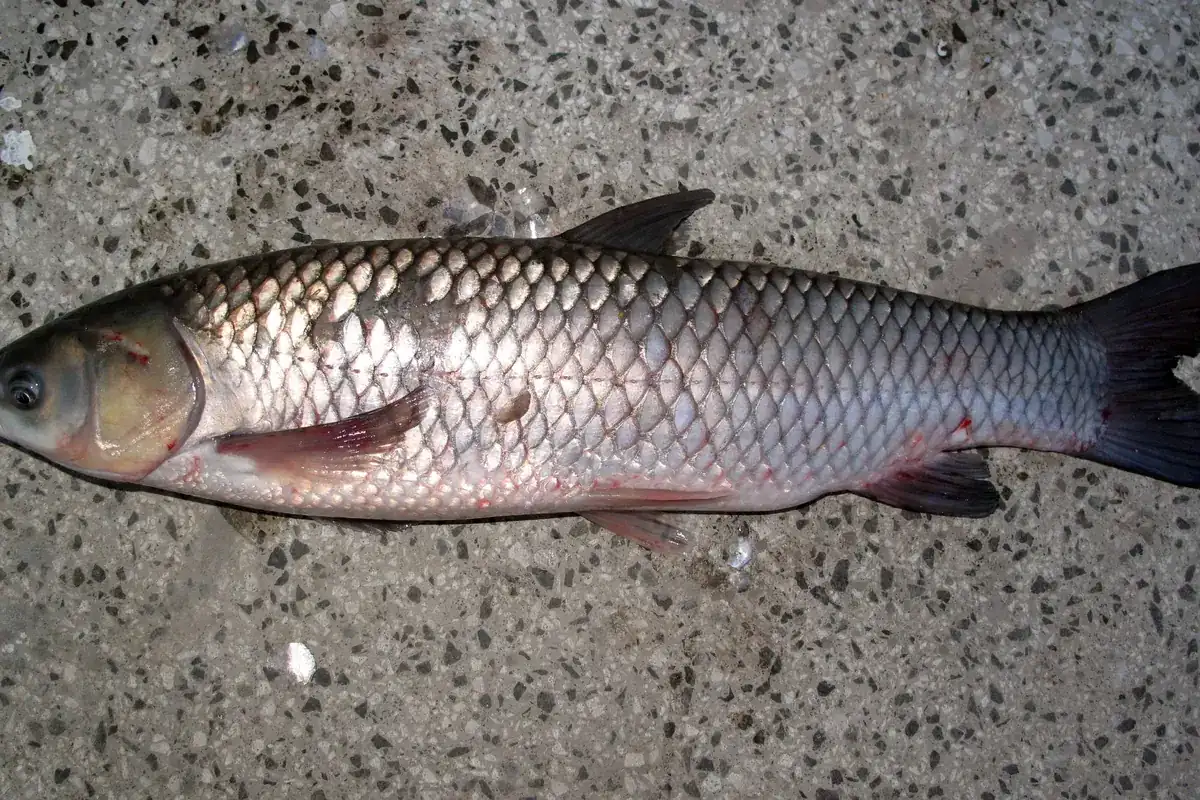

Introduced species, considered a pest in most countries because of damage to submerged vegetation (FishBase). Stocking is often regulated (e.g. sterile triploid fish only in many US states).
Related gear
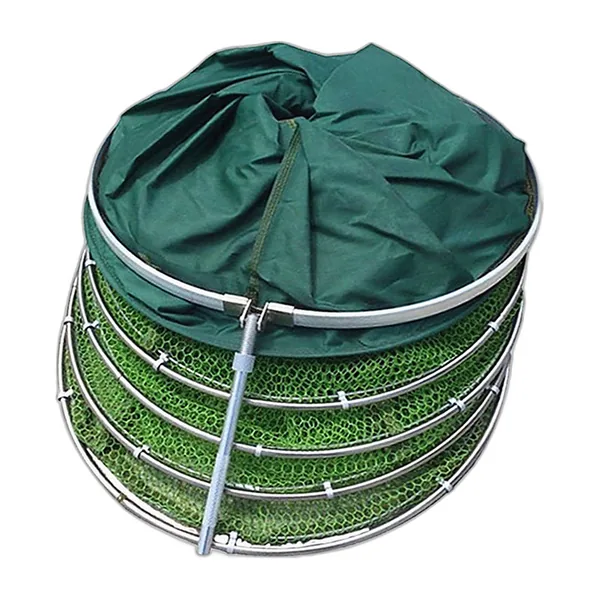 Responsible gearCoated Nylon Keepnet with Aluminium Rings
For : roach, common bream, european perch · float fishing (waggler and stick float)
€73.90£36.90Not shipped to the United States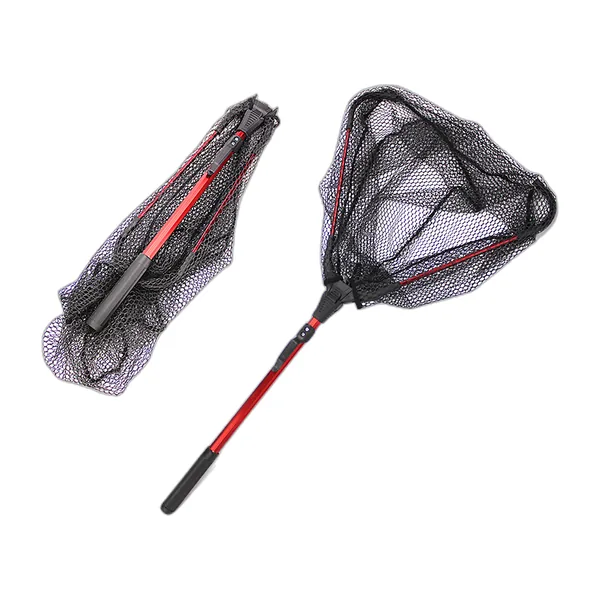 Responsible gearFolding Triangle Landing Net, 47 cm Folded
For : brown trout, rainbow trout, european perch · fly fishing (dry fly and nymph)
€37.90£18.90Not shipped to the United States Oxford fabric rod bag
For : northern pike, zander, walleye · carp fishing with a hair rig
€55.90£28.90Not shipped to the United States
A plant-eater from East Asia
Grass carp are native to East Asia. FishBase describes them as one of the world's most important aquaculture species, also used to control weeds in rivers, fish ponds and reservoirs. They live in lakes, ponds and backwaters of large rivers, in slow or still, weedy water, and tolerate temperatures from 0 to 38 °C (32-100 °F). They feed mostly on aquatic plants and submerged grasses, but also take detritus, insects and other invertebrates.
The downside: FishBase notes they are considered a pest in most countries because of the damage they do to submerged vegetation. Bain (1993) assessed their impacts when introduced into large aquatic systems. That is why stocking is regulated: many US states allow only sterile triploid grass carp, and some waters require anglers to keep, or report, any grass carp caught.
Sizes
The maximum published is 150 cm (59 in) and 45 kg (99 lb), with a maximum age of 21 years (FishBase).
Reproduction
In their native range, grass carp spawn on gravel river beds with very strong current, and the eggs drift for 2-3 days before hatching (FishBase). Those conditions are rare in most introduced waters, so populations usually come from stocking, although wild reproduction has been documented in some large North American rivers. There is typically no spawning-related closure; general water rules apply. Check the regulation page and the fishery's own rules.
How to catch them
Grass carp are summer fish. In hot weather they cruise near the surface and along weed beds. A piece of bread crust or a grain of sweetcorn placed in front of a fish spotted with polarised glasses makes for exciting stalking. On the bottom, hair rigs with corn, boilies or pellets work as for common carp. Some anglers use clover or lettuce leaves, and fly anglers catch them on seed or grass imitations.
Good practice
They fight hard, so use tackle strong enough to keep fights short, a large net and a wet unhooking mat. Before releasing a grass carp, check that it is allowed on that water.
Tackle checklist
A 12 ft (3.6 m) carp rod or a strong float rod, 10-15 lb line, size 6-10 hooks and polarised glasses to spot cruising fish cover most situations.
Lures and baits
- Sweetcorn
- Bread
- Tender greens (clover, lettuce)
- Boilies and pellets
- Seed or grass imitations on the fly
Catch and release
- Powerful fighter: use gear strong enough not to exhaust the fish.
- Wet unhooking mat and large net.
- Check whether release is allowed (introduced species).
Frequently asked questions
What bait should you use to catch grass carp?
Take Me Fishing lists bread or dough balls and flies for grass carp, and says still fishing with dough balls is the most popular method. FishBase says they eat higher aquatic plants and submerged grasses, plus detritus, insects and other invertebrates. No source ranks baits.
The baits documented by Take Me Fishing for grass carp are bread or dough balls and flies. It states that, grass carp being herbivorous, still fishing with dough balls is the most popular approach, while fly fishing is becoming increasingly popular. FishBase describes their diet as higher aquatic plants and submerged grasses, also detritus, insects and other invertebrates, which explains why plant-based and bread baits work. We found no official source ranking baits for grass carp, so we do not name one best bait. The fish are often wary: Take Me Fishing says they may be reluctant to bite, but fight hard and jump when hooked. The USGS reports that feeding declines sharply below 14 °C, so baits work best in warm water. Rules first: grass carp are regulated in many US states because of their impact on aquatic vegetation, and many stocked fish are sterile triploids used for weed control. Washington's statewide lake rule excludes grass carp from the year-round season. Check your state's regulations and whether the water is a managed weed-control stocking.
Official sources : Take Me Fishing (RBFF) — Grass Carp ; FishBase — Ctenopharyngodon idella (species summary) ; USGS Nonindigenous Aquatic Species — Grass Carp fact sheet ; Washington Department of Fish & Wildlife — Statewide freshwater species rules (eRegulations)
How do you catch grass carp with bread?
Take Me Fishing lists bread or dough balls as grass carp baits and says still fishing with dough balls is the most popular method. Present bread where the fish feed on plants and wait patiently: grass carp are often reluctant to bite but fight hard and may jump.
Take Me Fishing lists 'bread or dough balls' among baits for grass carp and says still fishing with dough balls is the most popular way to target this herbivorous fish. We found no official step-by-step for bread fishing, so we keep to what the sources support. Grass carp feed on higher aquatic plants and submerged grasses (FishBase) in slow or still vegetated water, so bread presented near weed beds or where fish are seen feeding fits their behaviour. They are often reluctant to bite, but once hooked they are strong fighters and are known to jump (Take Me Fishing): use tackle strong enough to control a large fish. FishBase lists a maximum of 150 cm and 45 kg. Feeding declines sharply below 14 °C (USGS), so bread works best in warm conditions. Check the rules first. Grass carp are regulated in many US states, many stocked fish are sterile triploids used for weed control, and some waters protect them; Washington's statewide lake rule excludes grass carp from the year-round season.
Official sources : Take Me Fishing (RBFF) — Grass Carp ; FishBase — Ctenopharyngodon idella (species summary) ; USGS Nonindigenous Aquatic Species — Grass Carp fact sheet ; Washington Department of Fish & Wildlife — Statewide freshwater species rules (eRegulations)
What is the best lure for grass carp?
Grass carp are plant-eating fish, so classic lures rarely work on them. Take Me Fishing lists flies, along with bread or dough balls, for grass carp and notes that fly fishing for them is increasingly popular. No official source recommends a specific lure or fly pattern.
FishBase describes grass carp as feeding on higher aquatic plants and submerged grasses, with some detritus, insects and other invertebrates. They are not predators that chase lures. Take Me Fishing lists bread or dough balls and flies as baits, fly fishing among the methods, and says fly fishing for the species is becoming increasingly popular. We found no official recommendation of a specific lure or fly pattern for grass carp, so we do not name one. Flies that imitate plant material or small invertebrates follow the diet described by FishBase, but we cannot cite a source ranking them. Grass carp are often reluctant to bite and fight hard when hooked (Take Me Fishing). Regulations: many states control grass carp and many stocked fish are sterile triploids used for weed control. Washington's statewide lake rule excludes grass carp from the year-round season. Check local rules.
Official sources : FishBase — Ctenopharyngodon idella (species summary) ; Take Me Fishing (RBFF) — Grass Carp ; USGS Nonindigenous Aquatic Species — Grass Carp fact sheet ; Washington Department of Fish & Wildlife — Statewide freshwater species rules (eRegulations)
How big do grass carp get?
FishBase lists a maximum of 150 cm (about 59 in) and 45 kg (about 99 lb) for grass carp, with a maximum reported age of 21 years; the USGS fact sheet gives a size of 125 cm total length. Growth is fast in warm, weedy water.
Reference figures: FishBase lists Ctenopharyngodon idella at a maximum length of 150 cm (total length), a maximum published weight of 45 kg and a maximum reported age of 21 years. Its length at first maturity is around 68 cm (range 58-79 cm). FishBase's 'common length' refers to young farmed fish and is not a useful guide for anglers. The USGS Nonindigenous Aquatic Species fact sheet gives a size of 125 cm total length. Grass carp prefer large, slow-flowing or standing waters with vegetation and tolerate temperatures from 0 to 38 °C (FishBase). The USGS reports a preferred temperature of 25.3 °C and feeding declining sharply below 14 °C, which influences growth. No official source gives a typical size for fish stocked in ponds, which depends on stocking size and food. Take Me Fishing notes that hooked grass carp are strong fighters and jump, so size them up with strong tackle. Rules on keeping grass carp are set by each state.
Official sources : FishBase — Ctenopharyngodon idella (species summary) ; USGS Nonindigenous Aquatic Species — Grass Carp fact sheet ; Take Me Fishing (RBFF) — Grass Carp
How much do grass carp eat a day?
We found no official figure for how much grass carp eat per day. FishBase describes them as eating higher aquatic plants and submerged grasses, and the USGS notes that feeding declines sharply below 14 °C. That is why they are stocked for weed control; consult your state agency for stocking guidance.
Our sources do not provide a daily consumption rate for grass carp, so we do not give one. What they document: FishBase says grass carp feed on higher aquatic plants and submerged grasses, also taking detritus, insects and other invertebrates. It notes they are used for weed control in rivers, fish ponds and reservoirs. The USGS Nonindigenous Aquatic Species fact sheet reports that feeding declines sharply below 14 °C and gives a preferred temperature of 25.3 °C. It explains that grass carp have been stocked across the United States for biological control of vegetation, often as sterile triploids. The USGS also summarises literature showing that effects on a water body depend on stocking rate, plant abundance and community structure, with negative effects on plants, invertebrates and other fish reported in many studies. Because consumption depends heavily on water temperature and fish size, stocking rates for weed control are set by state agencies and pond managers, not by a single rule; ask your state fisheries agency before stocking.
Official sources : FishBase — Ctenopharyngodon idella (species summary) ; USGS Nonindigenous Aquatic Species — Grass Carp fact sheet
When is the best time to fish for grass carp?
Warm months: the USGS reports that grass carp feeding declines sharply below 14 °C and that their preferred temperature is about 25 °C. Take Me Fishing says they are often reluctant to bite. Check your state's season and any restrictions on grass carp.
The USGS Nonindigenous Aquatic Species fact sheet cites studies giving a preferred temperature of 25.3 °C and reporting that feeding declines sharply below 14 °C. Warmer periods are therefore when grass carp feed most. FishBase describes a species of large, slow-flowing or standing, vegetated waters that tolerates a very wide temperature range (0 to 38 °C). Take Me Fishing notes they are reluctant to bite but fight hard, and that still fishing with dough balls or fly fishing are the usual methods. No official source names a best month or time of day, so we do not give one. Seasons and legality depend on the state: Washington's statewide lakes rule excludes grass carp from the year-round season, and many states regulate grass carp because they are used for weed control. Read your state's regulations before fishing for them.
Official sources : USGS Nonindigenous Aquatic Species — Grass Carp fact sheet ; FishBase — Ctenopharyngodon idella (species summary) ; Take Me Fishing (RBFF) — Grass Carp ; Washington Department of Fish & Wildlife — Statewide freshwater species rules (eRegulations)
Where can you fish for grass carp?
In the US, the USGS records grass carp in 45 states, with breeding populations in the Mississippi River basin; they are also stocked in many ponds and lakes for weed control. Take Me Fishing suggests lakes, ponds, rivers, overhanging trees, eddies and current edges. Check state rules, since some waters protect them.
The USGS Nonindigenous Aquatic Species programme reports grass carp from 45 states, with no introductions recorded in Alaska, Maine, Montana, Rhode Island or Vermont. It lists established breeding populations in the Mississippi River basin (for example in Arkansas, Kentucky, Illinois, Missouri, Louisiana and Tennessee) and in the Trinity River of Texas. Take Me Fishing notes naturally reproducing, non-triploid populations around the Mississippi River basin. It lists places to find them: lakes and ponds, overhanging trees and bushes, rivers and streams, dams and falls, eddies, undercuts, drop-offs and current edges. FishBase describes their habitat as lakes, ponds, pools and backwaters of large rivers with vegetation. Many ponds and lakes are stocked with sterile grass carp for weed control, and the water's managers may require that they be released; Washington's statewide lake rule excludes grass carp from the year-round season. We have no official list of public waters; ask your state fisheries agency.
Official sources : USGS Nonindigenous Aquatic Species — Grass Carp fact sheet ; Take Me Fishing (RBFF) — Grass Carp ; FishBase — Ctenopharyngodon idella (species summary) ; Washington Department of Fish & Wildlife — Statewide freshwater species rules (eRegulations)
How do you catch grass carp?
Grass carp are plant-eaters and often reluctant to bite, but fight hard and may jump once hooked. Take Me Fishing says the most popular method is still fishing with dough balls, with fly fishing increasingly popular. Check your state rules: some states restrict grass carp, and stocked fish are often sterile triploids.
Take Me Fishing notes that grass carp 'might be reluctant to bite', but once hooked they are strong fighters and are known to jump. Being herbivorous, the most popular way to target them is still fishing with dough balls, and fly fishing is becoming increasingly popular. It lists drift fishing, still fishing, fly fishing and spin casting as methods, with bread or dough balls and flies as baits. FishBase explains the diet: higher aquatic plants and submerged grasses, plus detritus, insects and other invertebrates. The species prefers large, slow-flowing or standing waters with vegetation. The USGS fact sheet reports that feeding declines sharply below 14 °C and gives a preferred temperature of 25.3 °C, so warm months are the productive period. Regulations vary by state: grass carp are widely stocked for weed control, often as sterile triploid fish. Washington's statewide rule for lakes excludes grass carp from the year-round season, so check your state regulations and any water-specific rules before targeting them.
Official sources : Take Me Fishing (RBFF) — Grass Carp ; FishBase — Ctenopharyngodon idella (species summary) ; USGS Nonindigenous Aquatic Species — Grass Carp fact sheet ; Washington Department of Fish & Wildlife — Statewide freshwater species rules (eRegulations)
What do grass carp eat?
Grass carp are herbivores: FishBase says they feed on higher aquatic plants and submerged grasses, and also take detritus, insects and other invertebrates. That diet is why they are stocked for aquatic weed control, and why FishBase considers them a pest in most countries where they damage submerged vegetation.
FishBase states that grass carp feed on higher aquatic plants and submerged grasses, and also take detritus, insects and other invertebrates. It describes the species as one of the world's most important aquaculture species. It is also used for weed control in rivers, fish ponds and reservoirs, yet considered a pest in most countries because of the damage it does to submerged vegetation. The USGS Nonindigenous Aquatic Species fact sheet explains that grass carp have been stocked in the United States, legally and illegally, for biological control of vegetation. Its literature review reports effects including competition with invertebrates and other fish for food and changes in plant, plankton and invertebrate communities. It adds interference with the reproduction of other fishes and loss of refuges for other fish. Feeding declines sharply below 14 °C (USGS). For anglers, the diet explains the baits documented by Take Me Fishing: bread or dough balls and flies.
Official sources : FishBase — Ctenopharyngodon idella (species summary) ; USGS Nonindigenous Aquatic Species — Grass Carp fact sheet ; Take Me Fishing (RBFF) — Grass Carp
Can you eat grass carp?
Grass carp are a major food fish worldwide: FishBase calls them one of the most important aquaculture species and lists them eaten fresh, steamed, pan-fried, broiled and baked. Whether you may keep one depends on your state's rules; some waters protect stocked weed-control fish, so check first.
FishBase describes the grass carp as one of the world's most important aquaculture species. It records that the fish is used fresh and eaten steamed, pan-fried, broiled and baked; Take Me Fishing notes it is an important source of fish protein in some countries. So the species is edible; we give no further culinary advice. Keeping a grass carp is a legal question. In the United States, grass carp are regulated by each state; many were stocked as sterile triploids for aquatic weed control (USGS). Some managers ask anglers to release them, and some waters restrict their harvest. For example, Washington's statewide lake rule excludes grass carp from the year-round season. Check your state regulations and any posted rules for the water. Fish consumption advisories for contaminants are issued by state health or environment agencies and can apply to specific lakes and species: look up the current advice before eating fish from a given water.
Official sources : FishBase — Ctenopharyngodon idella (species summary) ; Take Me Fishing (RBFF) — Grass Carp ; USGS Nonindigenous Aquatic Species — Grass Carp fact sheet ; Washington Department of Fish & Wildlife — Statewide freshwater species rules (eRegulations)
How long do grass carp live?
FishBase gives a maximum reported age of 21 years for grass carp. No official source gives a typical lifespan in ponds; it depends on stocking size, water temperature and management. Many pond fish are sterile triploids stocked for weed control, which do not reproduce.
FishBase lists a maximum reported age of 21 years for Ctenopharyngodon idella, a maximum size of 150 cm and 45 kg, and first maturity at around 68 cm. The USGS fact sheet explains that grass carp tolerate a wide range of conditions: fry and fingerlings survive from 0 to 40 °C, and fingerlings in Arkansas survived five months under heavy ice cover. The lethal low oxygen level for juveniles is below 0.5 mg/L. We found no official figure for the typical lifespan of grass carp in ponds, so we do not give one. Pond lifespan depends on stocking size, temperature, oxygen, predation and removal. Many pond fish are sterile triploids, produced by treating fertilised eggs with heat or cold, and screened by blood tests before stocking in some programmes (USGS). They cannot establish a breeding population. Pond owners should follow their state agency's stocking guidance and permit rules.
Official sources : FishBase — Ctenopharyngodon idella (species summary) ; USGS Nonindigenous Aquatic Species — Grass Carp fact sheet
Why are grass carp invasive?
Grass carp are non-native in North America and FishBase considers them a pest in most countries because they damage submerged vegetation. The USGS reports they have been recorded in 45 US states and have established breeding populations in the Mississippi River basin. Literature reviews link them to changes in plants, invertebrates and fish.
Native to eastern Asia from the Amur River south to southern China (USGS), grass carp were first imported to the United States in 1963 for aquaculture. They have since spread through escapes, authorised and unauthorised stockings for weed control, interstate transport and natural dispersal. The USGS Nonindigenous Aquatic Species programme records them in 45 states. It lists established breeding populations in several states of the Mississippi River basin (including Arkansas, Kentucky, Illinois, Missouri, Louisiana, Tennessee) and in Texas. FishBase states that the species is 'considered as a pest in most countries because of the damages made to submerged vegetation'. The USGS literature review reports negative effects including competition for food with invertebrates and other fish and major changes in plant, phytoplankton and invertebrate communities. It also cites interference with the reproduction of other fishes and loss of refuge habitat, while noting that results depend on stocking rate and ecosystem. To limit spread, many programmes stock only sterile triploid fish. Never move or release grass carp; follow your state's rules.
Official sources : USGS Nonindigenous Aquatic Species — Grass Carp fact sheet ; FishBase — Ctenopharyngodon idella (species summary) ; Take Me Fishing (RBFF) — Grass Carp
What size hook do you need for grass carp?
No official source gives a hook size for grass carp. Choose a strong hook matched to your bait (dough ball or bread) and to a large, powerful fish: FishBase lists grass carp up to 150 cm and 45 kg, and Take Me Fishing says they fight hard and jump. Research on common carp shows hook size matters.
We found no agency or study that specifies a hook size for grass carp, so we do not give a number. The relevant facts: grass carp can reach 150 cm and 45 kg (FishBase). Take Me Fishing notes they are reluctant to bite but strong fighters that are known to jump, and that dough balls and bread are the usual baits. A hook must therefore hold a bread or dough bait and be strong enough for a big fish. A study on specialised angling for large common carp found that hook size influences capture and hooking outcomes (Rapp et al. 2008); it concerns common carp, not grass carp, but supports matching hook size to the fish. A general review of hooking mortality links deep hooking to higher death rates (Muoneke and Childress 1994), so strike promptly if you plan to release fish. Check state rules on grass carp harvest and on hooks and methods for the water you fish.
Official sources : FishBase — Ctenopharyngodon idella (species summary) ; Take Me Fishing (RBFF) — Grass Carp ; Rapp et al. 2008, Exploitation of specialised fisheries resources: The importance of hook size in recreational angling for large common carp (Cyprinus carpio L.), Fisheries Research ; Muoneke & Childress 1994, Hooking mortality: A review for recreational fisheries, Reviews in Fisheries Science
Minimum size for Grass carp by area
Slovakia : 60 cm (1)
Studies cited
- Bain (1993) Assessing impacts of introduced aquatic species: Grass carp in large systems Environmental Management doi:10.1007/bf02394691
Assesses the impacts of introduced grass carp in large aquatic systems: effects on vegetation and ecosystems.
Official sources
- FishBase – Ctenopharyngodon idella (fiche espèce ; statut IUCN Red List 2025-2 repris par FishBase) (accessed on 23 September 2026)
- Sportvisunie – VISpas (Gezamenlijke Lijst van Nederlandse Viswateren, VISplanner, NachtVIStoestemming) (accessed on 23 September 2026)
- ICNF – Licenças de pesca lúdica e desportiva em águas interiores (licença geral obrigatória, exceto parques de pesca) (accessed on 23 September 2026)